SADO-MUMYOIYAKI(POTTERY)
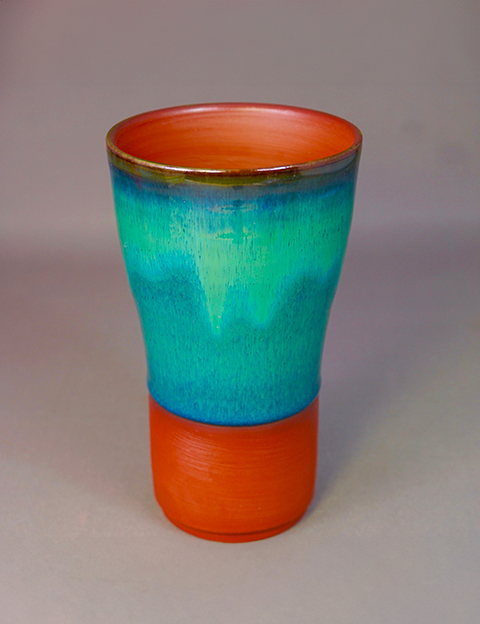
This pottery is made from red clay containing a large amount of iron oxide, known as "Mumyoi clay." The first red Raku ware, which mixed with Mumyoi clay, began in the early 19th century, and the current Mumyoi ware, which is fired at high temperatures to create a hard texture, was perfected during the Meiji era.
While the principle is to use clay and glaze raw materials produced in Sado, advances in technology and years of ingenuity by potters have led to a greater diversity in glaze raw materials and shapes in recent years, resulting in products with distinct characteristics from one kiln to another.
overview
| Craft item name | SADO-MUMYOIYAKI(POTTERY) |
|---|---|
| Reading | Sadomumyoyaki |
| Classification of crafts | Ceramics |
| Main Products | Tea utensils (teacups and teapots), sake sets, vases, plates, beer mugs, chopstick rests, etc. |
| Main manufacturing area | Sado City |
| Designated date | October 17, 2020 |
contact address
■ Production area association
SADO-MUMYOIYAKI(POTTERY)Association
952-1557
1-1 Aikawa-chome, Sado City, Niigata Prefecture
TEL: 0259-74-2127
Features
Due to the fine particles of the clay and its high shrinkage rate, it shrinks by about 30% from molding to drying. Its characteristic feature is that it fires up very hard.
How to make it
Because it undergoes elutriation (a process of refining the clay using water) and is then passed through a silk-like sieve, the particles are finer and the shrinkage rate is greater than that of other clays. After shaping, it is polished with stones or iron spatulas while still raw to give it a shine, and after firing, it is polished further with the slag from the Sado Gold Mine to give it a unique luster. The color becomes more lustrous with use, and it develops a unique, subdued charm.
Please see here for information on traditional craftspeople.