NIBUTANI-Attus (Bark Fiber Textiles)

Hokkaido

It has been passed down in the Saru River basin since ancient times, and during the Edo period, it was traded with other regions as a local product of the Saru River basin.
NIBUTANI-Attus (Bark Fiber Textiles) is still made using tools that are almost identical to those used over a hundred years ago.

  • Technology/techniques/raw materials

    Technology/techniques

    1. The thread shall be made using the following techniques or methods:

    (1) By "slashing thread".

    (2) By "weaving the thread".

    (3) By "twisting yarn".

    2. Weaving shall be carried out using the following techniques or methods:

    (1) Using the "receiving thread" method.

    (2) Using a back loom for weaving.
     

    raw materials

    The main ingredient shall be either elm or linden.

overview

Craft item name NIBUTANI-Attus (Bark Fiber Textiles)
Reading Nibutaniattushi
Classification of crafts fabric
Main Products Kimono fabric, kimono, arm guards, leg guards, obi fabric, wall hangings, accessories, etc.
Main manufacturing area Biratori Town, Saru District
Designated date March 8, 2013

contact address

■ Production area association

Nibutani Folk Craft Association
〒055-0101
77-14 Nibutani, Biratori-cho, Saru-gun, Hokkaido
Biratori Ureshipa, a general incorporated association
TEL: 01457-3-7501
FAX: 01457-3-7502

Features

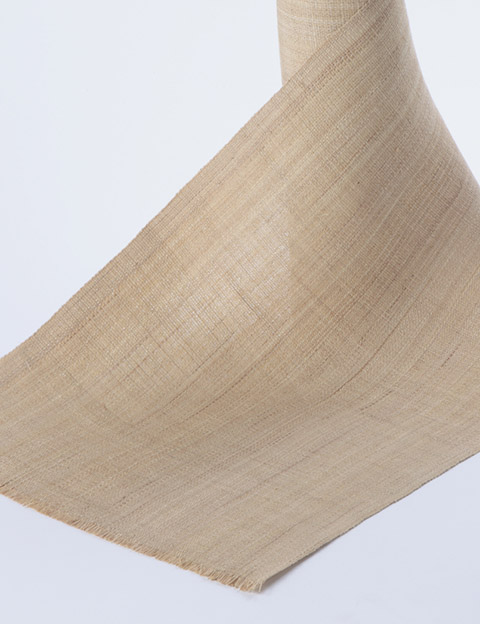
Attush refers to a type of fabric woven using an attushkarpe (loom) from threads made from the bark fibers of trees such as elm (Ani). It is water-resistant, highly breathable, and possesses exceptional strength and a unique texture, making it rare among natural fibers.

*The "shi" in Attush, and the "shi" and "ra" in Attushkarpe are written in lowercase in Ainu script.

How to make it

The bark of the elm and linden trees is stripped and processed, then split into strips about 2 mm wide to form threads. The threads, spun using the loom knotting method, are twisted, stretched, and then picked up before weaving on a loom while seated.

top