Features
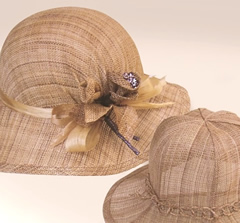
This fabric is made from bast fibers extracted from the bark of linden trees (Tilia japonica, Tilia cordata, or Tilia maximowicziana) that grow in the mountainous regions of the Uetsu area. The yarn is spun from these fibers and woven into cloth. In Japan, it has been used for clothing and ornaments since the Jomon and Yayoi periods, and today it is still produced in the Sekikawa district of Tsuruoka City, Yamagata Prefecture, and Yamakita Town, Iwafune District, Niigata Prefecture. Because the raw material is tree bark fiber, the texture is rough, but it is characterized by its coarse feel and calm texture, and is processed not only into obi fabric but also into many everyday items such as bags and hats.
How to make it
The materials used, Tilia japonica, Tilia maximowicziana, or Tilia japonica, are deciduous trees belonging to the Tilia genus of the Tiliaceae family. They grow abundantly in the mountains and fields along the Sea of Japan and in the Tohoku region, and are called by various names depending on the region, such as Mada, Manda, Mouda, and Moada. The yarn is made by spinning and twisting fibers extracted from the bark of these trees, and then weaving this yarn on a handloom or a loom. Because it is made from bark fibers, it cannot be mechanized and still relies on manual labor.