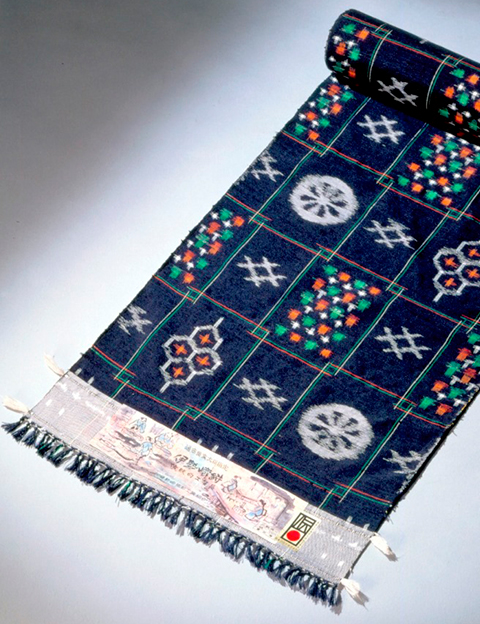
ISESAKI Gasuri (Ikat)

Gunma Prefecture

The history of ISESAKI Gasuri (Ikat) can be traced back to ancient times, but the production area itself only took shape in the latter half of the 17th century.
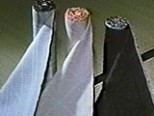
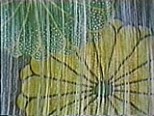
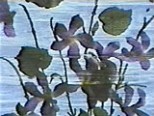
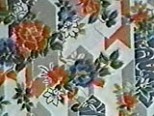
During the Meiji, Taisho, and Showa periods, it was known nationwide as "Isesaki Meisen." The distinctive features of ISESAKI Gasuri (Ikat) lie in its tie-dyeing, board-clamping, and printing techniques. From simple ikat patterns to intricate designs, a wide variety of handmade ikat fabrics are produced, making the most of the texture of silk.

  • Technology/techniques/raw materials

    Technology/techniques

    1. The fabric must be a kasuri textile woven using one of the following techniques or methods.
    (1) The fabric shall be plain weave with pre-dyed yarn.
    (2) Kasuri thread shall be used for warp and weft threads or as weft threads.
    (3) Matching the patterns of the ikat threads by hand to weave the ikat pattern.


    2. The dyeing method for the ikat thread shall be "hand-tying," "board-clamping," or "stencil dyeing."

     

    raw materials

    The thread used shall be raw silk, spun silk, or floss silk, or silk thread of equivalent quality.

  • Work scene

    The diverse ikat patterns of ISESAKI Gasuri (Ikat) are created by employing a variety of techniques. The main techniques include tie-dyeing, board-binding, combined ikat, loosened pattern ikat, and weft ikat, each with different processes and finishes.
    Here, we introduce the process of tie-dyeing, a traditional technique used in ISESAKI Gasuri (Ikat) weaving. Tie-dyeing, also known as shibari kasuri, is one of the representative techniques of ISESAKI Gasuri (Ikat).

    Step 1: Design Creation

    The design of the fabric is decided, and the pattern is drawn on graph paper called design paper. At the same time as deciding on the composition and color scheme, the number of warp threads needed to create the pattern is also calculated. The design paper, on which this information is written, serves as the blueprint for the fabric. Based on this, the amount of yarn needed for the entire fabric is calculated, and the yarn is prepared through processes such as scouring, bleaching, and sizing.

    Step 2: Yarn preparation (scouring, bleaching, and sizing)

    The threads used for silk ikat are mainly refined twisted yarns. Refining is the process of removing the gelatinous substance covering the surface of raw silk, which is done by boiling the raw silk in sodium carbonate or neutral soap. Refining brings out the beautiful luster unique to silk in the thread and makes it easier to dye. If the thread is severely yellowed after scouring, it is bleached.
    After scouring, the yarn is treated with sizing. This makes the yarn easier to handle and prevents fraying.

    Step 3: Thread winding and warping

    The glued threads are first wound onto wooden bobbins. This process is called reeling. Dozens of reeled bobbins are lined up, and the required length and number of warp threads for the fabric to be woven are drawn from them. Each thread is trimmed carefully to ensure equal tension and that the arrangement is not disrupted, and the warp threads are prepared according to the design. This process is called warping. The bundles of warped threads are wound into balls. These balls are called warp balls.

    Step 4: Preparation for dyeing (ink marking)

    The warp threads are unraveled and stretched out. Marks for the dye divisions of the pattern are then made on the stretched warp threads, using the grid paper of the design as a guide. This process is called ink marking.

    When applying ikat patterns to the weft threads, a seed thread is used to create the dye pattern. A seed thread is a cotton thread marked with the pattern. A frame is erected over the pattern at the actual weaving width, and the thread is passed through the frame the same number of times as the weft thread will pass through to create a flat surface. The pattern is then transferred and marked with ink. When the frame is removed, a single seed thread with a mottled pattern remains.


    画像をクリックすると動画が再生されます

    Step 5: Printing

    Based on the ink markings, dyes are rubbed in according to the color scheme.

    Step 6: Binding

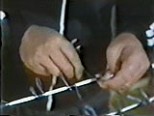
    Allow the printed area to dry completely, then securely tie it with cotton thread or polyethylene tape. This prevents the dye from seeping into the background color when dyeing it.

    Step 7: Immersion dyeing

    The tied threads are immersed in hot water to promote color development in the printed areas. Then, along with the ground threads (those without the ikat pattern), they are immersed in the dye solution to dye the base color. The dye solution is gradually heated, and the threads are moved appropriately to ensure even dyeing. After dyeing at a liquid temperature of about 90°C for about an hour, the threads are thoroughly washed, dehydrated, and then starched.

    Step 8: Starching and ikat pattern matching

    Before the starched ikat fabric dries, untie the ties and let it dry thoroughly outdoors in a sunny spot, maintaining a moderate tension. At this time, secure the ties in several places to prevent the ikat pattern from becoming distorted.

    Step 9: Thread wrapping

    The warp threads for the ikat weaving, after being starched, are bundled together. To spread them to the width of the fabric, the ground threads are incorporated according to the design instructions, and each thread is passed through the reed and placed on the winding stand. The ikat pattern of the threads on the winding stand is then arranged using a special tool. Once the ikat pattern is arranged, it is wound up carefully to prevent it from unraveling.

    画像をクリックすると動画が再生されます

    Step 10: Retraction

    The wound warp threads are then set up on the loom. The process of threading the warp threads through the heddles and reed is called "pulling in," and both are done by hand, one thread at a time.

    工程11: 製織

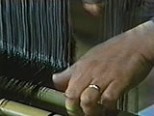
    The weft thread is wound onto a bobbin and set on the shuttle. The weft thread is then passed through the warp threads set up on the loom using the shuttle and beaten with the reed, thus creating cloth from yarn. Weaving technique is a crucial process that determines the value of the finished product.

    Process 12: Sorting

    After weaving, the excess starch is removed from the fabric, and it is rolled over while being steamed to adjust its width and length.

    Step 13: Inspection

    Unraveled pattern ikat
    Around 1909, a technique was developed to create curved patterns that were difficult to express with tie-dyeing, by using stencils on the warp threads and then printing them. This is the origin of the untied pattern ikat.

    Yokosōgasuri (weft ikat)
    Conversely, weft ikat is a type of textile where a stencil is used to print the weft threads.

    Combined ikat weaving (heiyōgasuri)
    Furthermore, combined ikat weaving involves printing both the warp and weft threads using stencils before weaving.


  • Close-up

    ISESAKI Gasuri (Ikat): The culmination of artisanal skill.

    ISESAKI Gasuri (Ikat) expresses delicate patterns through a variety of ikat weaving techniques and vibrant colors. This is supported by the combined skills of highly skilled craftsmen at each stage of the process. We encourage you to experience this truly diverse world for yourself.


    ISESAKI Gasuri (Ikat) is characterized by its diverse techniques, fresh use of color, and delicate patterns.

    Techniques such as kukurigasuri (also called shibari-gasuri), itajime-gasuri, hogushi-moyou-gasuri, heiyou-gasuri, and yokosou-gasuri, each with its own unique characteristics, give rise to the diverse range of colors and patterns of ISESAKI Gasuri (Ikat).
    The diverse range of works is produced through a division of labor in each stage of the process, and each stage is nothing less than the culmination of the skilled craftsmanship of experienced artisans.
    Among the many different artisans, we spoke with Matsumoto Shinzo, an artisan who is in charge of tie-dyeing, printing, and tying techniques for tie-dyed ikat fabrics.

    Printing sticks used for stencil printing

    Going back to the Edo period, it originated from "futori" (thick weaving).

    The history of ikat weaving dates back to ancient times, but production centers were established in the late 17th century, and from the Meiji to Showa periods, it became known as Isezaki Meisen, a representative kimono for Japanese women.
    Matsumoto was born in Isezaki, a town that has produced a diverse world of ikat textiles throughout history. From a young age, he grew up surrounded by ISESAKI Gasuri (Ikat), and by the time he was old enough to understand, he had been thinking about becoming an ISESAKI Gasuri (Ikat) craftsman.

    The secret to the high quality of ISESAKI Gasuri (Ikat)

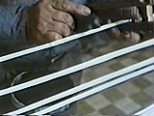
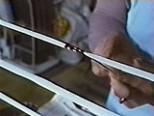
    Matsumoto's job is called "tying." He stretches out a 30-meter-long thread and, using a tool called a printing rod, dyes each section of the main pattern by hand according to the design. His main responsibility is the tying process, where he tightly wraps cotton thread or polyethylene tape around the dyed sections to prevent them from mixing with other colors during subsequent dyeing.
    At first glance, this task may seem simple. However, creating a pattern according to the design requires meticulous attention to detail, where even the slightest error is unacceptable. The same applies to the colors; from well over 200 dyes, the perfect shade that matches the image of the design must be selected through subtle adjustments.
    Matsumoto says that he is able to concentrate on his work with almost no distractions while he is working. "Good ikat fabric can only be made when every step of the process is done well," he says, and precisely because the work is divided into specialized tasks, there is absolutely no room for compromise. The dedication of each craftsman is the secret to the high quality of ISESAKI Gasuri (Ikat).

    Mrs. Matsumoto is busy with the tying work.

    Strictness and warmth

    The artisans of ISESAKI Gasuri (Ikat) are uncompromising in their work. Matsumoto entered this world at the age of 15, and after five years of rigorous training with almost no days off, he has established his pride and confidence as an artisan, and that pride and confidence remain unchanged even now.
    But Mr. Matsumoto is not just a strict person. He has been a craftsman for a remarkable 53 years, 40 of which he has worked alongside his wife. "It's nice to be able to work from home. When I make something good, I want to dress my grandchildren in it," he said, showing a gentle smile that reflects his love for his family. I began to feel that it is not only his strictness as a craftsman, but also this warmth that allows him to create such approachable ISESAKI Gasuri (Ikat).

    Matsumoto-san working on stencil printing.

    Craftsman Profile

    Matsumoto Shinzo

    Born in 1933.
    He entered the world of ISESAKI Gasuri (Ikat) at the age of 15, and after five years of apprenticeship, he has a career of approximately 50 years as a "tying craftsman."

    Anecdotes

    Wearing ISESAKI Gasuri (Ikat) as everyday wear

    ISESAKI Gasuri (Ikat) is characterized by its diverse range of techniques, resulting in a rich variety of fresh colors and delicate patterns. It's a fabric that can be enjoyed by people of all genders and ages, and not only for formal occasions but also as everyday wear. Originally a traditional fabric for everyday clothing, ISESAKI Gasuri (Ikat) is sure to bring a breath of fresh air to your life. Currently, ISESAKI Gasuri (Ikat) is used not only for kimonos but also for a wide variety of products including Western clothing fabrics, scarves, tablecloths, noren curtains, ties, and tapestries. Why not incorporate ISESAKI Gasuri (Ikat) into your daily life?


overview

Craft item name ISESAKI Gasuri (Ikat)
Reading Isesaki Kasuri
Classification of crafts fabric
Main Products Kimono fabric
Main manufacturing area Isezaki City, Ota City, Saitama Prefecture / Honjo City
Designated date May 10, 1975

contact address

■ Production area association

Isezaki Textile Industry Association
372-0055
31-1 Magariwa-cho, Isesaki City, Gunma Prefecture
TEL: 0270-25-2700
FAX: 0270-24-6347

Features

Because each piece is made through numerous processes, primarily by hand, even pieces with the same pattern will have subtle differences depending on the craftsman involved in its creation.

How to make it

The manufacturing methods are diverse, including tie-dyeing, board-clamping, and printing, and sometimes two or more techniques are combined. The manufacturing process itself is also complex, incorporating various ingenious methods.

top