HON SHIOZAWA (Textiles)

Niigata Prefecture

HON SHIOZAWA (Textiles), along with SHIOZAWA Tsumugi (Pongee), is a representative textile of the Shiozawa region, and until recently it was widely known as "Shiozawa Omeshi."
It is said to have originated in the mid-Edo period, and is based on silk crepe, which applies the techniques and methods of linen weaving with a "shibo" (crepe-like) texture, such as Echigo chijimi, to silk.

  • Technology/techniques/raw materials

    Technology/techniques

    1. The fabric must be a kasuri textile woven using one of the following techniques or methods.
    (1) The fabric shall be plain weave with pre-dyed yarn.
    (2) The warp threads and weft threads are manually matched to create the ikat pattern.


    2. The weft threads used for the ground threads shall be "sizing" with rice starch or other plant-based sizing agents, followed by "over-sizing."


    3. The dyeing method for the ikat thread shall be "hand-tying," "hand-printing," "board-clamping," or "stencil dyeing."


    4. The wrinkles should be formed by "hot water massage".
     

    raw materials

    The thread used must be raw silk.

  • Work scene

    The process of making HON SHIOZAWA (Textiles) is complex, but broadly speaking, it involves pre-dyeing the warp and weft threads, creating the ikat patterns, weaving, and finishing. The patterns of HON SHIOZAWA (Textiles) are created by "pre-dyeing" the threads before weaving. Raw silk is used for dyeing the ground threads and creating the ikat threads that form the patterns. Ikat patterns are created by making an ikat ruler based on a design, marking the threads with ink along the ruler, and then using methods such as "hand-tying," where cotton threads are tied to the marks, or "hand-rubbing," where dye is applied with a spatula. The dyed warp and ikat threads are then combined into a ball and set on a loom, and only then can weaving begin. This process involves carefully aligning each ikat thread, and to create the unique texture of HON SHIOZAWA (Textiles) fabric, the weft threads include right-twisted and left-twisted strong twisted threads, which are woven carefully to avoid mistakes. Finally, as a finishing touch, the fabric is kneaded in hot water to create the unique wavy, textured surface called "shibo" characteristic of HON SHIOZAWA (Textiles). This texture gives the fabric a crisp, pleasant feel against the skin.

    Step 1: Design and Planning

    Based on the original design or sample, the pattern placement is determined on graph paper to create a ikat pattern, and the length of the threads and the exact positions of the ikat are meticulously designed. Then, the next work process begins based on that design.

    Step 2: Twisting the yarn

    The raw silk to be used is separated according to its intended use, such as warp and weft threads and warp and weft ikat threads, and then twisted together according to specifications. This is called the initial twist, and it is done to make the thickness and strength uniform.

    Step 3: Attach and tie

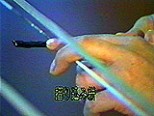
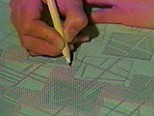
    The weft threads are stretched onto a stretching stand, and ink marks are made on the pattern positions according to the ikat ruler. Next, the marked parts of the weft threads are tightly tied with cotton thread. This prevents the tied parts from being dyed. Also, if the tying is not done tightly, the dye will seep into the tied parts and the ikat pattern will fall apart.

    画像をクリックすると動画が再生されます

    Step 4: Rubbing

    Using a bamboo spatula, the dye is literally rubbed into the areas that have been marked with ink. Afterwards, the piece is placed in steam at around 100 degrees Celsius to fix the color.

    Step 5: High-twist yarn

    The weft threads of the base fabric are initially twisted, then scouring, dyeing, and coated with starch powder. To create a crinkled texture, a strong upper twist is applied separately to the right and left.

    Step 6: Prepare the loom and begin weaving.

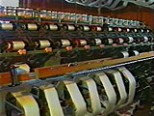
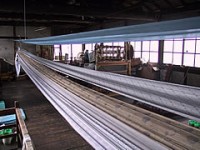
    The warp threads are carefully wound onto bobbins, ensuring the ikat pattern doesn't shift. Each thread is then passed through the heddles of the loom, and two threads at a time are passed through the reed. By passing the threads through the heddles and reed, the threads are suspended up and down, allowing the weft threads to pass back and forth, thus creating the weave. The standard number of threads is around 1500. The weft ikat threads are prepared to create the ikat pattern and then wound onto bobbins. The ground threads are wound separately onto bobbins, with right-hand and left-hand twists. At this time, one side is marked to avoid mixing up left and right. The weaving is done using a loom called a "takahata." In this process, the warp and weft ikat threads are woven one by one, and because the ground yarns include both right-twisted and left-twisted highly twisted yarns, the weaving is done with particular care to avoid mixing up the left and right sides.

    画像をクリックすると動画が再生されます

    工程7: 仕上げ

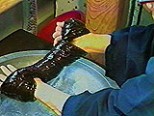
    After weaving, the finished product is cleaned of dirt and starch, then treated with hot water to bring out the unique crinkled texture HON SHIOZAWA (Textiles), and finally rolled up to a specified width. Lastly, it is inspected for any dirt or weaving irregularities before being completed.


  • Close-up

    HON SHIOZAWA (Textiles) The culmination of refined and perfected techniques from our predecessors.

    HON SHIOZAWA (Textiles), a silk fabric that has been loved for a long time, incorporates techniques and methods inherited from "Echigo Jofu," a nationally designated Important Intangible Cultural Property, into silk weaving.


    Inheriting the tradition from Echigo Jofu

    Jofu is a general term for particularly high-quality linen fabrics, and linen crepe produced in Echigo was called Echigo Jofu. This fabric is woven through numerous processes, including tearing hemp called "choma" with fingernails, twisting, reeling, and sizing the resulting threads, and then tying them by hand to create ikat patterns. Furthermore, this weaving also uses a tool called a "jibata," and the fabric is woven only when the person, the loom, and the thread work together as one. It took more than two months to weave one bolt of fabric. Moreover, it is said that linen fabric woven in this region already existed 1200 years ago, during the Nara period, even before Echigo Jofu. (This linen fabric is currently preserved in the Shosoin Treasure House in Nara.) These facts give an idea of the long history of Shiozawa textiles. HON SHIOZAWA (Textiles) originated from the weaving techniques of this Echigo Jofu. This time, we spoke with Kiyoshi Nakajima, a traditional craftsman of Shiozawa textiles.

    Refreshing colors that make you want to come in the summer

    The intricate weaving reveals the form of ikat.

    HON SHIOZAWA (Textiles) is "crispness." Mr. Nakajima says, "When you rub a cloth with a crepe-like texture (wavy bumps) with your hands, it makes a crisp, rustling sound. I think that's where the word came from." When you hold the cloth with its unique crepe texture, it does indeed make a pleasant crisp sound. "This crispness is something that has been inherited from Echigo Jofu." Mr. Nakajima says that preserving this texture is of utmost importance. "When I first got involved in weaving, my predecessor taught me to be very careful with the raw materials, and above all, to cherish the texture, to perfect the texture, because if this is not perfected, the colors and patterns cannot be fully displayed." It is the same as saying that a good building cannot be built without a solid foundation. HON SHIOZAWA (Textiles), it is because this "crispness" texture is a solid foundation that the patterns and colors come alive. Indeed, HON SHIOZAWA (Textiles) bolts of cloth exuded an atmosphere of substance that was not merely superficial. It is precisely because they cherish the most fundamental aspects above all else that the name "Shiozawa Omeshi" became immensely popular and continues to be embraced by people even today.

    HON SHIOZAWA (Textiles), a cool and refreshing texture

    Delicately woven ikat patterns and elegant colors

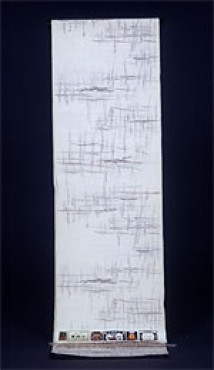
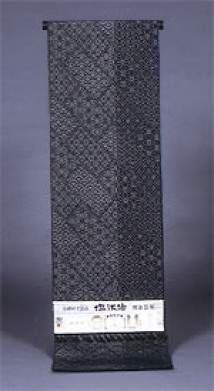
    "Combining cross-patterned and tortoise-shell-patterned ikat, the design is composed of fine ikat patterns known as mosquito ikat." This ikat technique uses traditional hand-tying and hand-printing methods, carefully weaving each warp and weft ikat thread to create the pattern. The fabric has a fine, textured feel, and the delicate weave, characteristic of silk ikat, looks as if it were drawn with the tip of a needle. Not only is the weaving exquisite, but the colors are also carefully chosen, using varying shades of navy blue, with attention paid to the subtle changes in each color. As a result, HON SHIOZAWA (Textiles) ikat possesses a calm and refined elegance.

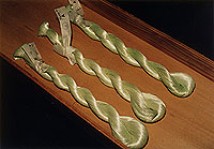
    Raw silk

    The care and attention of the weaver is evident.

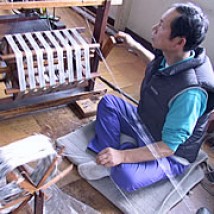
    The weaving equipment used is a loom called a takahata, and this weaving technique inherits the technique of weaving Echigo Jofu, where the person and the thread work together as one. "We carefully adjust the tension of the warp threads. We must not stretch the threads by force, and we weave while matching each warp and weft ikat thread one by one. Furthermore, the weft ground threads of HON SHIOZAWA (Textiles) include right-twisted strong twisted yarn and left-twisted strong twisted yarn, and we must weave them in without mixing them up." You can see the care taken by the people who make HON SHIOZAWA (Textiles).

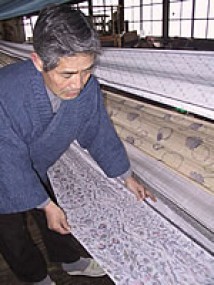
    Mr. Nakajima. He has been involved in this work for about half a century, having started when he was 15 years old.

    The challenge is yet to come.

    Given its long history, which has been refined and passed down through generations, Mr. Nakajima says, "This HON SHIOZAWA (Textiles) technique is incredibly profound, and there's no such thing as 'good enough'." Apparently, he can't seem to produce anything that he's truly satisfied with. Mr. Nakajima is always eager to tackle this technique, which is said to be impossible to revive once it's lost. His words, "I want to keep challenging myself," reveal the sincere attitude of a craftsman towards HON SHIOZAWA (Textiles).

    The work continues carefully, "so that the weavers don't have any trouble."

    Craftsman Profile

    Kiyoshi Nakajima

    I've been involved in the weaving industry for half a century, and I've dedicated myself to this job all this time.

    Anecdotes

    Snow bleaching is like a kimono returning home.

    Snow bleaching is a unique technique that takes advantage of the natural conditions of snow, and it is a characteristic sight of early spring in this region.
    When snow melts and turns into water vapor, it absorbs ultraviolet light, generating ozone. This ozone has sterilizing and bleaching properties, and as it passes through the fabric, it chemically reacts with the dyes in linen, bleaching it. This practice has been carried out since ancient times, even before chemical understanding was widespread, a testament to the wisdom of those who understood the principle.
    Furthermore, if crepe fabric fades or becomes dirty over time, it can be restored to its vibrant color and become beautiful again by being bleached in snow multiple times. While dry cleaning inevitably stiffens the fabric, this snow bleaching process does not have that problem. The crepe fabric, having thus "returned home," is then worn and cherished by its owner for many years to come.

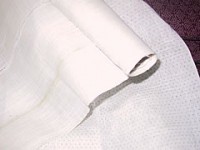
    Textiles before they are cleaned by being bleached in the snow.

    Fabrics that have been repeatedly exposed to snow. Revived while retaining their texture.


overview

Craft item name HON SHIOZAWA (Textiles)
Reading Honshiozawa
Classification of crafts fabric
Main Products Kimono fabric
Main manufacturing area Minamiuonuma City
Designated date December 15, 1976

contact address

■ Production area association

Shiozawa Textile Industry Cooperative
949-6435
107-1 Mekita, Minamiuonuma City, Niigata Prefecture
TEL: 025-782-1127
FAX: 025-782-1128

Features

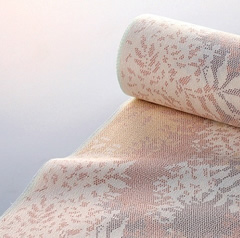
This silk fabric is characterized by its textured surface, achieved by weaving raw silk with a strong twist in the weft threads and then kneading it in hot water. Its smooth feel against the skin and the ikat patterns, composed of cross-shaped and tortoise-shell patterns, are renowned for their elegance and sophistication.

How to make it

This is a plain-weave ikat fabric made with pre-dyed raw silk. The manufacturing process is divided into design, dyeing, ikat weaving, and finishing, but its distinctive features include strongly twisting the weft threads and then kneading the fabric in hot water after weaving to create a crinkled texture.

Please see here for information on traditional craftspeople.

Japanese traditional craftsman
top