HAEBARU Hana-ori (Flower Patterned Textiles)

Okinawa Prefecture

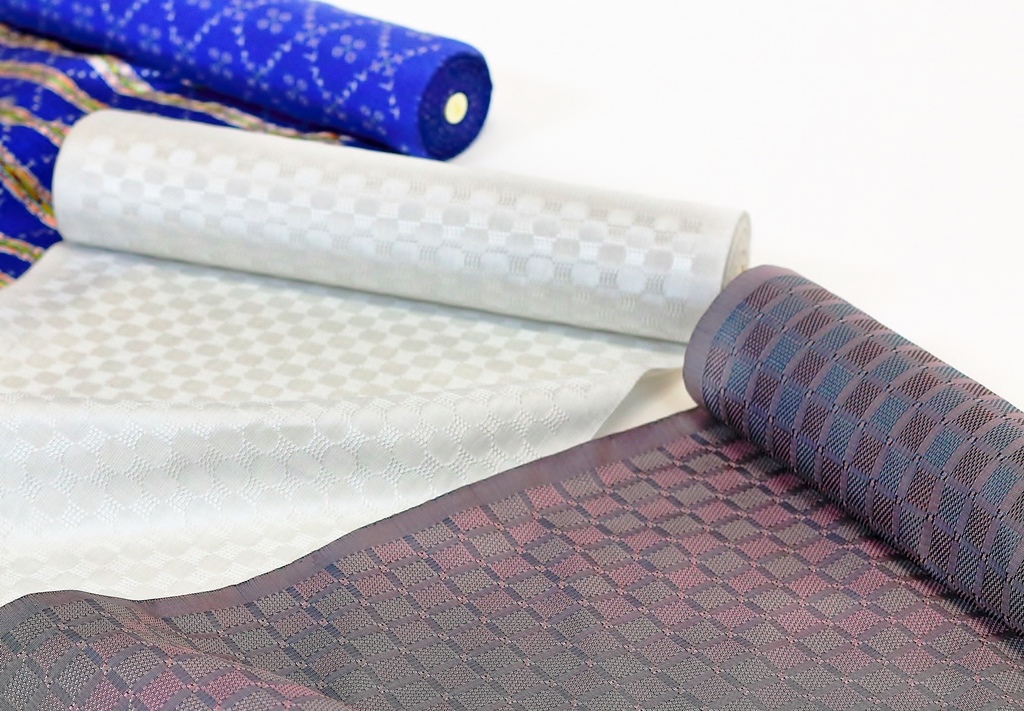
HAEBARU Hana-ori (Flower Patterned Textiles) is a type of textile produced in Haebaru Town, Okinawa Prefecture, since the Meiji era. The beautiful, three-dimensional patterns, resembling flowers and composed of a woven structure, have unique names and designs such as Kwankwan Hanaori, Chip Gasa, and Kiyan Hachimai.
  • Technology/techniques/raw materials

    Technology/techniques

    1. In the case of Haebaru double-sided floating flower weave, the patterned fabric shall be woven using the following techniques or methods.
    (1) The fabric shall be a pre-dyed plain weave or a mixed plain weave and twist weave.
    (2) A hand-thrown shuttle is used to insert the weft threads.
    (3) The crest shall be expressed by partially raising the plain weave threads using the "flower heddle" and "hand-thrown shuttle," and the ro (thin silk gauze) shall be expressed by using the "ro heddle" and "hand-thrown shuttle" or the "flower heddle" in combination.
    (4) When using ikat thread, the dyeing method shall be "picture," "true core," "hand tie," or "hand print."


    2. In the case of Kwankwan Hanaori, the patterned fabric shall be woven using the following techniques or methods.
    (1) The fabric shall be plain weave with pre-dyed yarn.
    (2) A hand-thrown shuttle is used to insert the weft threads.
    (3) The pattern shall be expressed using a "flower heddle" and a "hand-thrown shuttle," and shall be a different pattern system from the weft threads that make up the plain weave.
    (4) When using ikat thread, the dyeing method shall be "picture," "true core," "hand tie," or "hand print."


    3. In the case of chip gasar, it shall be a patterned fabric woven using the following techniques or methods:
    (1) The fabric shall be plain weave with pre-dyed yarn.
    (2) A hand-thrown shuttle is used to insert the weft threads.
    (3) The pattern shall be created using a combination of a "bamboo spatula," "finger," or "flower heddle," and shall be expressed using a pattern system different from that of the weft threads that make up the plain weave.
    (4) When using ikat thread, the dyeing method shall be "picture," "true core," "hand tie," or "hand print."


    4. In the case of Haebaru twill weave, the patterned fabric shall be woven using the following techniques or methods.
    (1) The fabric shall be pre-dyed and twill woven.
    (2) A hand-thrown shuttle is used to insert the weft threads.
    (3) The crest shall be made using "ground heddle".
    (4) When using ikat thread, the dyeing method shall be "picture," "true core," "hand tie," or "hand print."


    raw materials

    The yarn to be used should be silk, cotton, linen, or wool (mainly sheep's wool).

overview

Craft item name HAEBARU Hana-ori (Flower Patterned Textiles)
Reading Haebare hanari
Classification of crafts fabric
Main Products
Main manufacturing area Haebaru Town, Torishiri District, Okinawa Prefecture
Designated date January 26, 2017

contact address

■ Production area association

RYUKYU Kasuri (Ikat) Business Cooperative
〒901-1112
157 Motobu, Haebaru-cho, Shimajiri-gun, Okinawa Prefecture
TEL: 098-889-1634

top