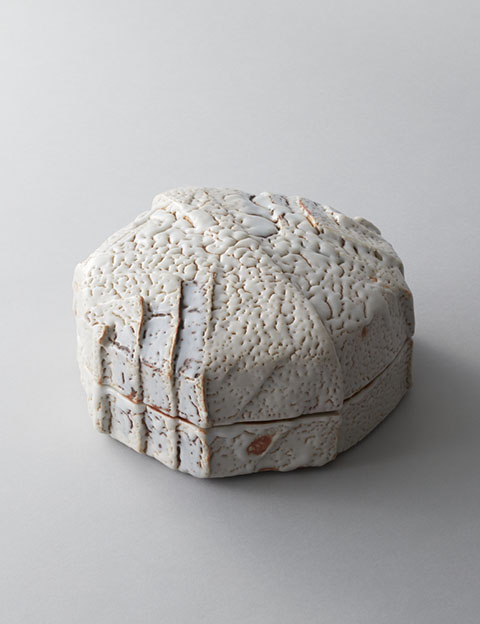
MINO Yaki (Ceramics)

Gifu Prefecture

The history of MINO Yaki (Ceramics) is ancient, dating back more than 1300 years. Initially, the techniques of Sue ware were introduced from the Korean Peninsula. During the Heian period (10th century), pottery with an ash glaze called shirashi began to be produced.
This white porcelain was an improved version of Sue ware, using glaze. Around this time, the number of kilns increased, and the area became a full-fledged pottery production center. From the Azuchi-Momoyama period to the early Edo period, with the rise of the tea ceremony, pottery reflecting the tastes of tea masters was produced.

  • Technology/techniques/raw materials

    Technology/techniques

    1. Molding shall be carried out by the following techniques or methods:
    (1) Made by wheel throwing, slab throwing, mold pressing, or hand twisting.
    (2) In the case of porcelain, in addition to the molding method specified in (1), the body shall be molded by bag casting or "double casting" which involves scraping and wiping the entire surface of the body to ensure that it has properties equivalent to those obtained by the molding method specified in (1).

    2. When decorating the base material, the following methods may be used: carving, comb marks, stamping, chamfering, cloth texture, pasting, Mishima style, brushwork, decorative application, or scraping.

    3. When applying underglaze painting, the method shall be line drawing, smudge painting, "painting," "blown ink," or "printed painting." In this case, the pigments shall be "cobalt blue pigment" or "oniita pigment."

    4. Glazing shall be done by "dipping," "ladling," or "brushing." In this case, the glaze shall be "Shino glaze," "Kiseido glaze," "Oribe glaze," "iron glaze," "Ofukai glaze," "ash glaze," "celadon glaze," or "Mino porcelain glaze."

    5. When applying overglaze decoration, it shall be done by line drawing or "brush painting." In this case, the paints shall be "Japanese pigments."
     

    raw materials

    The clay used for the clay base must be mogusa clay, Mino clay, Kibushi clay, Gairome clay, algae clay, or a material of equivalent quality.

  • Work scene

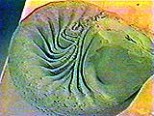
    Process 1: Kneading the soil

    Once the soil has reached a uniform consistency in terms of hardness and moisture, it is then kneaded while rotating it slowly to remove any air bubbles. This process is sometimes called "chrysanthemum kneading" because the resulting texture resembles chrysanthemum petals.

    Step 2: Molding

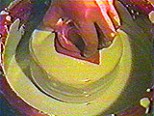
    Techniques include coil building, ball building, slab building, hand-building, and wheel throwing.

    画像をクリックすると動画が再生されます

    工程3: 乾燥

    After shaping and finishing any necessary trimming, the piece is slowly dried in the shade or in direct sunlight before bisque firing. The drying time will vary depending on the size of the piece and the thickness of the clay.

    工程4: 素焼き

    The shaped and dried pieces are fired in a kiln at 700-800 degrees Celsius.
    Firing increases water absorption and strength, making it easier to apply glaze.

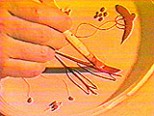
    Step 5: Underglaze painting

    Underglaze painting refers to painting before glazing, that is, painting beneath the glaze.
    You'll start painting with a brush and your favorite colors of paint.

    Process 6: Glazing

    Glazing refers to the process of applying glaze to bisque-fired pottery. This is done to strengthen and decorate the piece. There are various techniques, including dipping, ladle application, and spray application.

    Step 7: Final firing

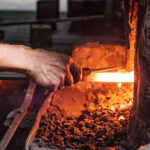
    After glazing, the pieces are fired at high temperatures. The kiln is loaded carefully to ensure a uniform density throughout. There are various types of kilns, including climbing kilns, gas kilns, and electric kilns.

    画像をクリックすると動画が再生されます

    Step 8: Overglaze painting

    Overglaze decoration is a method where, after glazing and firing, pictures or patterns are applied with overglaze paints, and then fired again at 700-800 degrees Celsius.
    You can draw even very fine lines.

    工程9: 完成

    Once firing is complete, you can finish it off by sanding and other finishing touches.


  • Close-up

    Thoughts on MINO Yaki (Ceramics)

    MINO Yaki (Ceramics) with its 400-year history, includes various types such as Shino, Oribe, Kiseido, and Setoguro. We spoke with artisans who have dedicated their lives to the world of pottery, where it's said that "three years of clay preparation and ten years on the potter's wheel" are essential, about their thoughts and aspirations for MINO Yaki (Ceramics).


    Dedicated to pottery

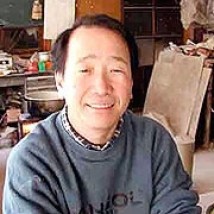
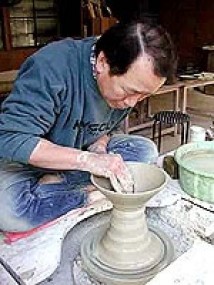
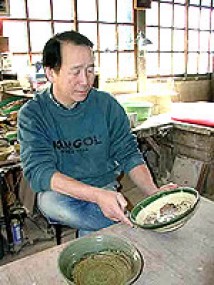
    Kozo Hayashi was born in Toki City, a town known for its pottery. By the time he graduated from junior high school, he thought he would be involved in the ceramics industry. He studied ceramics in high school. "I simply didn't know about other jobs. Later, I did think that I could have done something else," he says, but it seems he had a strong passion for ceramics. "Watching my parents, who made Western-style tableware for export, I felt that I could make something even better." After graduation, he apprenticed under Kohei Kato, who specialized in porcelain. There, he studied Japanese tableware as everyday items for 10 years. At the age of 28, he became independent and set up a workshop in the Gotomaki district of Toki City, where he works to this day.

    Kozo Hayashi was born and raised in Toki City in 1950. He is a traditional craftsman who drinks "Iichiko" shochu from a coffee cup he made himself.

    The warmth of the person who made it remains.

    While the market is flooded with pottery produced in large factories, many people still seek out handmade pottery. When you compare them, there's something subtly different. Many people are drawn to this difference, but what exactly is it? "Perhaps it's because the warmth of the person who made it remains. The makers don't consciously think about it, but because they create the piece from scratch, starting with preparing the clay, that's where the subtle differences come from," says Hayashi. "However, I think that subtle difference depends on how much work they've done in the past. It won't appear in just one or two years." Craftsmen work hard every day to create this subtle difference. Perhaps many people are drawn to handmade pottery because it reflects the past experiences of these craftsmen.

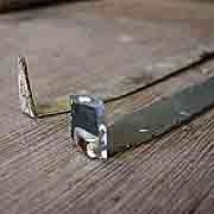
    The one in the foreground is for porcelain, and the one in the back is for shaving clay for pottery.

    I decided to make something even better.

    When Mr. Hayashi entered the world of pottery, it was a time when the production of pottery for export was thriving. Factories were growing in size, and the division of labor was progressing. Mr. Hayashi decided, "I want to learn the entire process, not just the division of labor. And I want to make something better than mass-produced goods." He then learned all aspects of traditional pottery techniques, from preparing the clay and body to painting and firing. Mr. Hayashi's specialty is celadon. "The porcelain I saw during my apprenticeship made a strong impression on me, and I've been committed to porcelain ever since." He also uses Gotomaki clay, which is sourced from the Gotomaki area, to make other types of pottery such as kohiki, oribe, and kurooribe.

    Dishes are meant to be used.

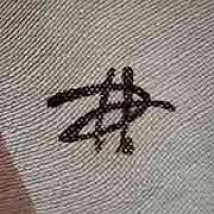
    Products made by Mr. Hayashi are marked with a signature featuring the character "林" (Hayashi). Works submitted to public exhibitions also bear the character "耕" (Ko), from his given name. Mr. Hayashi personally writes each one, ensuring its quality. He says, "I want people to use all kinds of tableware for cooking. You don't need to worry too much about how you use it. Just buy the dishes you like and use them however you like. That way, the food will taste better." Mr. Hayashi himself makes it a daily habit to drink shochu from his own handmade coffee cups. "You'll understand once you use them," he says, narrowing his eyes.

    • The signature is based on the character "林" (Hayashi).

    • Watching the clay transform into the shape of a vessel is endlessly fascinating.

    • "The taste of the food changes depending on the dish it's served in," says Hayashi.

    Anecdotes

    Furuta Oribe, a samurai and tea master

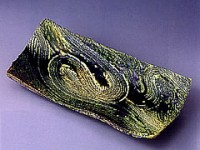
    When it comes to MINO Yaki (Ceramics), the most famous is "Oribe ware." Oribe ware is characterized by its bold, asymmetrical shapes created by deliberate distortion, its innovative geometric patterns, and its striking colors, exemplified by the beautiful green known as Oribe glaze. The name "Oribe" comes from the fact that a man named Furuta Oribe was fond of using this type of pottery.
    So, who exactly was this Furuta Oribe? According to legend, he was both the greatest tea ceremony master in Japan and a warlord during the Sengoku period. He was a leading disciple of Sen no Rikyu in the world of tea ceremony, and as a warlord, he served Nobunaga, Hideyoshi, and Ieyasu. What an extraordinary career!
    Oribe ware first appears in historical records on February 28, 1599. It is recorded that it was used at a tea ceremony hosted by Furuta Oribe. It seems that everyone was surprised when the tea was served in a distorted vessel.
    Currently, February 28th is designated as "Oribe Day." Why not take this day to enjoy a cup of tea in Oribe ware while reflecting on the enigmatic Furuta Oribe?

    • It features bold shapes and innovative geometric patterns.


overview

Craft item name MINO Yaki (Ceramics)
Reading Minoyaki
Classification of crafts Ceramics
Main Products Flower vases, tea utensils, drinking utensils, ornaments
Main manufacturing area Tajimi City, Toki City, Mizunami City, Kani City, Ena City, Mitake Town, Kani District
Designated date July 22, 1978

contact address

■ Production area association

MINO Yaki (Ceramics) Traditional Crafts Cooperative Association
509-5142
1429-8 Kujiri, Izumi-cho, Toki City, Gifu Prefecture
Inside MINO Yaki (Ceramics) Traditional Industry Hall
TEL: 0572-55-5527
FAX: 0572-55-7352

http://www.minoyaki.gr.jp/

Features

There are 15 types of MINO Yaki (Ceramics) designated as traditional crafts. Among them, Shino, Kizeto, Oribe, and Setoguro are particularly important for their color palettes, with their soft, pale colors, the finish of the glaze, and the well-balanced designs being their greatest attractions.

How to make it

The pieces are shaped using techniques such as the potter's wheel, hand-building, and mold making. After that, the clay is decorated by carving patterns or drawing designs with bamboo or metal combs, and then bisque-fired. Once bisque-fired, glazes such as Shino glaze, Kizeto glaze, and Oribe glaze are applied, and then the pieces are fired again. Traditional Japanese pigments are used for the final overglaze decoration.

Please see here for information on traditional craftspeople.

Japanese traditional craftsman
top