HAGI Yaki (Pottery)

Yamaguchi Prefecture

The origins of HAGI Yaki (Pottery) can be traced back 400 years to when Mori Terumoto, who traveled to the Korean Peninsula with Toyotomi Hideyoshi, returned to Japan accompanied by the local potter brothers, Lee Shak-gwang and Lee Gye.
The potters accompanied the Mori clan when they moved their castle to Hagi, and Lee Seok-gwang was permitted to open a kiln in Hagi to fire utensils for the lord. This kiln marked the beginning of HAGI Yaki (Pottery). After Lee Seok-gwang's death, Lee Gye inherited the kiln and received the name "Saka Koraizaemon" from the feudal lord, a name that has been passed down to the present day.
The initial style of HAGI Yaki (Pottery) was based on that of the Joseon Dynasty, but later, styles from Raku ware and other influences were incorporated, resulting in the production of works with a unique character that is characteristic of HAGI Yaki (Pottery) today.

  • Technology/techniques/raw materials

    Technology/techniques

    1. The clay body should be prepared by elutriation.

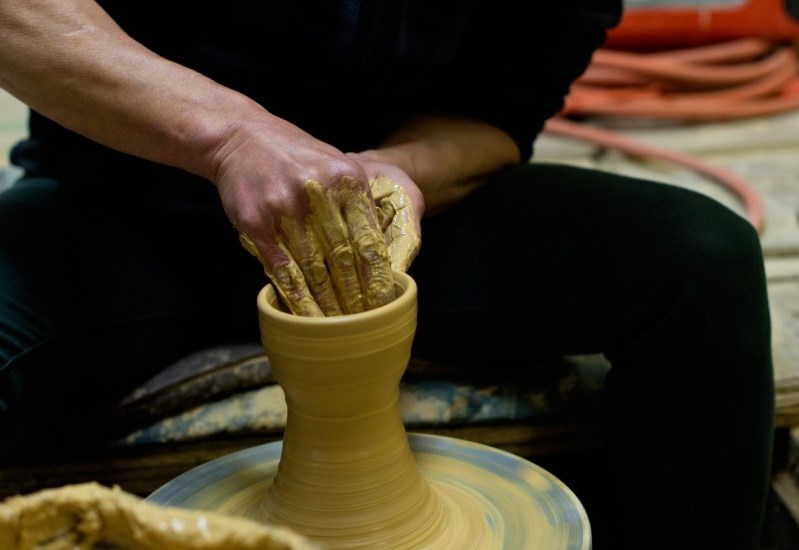
    2. Forming shall be done by pottery wheel forming, hand-building, mold forming, or slab forming.

    3. When applying patterns to the base material, the following methods may be used: glaze application, brushwork, inlay, stamping, carving, and beveling.

    4. Glazing shall be done by "dipping," "ladle glazing," or "spraying." In this case, the glaze shall be "wood ash glaze," "straw ash glaze," or "iron glaze."

    5. Kiln loading shall be done by balancing, stacking, or stacking in sacks.


    raw materials

    The clay used shall be Daido clay, Kinpusan clay, Mishima clay, or clay of equivalent quality.

  • Work scene

    Process 1: Original soil

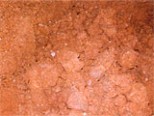
    The basic clays used in HAGI Yaki (Pottery) are Daido clay, Mitake clay, and Mishima clay. These are mixed together to create the clay body used for pottery making. In addition to these three basic types of clay, potters sometimes mix in local clay, known as "jido," from the area where the kiln is located to create a unique clay texture.

    Step 2: Strain the water

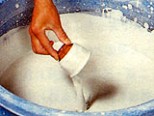
    The raw soil is dried until it turns white and then crushed. The crushed Daido soil and Kinpo soil are mixed together and placed in a water tank, then stirred, and the upper layer of muddy water is transferred to the next tank. At this time, sand and gravel remain at the bottom of the first tank. The same procedure is repeated, transferring the muddy water from tank to tank multiple times.
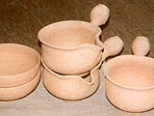
    The soil that has settled at the bottom of the final tank is scooped up, placed in an unglazed pottery bowl, and allowed to dry to a suitable degree to create the clay for pottery. This process is called "water straining."

    Step 3: Stepping on the soil

    Once the excess moisture has evaporated, knead the clay. This process removes air bubbles, makes the clay uniform in consistency, and gives it the appropriate softness.
    In Hagi, a traditional method called "earth treading" is practiced, in which the soil is adjusted by stepping on it with the feet. The soil is placed on a wooden platform and stepped on for several hours. Mishima soil and other local soils are mixed in at this time.

    Step 4: Mixing the soil

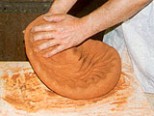
    After the initial "foot-treading" of the clay, the next step is to knead it by hand. This process is called "clay kneading." If this is not done sufficiently, pores, cracks, and distortions may appear in the finished piece. Through "clay kneading," the artist checks the condition of the clay and prepares it for easy shaping. The degree of kneading varies from person to person. It is such an important process for the artist that it is said, "It's difficult to work with clay that someone else has kneaded."

    工程5: 成形

    We create the shape using clay that has already been kneaded.
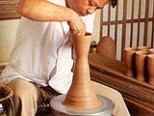
    There are various techniques for shaping pottery, including "wheel shaping," which involves using a potter's wheel to create the form, "hand-building," which involves shaping by hand, as well as "press shaping," which uses a mold, and "slab shaping," which involves shaping clay in the form of a sheet.

    Step 6: Dry in the shade

    Once the shaping is complete, let the finished product air dry in the shade for two or three days.

    Step 7: Finishing (shaving)

    Once some of the moisture has evaporated, use a plane to remove any excess material and refine the shape.
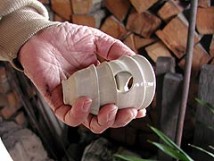
    The foot of the tea bowl is made by placing the piece back on the potter's wheel and using a plane to shave it down while it's rotating. The foot is an important part of HAGI Yaki (Pottery) tea bowls and is considered a key point of appreciation. Even skilled potters take great care in creating the foot.

    Step 8: Finishing (applying the cosmetic coating)

    Once the shaping is complete, a slip made of white clay mixed with water is applied to the still-damp piece. This process is called "decorative coating."
    When a large amount of iron-rich clay, such as Mishima clay, is used in the mixture, the finished product will turn dark, so the surface color is adjusted by applying a "slip coating."

    Process 9: Bisque firing

    After the finished pieces have dried, they are placed in a kiln and fired at a temperature of around 700-800°C for about 15-16 hours. This process is called bisque firing. Bisque firing makes the next step, glazing, easier and prevents the glaze from peeling off during firing.
    When firing bisque pottery, the kiln is fired gradually to prevent the temperature inside from rising too quickly. Controlling the intensity of the fire using firewood is difficult and requires skill.

    Step 10: Glazing

    After bisque firing, glaze is applied to the pieces. Depending on the piece, it may be fired in a state called "raw glazing," where the glaze is applied without bisque firing.
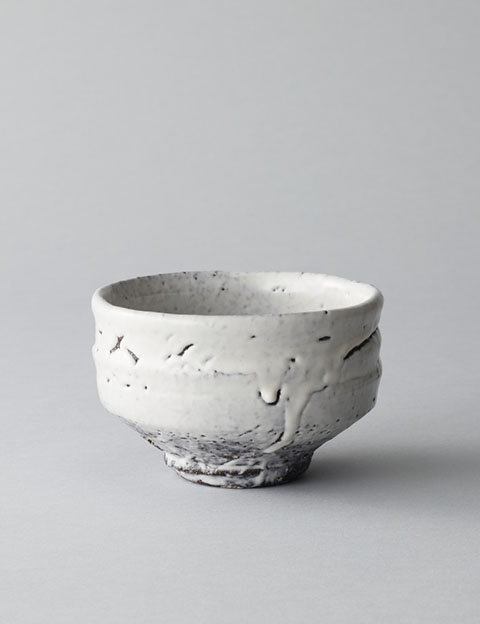
    Glaze transforms into a glassy substance during firing, covering the surface of the piece. Commonly used glazes in HAGI Yaki (Pottery) include ash glaze and straw ash glaze. Ash glaze is a transparent glaze made by mixing feldspar and wood ash. Straw ash glaze is a milky white, opaque glaze made by adding straw ash to the ash glaze materials. White Hagi ware is a representative example of ware that uses straw ash glaze.
    Glazing methods include "dipping," where the piece is immersed in the glaze, and "ladle glazing," where the glaze is poured using a ladle or similar tool.

    Step 11: Kiln loading

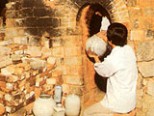
    The glazed pieces are loaded into the firing chambers of the kiln. HAGI Yaki (Pottery) kilns are multi-chambered climbing kilns, with 3 to 5 small firing chambers arranged in a row as if climbing up a mountain slope.
    The traditional method of loading HAGI Yaki (Pottery) kilns is called "balance stacking." In "balance stacking," multiple pieces are placed in a balanced manner on a stand made by placing a circular board on top of a cylinder, and these are stacked in multiple layers to form a tower-like structure for loading the kiln.
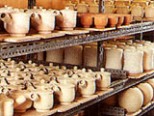
    Besides the "balance stacking" method, other techniques include "shelf stacking," where ceramic tiles are used to create shelves for displaying the works, and "saggar stacking," where the works are placed in containers called saggars and then stacked before firing.
    Once the kiln is loaded, the entrance and exit of the firing chamber used for loading are sealed with mud and bricks, leaving only the opening for throwing in the firewood.

    工程12: 焼成

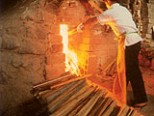
    Once all the entrances and exits to the firing chambers are sealed, the fire is lit sequentially, starting from the bottom chamber. The time it takes to complete the firing varies depending on the number of chambers and weather conditions, but for a five-chamber kiln, it takes about 30 to 40 hours. Finally, the kiln temperature is raised to 1,250 to 1,300°C for firing. The maker cannot leave the kiln during this time.
    Even with the same glaze composition, the resulting color will differ depending on whether the fire is created by frequently adding firewood or by slowly adding it. To achieve the desired color, the craftsman skillfully judges the timing of adding firewood.
    As firewood is continuously added, the flames inside the kiln turn white. This indicates a temperature of approximately 1,250 to 1,300°C. Once the desired temperature is reached, the kilnkeeper, at the right moment, pulls out a firing sample called a "color sample," which has been placed at the back of the kiln, through a small opening to check the degree of glaze melting. The timing of adding firewood and pulling out the "color sample" is all determined by observing the flames inside the kiln. Judging the flames in this way is said to be difficult, even for highly skilled kilnkeepers.
    If the color is satisfactory, stop adding firewood, seal the opening, and extinguish the fire. Leave it like that for a day or two, or even three or four days, and wait for the kiln to cool down naturally.

    工程13: 窯出し

    Once the artwork has cooled sufficiently, the sealed opening is broken, and the artwork is removed.


  • Close-up

    Intertwining techniques of fire and human skill ~ HAGI Yaki (Pottery)

    First Raku, second Hagi, third Karatsu. HAGI Yaki (Pottery) has been cherished as tea ceremony utensils for hundreds of years. What made it suitable for the tea ceremony was the soft texture of the clay and the expressive glaze. These are brought to life by the flames of the kiln. Through experience, the makers learn to control the flames. It is the unity of fire and human skill that creates the unique presence of HAGI Yaki (Pottery).
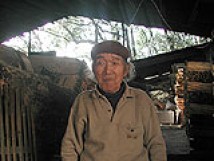
    We visited the kiln of Sanzaemon Kaneda, who has been firing HAGI Yaki (Pottery) for over 60 years, and while continuing his own vigorous production activities, has also trained many apprentices.


    Tea ceremony and HAGI Yaki (Pottery)

    "First, let's have some tea," they said, and served matcha. The fact that matcha was offered so casually as a gesture of hospitality made me realize how close the tea ceremony is to the culture of Hagi.
    Many HAGI Yaki (Pottery) artisans are avid tea ceremony practitioners. It's not uncommon for potters to introduce their craftsmen to masters and send them to learn tea ceremony as part of their work. Through their interaction with the tea ceremony, the artisans themselves became users of the pottery, striving to produce even better pieces. This spirit is still passed down among the artisans today.

    For tea ceremony bowls, not only their appearance but also how they feel in the hand and when used is important. Because they lack unnecessary decoration, the shape and glaze of the bowl determine its presence, and the charm of HAGI Yaki (Pottery) is condensed in these bowls. Among the many shapes of pottery, Mr. Kaneda says, "Of course, tea bowls are the most difficult to make."

    The allure of HAGI Yaki (Pottery) created by flames

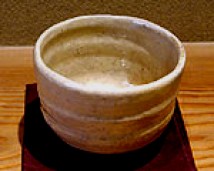
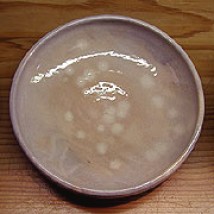
    The subtle glaze variations are one of the great charms of HAGI Yaki (Pottery). The white glaze draped over the gentle skin tone of the pottery, with faint purple hues appearing here and there, creates these color changes caused by kiln transformation. Kiln transformation refers to the reaction that occurs in a way that differs from the usual glaze depending on the conditions of the fire when the pottery is placed in the kiln. The white spots that sometimes appear on the surface of HAGI Yaki (Pottery), resembling the glow of fireflies, are also created by kiln transformation.
    The artisans can intentionally create kiln-fired variations by calculating the placement of their pieces within the kiln during firing. However, not everything goes as planned.
    "Even if you've fired something good in a kiln before, there's no guarantee you'll get the same result next time. On the contrary, unexpected kiln transformations can occur. That's what's so interesting about climbing kilns. Even in the same kiln, the color changes depending on how the fire circulates, and sometimes the shape gets distorted by the heat. But people who know HAGI Yaki (Pottery) appreciate that and buy it," says Kaneda with a smile. The art of the maker truly comes alive when the buyer has the discerning eye to appreciate the exquisite artistry created by the interplay of human skill and the power of fire.
    The allure of HAGI Yaki (Pottery) lies in its creation within the kiln, a place beyond human reach. However, it is human skill that brings the resulting works as close as possible to the artist's intended vision.

    The skill of those who utilize fire

    HAGI Yaki (Pottery) is still often fired in traditional climbing kilns. In addition to climbing kilns, gas kilns and electric kilns are also used. Gas kilns and electric kilns are suitable for consistently producing pieces with the same feel, but works that seek variations due to flames and ash can only be created in a climbing kiln.

    The firing time in a climbing kiln varies depending on the size of the kiln, but at Mr. Kaneda's place, it's generally 24 hours. He stays by the fire the entire time. The temperature is a crucial factor in determining the quality of the pottery. Even when firing pieces with the same clay, shape, and glaze, the way the kiln is fired will change the color and the appearance of the kiln-fired effects.
    In the case of a climbing kiln, the temperature and intensity of the fire are controlled by the thickness and timing of the firewood being added. Mr. Kaneda judges this by the color of the flames. It is a task where he relies solely on his own eyes.
    How much experience does it take to be able to discern the difference? To this question, Mr. Kaneda laughs and repeats, "Not yet, not yet." Even a veteran with 60 years of experience in this field says he still hasn't fully grasped the intricacies of climbing kilns.

    This is a sample called a "color sample." Once the color of the flame has been determined, the color sample is pulled out through a small window on the side of the kiln to check the firing process. If it is satisfactory, the firing process is finished.

    The next generation will create their own works.

    At Mr. Kaneda's Tenchozan kiln, his son, Masanao, also creates pottery. The works by Masanao displayed in the gallery are quite different in style from those of Mr. Kaneda.
    "I try not to say too much, telling my son that he has his own way of doing things." Even if Mr. Kaneda thinks that Masanao's way is different from his own, he doesn't say it out loud. He says that it's the same for every pottery workshop when it comes to their successors. "Sometimes, when it's finished, I think, 'That's good.' But I don't say that to him," Mr. Kaneda says, looking somewhat pleased.
    HAGI Yaki (Pottery) has been sensitive to the trends of the times since its inception. To keep pace with Edo, it quickly adopted the latest trends and changed its style accordingly. Among the popular forms of each era, those that survived have been passed down as tradition to the present day.
    Mr. Kaneda laughs and says, "I'm the one who needs to learn from my son." It was a comment that made me realize that Mr. Kaneda is also one of the artisans of HAGI Yaki (Pottery), which continues to evolve with the times.

    Craftsman Profile

    Kaneda Sanzaemon

    Born in 1920 (Taisho 9). In 1940 (Showa 15), he studied under Reishu Yamagata and his uncle, Tokuzo Kaneda, the fifth-generation head of the Tenchozan Kiln. Since his first acceptance into the Issuikai Exhibition in 1973 (Showa 48), he has been selected for and won numerous awards at various craft exhibitions, including the Japan Traditional Crafts Exhibition.

    Recipient of the Hagi City Cultural Encouragement Award, the Hagi City Industrial Merit Award, and the Yamaguchi Prefecture Selection Award.

    Full member of the Japan Crafts Association, Member of the Hagi Ceramic Artists Association

    Anecdotes


    A fresh, clear-colored tea bowl transforms into a calm, subdued-looking bowl after years of use. Those familiar with pottery refer to this beautiful aging process of HAGI Yaki (Pottery) as "the seven transformations of Hagi."

    HAGI Yaki (Pottery) tea bowls are made from a clay with a rough, earthy texture. This earthy texture is one of the charms of HAGI Yaki (Pottery), but because it is permeable, tea, sake, and other liquids easily seep in through the fine cracks called crazing in the glaze. This is why the glaze changes over time with prolonged use.

    The colors left behind by seeped-in tea liquids can accentuate the crackling pattern, making it appear like a background design, or create interesting color stains.

    The way the color soaks into the bowl varies greatly depending on how the user handles it. Before using it, soak the bowl thoroughly with water, and after use, wash it well by hand and let it air dry completely. While these basic precautions are important, the key to improving its texture is to keep using it. "No matter how fine a tea bowl is, if you cherish it too much and don't use it, it will die," as the saying goes.

    By properly caring for and using it for a long time, HAGI Yaki (Pottery) will allow you to enjoy not just seven, but an infinite number of changing expressions.


overview

Craft item name HAGI Yaki (Pottery)
Reading Hagiyaki
Classification of crafts Ceramics
Main Products Tea sets, vases, tableware, decorative items
Main manufacturing area Hagi City, Nagato City, Yamaguchi City, Abu Town, Abu District
Designated date January 30, 2002

contact address

■ Production area association

Hagi Ceramic Artists Association
758-8555
510 Emukai, Hagi City, Yamaguchi Prefecture
Hagi City Commerce and Industry Policy Department, Commerce and Industry Promotion Division HAGI Yaki (Pottery) and Ceramics Section
TEL: 0838-25-3638
FAX: 0838-25-3420

https://hagi-tougei.com/

■ Visits to production areas from overseas
image
HAGI Yaki (Pottery)- A visit to the production area

Features

The defining characteristics of HAGI Yaki (Pottery) are its soft, less-fired clay texture and high water absorption. Due to its high water absorption, tea and sake permeate the clay over time, changing the color of the tea bowl. This change is cherished by tea ceremony enthusiasts and is known as "tea aging." Other characteristics include the simplicity of its shape and decoration. In most cases, no painting is done. The clay mixture, the application of the glaze, and the spatula marks are all carefully considered to create various expressions through the firing process of the climbing kiln, and are crafted to bring out the unique charm of the piece.

How to make it

Based on Daido clay and Kinpo clay, the clay used for pottery is mixed with Mishima clay and local clay called Jido. For shaping, techniques such as the potter's wheel, hand building, mold making, and slab building are used. Works created using these techniques are then finished with slip coating, inlay, carving, etc., and then bisque-fired. After bisque firing, glazing is performed. Transparent or white glaze is used, and after glazing, the pieces are fired in a climbing kiln, electric kiln, gas kiln, etc. The parts of the glaze that come into contact with the flame in the kiln change in appearance, and this change is called "kiln transformation."

Please see here for information on traditional craftspeople.

Japanese traditional craftsman
top