AGANO Yaki (Pottery)

Fukuoka Prefecture

It all began in the early 17th century (1602) when Hosokawa Tadaoki became the lord of the Kokura domain. He invited Korean potters and had his family build a climbing kiln in Ueno, which is where it all started.
Tadaoki was a daimyo who received direct instruction from Sen no Rikyu and mastered the secrets of the tea ceremony. It is said that this kiln produced elegant works that met Tadaoki's standards. Later, as a domain kiln, it produced many tea utensils that suited the tastes of Kobori Enshu, a famous tea master of the time, and is counted as one of the seven kilns of Enshu.

  • Technology/techniques/raw materials

    Technology/techniques

    1. The molding process shall be carried out by wheel throwing, hammering, slab throwing, hand twisting, or press molding.

    2. When applying patterns to the base material, the following methods may be used: decorative coating, brushwork, spatula work, carving, comb work, hammering, inlay, stamping, openwork, or wood grain.

    3. When decorating, the underglaze should be hand-painted. In this case, the pigment should be either oniita (a type of lacquerware) or gosu (a type of cobalt blue).

    4. Glazing shall be done by dipping, ladle application, or layering. In this case, the glaze shall be "feldspar glaze," "straw ash glaze," "wood ash glaze," "copper glaze," "amber glaze," "yellow glaze," "black glaze," or "perilla glaze."
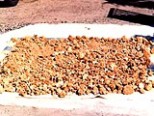
     

    raw materials

    The clay to be used must be "Ueno clay".

  • Work scene

    Step 1: Excavating the raw soil

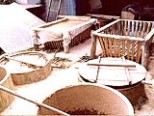
    Clay suitable for pottery can be found on Ueno Hill. Traditional craftspeople walk around the mountains searching for high-quality clay. The collected clay is then dried.

    Step 2: Crushing (turning the soil into powder)

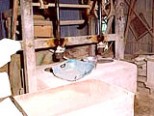
    The extracted clay is crushed into small pieces by factory machinery. The finely crushed clay is then sieved to extract only the high-quality clay. The larger soil particles remaining in the sieve are discarded.

    Step 3: Straining the soil (put the soil in water and strain it)

    High-quality clay is transported to a water tank and mixed with water. The water is filtered again to select fine-grained clay suitable for pottery. The clay is then sucked up by machine, the water is squeezed out, and it is left to dry slightly.

    Step 4: Mixing the clay (using a machine)

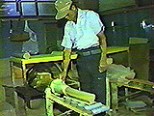
    Once the clay has formed into a square lump, it is then transformed into a cylindrical shape using a machine. This is where the clay is made.

    Step 5: Hand kneading (knead by hand once more)

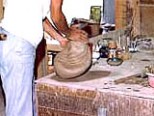
    After kneading the clay with a machine and letting it rest for a while, the clay is thoroughly kneaded to remove the air. This is a very difficult task that requires effort and experience.

    Step 6: Shaping (shaping on a potter's wheel)

    Once the air has been removed from the clay, it is placed on the potter's wheel, and skilled artisans can freely manipulate it. After the shape is formed, tools are used to trim and smooth it for the finishing touches.

    画像をクリックすると動画が再生されます

    Step 7: Partial drying (to partially dry), finishing, drying

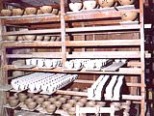
    Once the shape is formed, let it dry until it's semi-dry. Once dry, trim the back to finish it. If it's nicely finished, leave it to dry completely for a few days.

    Step 8: Bisque firing

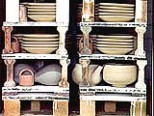
    Once completely dry, the pieces are placed in a kiln. This is called bisque firing, and it is done to make it easier for the glaze to adhere and to ensure good color development during the final firing. The pieces are packed tightly into the kiln and fired for about 5 to 6 hours. The firing temperature is around 800 to 850 degrees Celsius. Even if the pieces are beautifully fired, if the craftsman is not satisfied, they may be broken on the spot.

    Step 9: Glazing

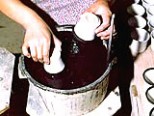
    The pieces that pass the test are then coated with a glaze. The glaze is made from materials such as straw ash and iron oxide found in mountain soil. The glaze gives the pottery a glassy texture and brings out its beautiful colors. AGANO Yaki (Pottery) is said to be the magic of fire, created by the combination of clay and glaze.

    Step 10: Final firing

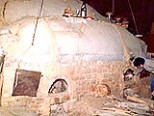
    Once preparations are complete, it's time for the final firing. There are two types of kilns used for the final firing: wood-fired kilns and gas kilns. In gas kilns, the pieces are fired for about 10 hours before being removed from the kiln. AGANO Yaki (Pottery) takes many days from digging the raw clay to the final firing to produce truly beautiful products.


  • Close-up

    The art of masterful craftsmanship and fiery artistry: AGANO Yaki (Pottery)

    Agano pottery is a testament to the masterful skills of artisans, where clay and glaze become one, and are brought to life by the flames in the kiln. The quietly sitting vessels invite the viewer into a world of refinement, wabi, and sabi.


    AGANO Yaki (Pottery) originated from the tea ceremony.

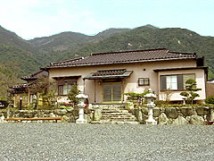
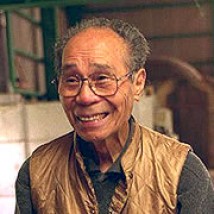
    Takata Kiln, run by Takata Kozan, a traditional craftsman of AGANO Yaki (Pottery), is located in a tranquil mountain valley at the foot of Mount Fukuchi. Among AGANO Yaki (Pottery) kilns, which have a history dating back to Lord Hosokawa Tadaoki of the Buzen Kokura Domain (370,000 koku) and have inherited the etiquette of the Ogasawara family, Takata Kiln is designated by the Ogasawara family and is visited by tea masters throughout the year.
    Even those who are not tea connoisseurs will immediately notice, upon visiting Ms. Takada's room, how surprisingly light the teacup is compared to its solid, earthy texture. The artist's dedication poured into each piece draws the viewer into the world of tea ceremony and etiquette. After spending some time admiring the various sizes of pottery, one is sure to find themselves unable to tear themselves away from the allure of AGANO Yaki (Pottery).

    Takada Kiln is located in the tranquil mountainous area of Mt. Fukuchi.

    Clay and glaze

    Born in 1923, Mr. Takada returned to Japan after the war and entered the world of AGANO Yaki (Pottery). Initially, he thought he would only help out for three years until he found a job, but after 10 years, he became independent in 1955. His work gained recognition, and he currently serves as the chairman of AGANO Yaki (Pottery) Traditional Craftsmen's Association.
    The foundation of pottery making is said to be "finding the right clay." By changing the glaze mixture, variations of AGANO Yaki (Pottery) can be created. High-quality clay, along with the iron glaze, copper glaze, and ash glaze made from burnt straw used in the glaze, are the foundation that creates the beauty of AGANO Yaki (Pottery) through the skill of the master craftsman.
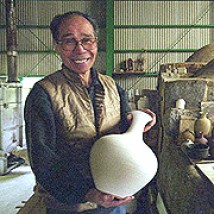
    Takada spares no effort in walking around everywhere to find good clay and iron to use as a base for glaze. "My heart leaps when I find a black layer of iron oxide in the gaps of the clay. Sometimes I find unexpected treasures, and sometimes the finished product turns out to be surprisingly uninteresting after firing. It's all a gift from nature," says Takada.

    • Takata Kozan

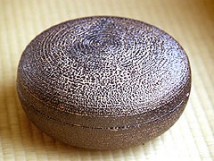
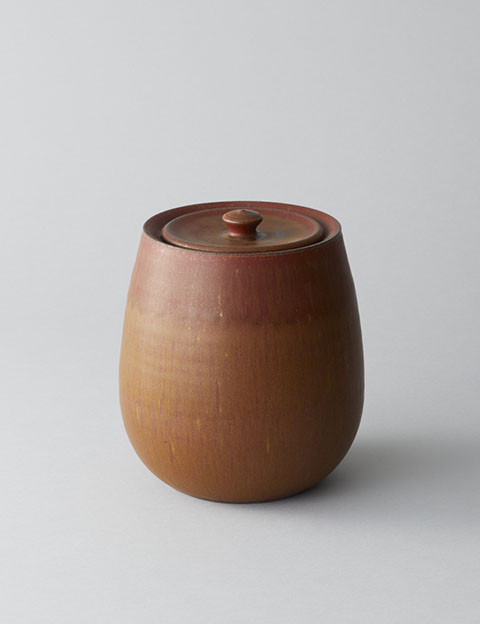
    • Insect-eaten glazed food container, exhibited at the Japan-Thailand-China Hundred Artists Exhibition. The glaze paints intricate patterns along the smoothly swirling marks left by the potter's wheel.

    Masterful craftsmanship and fire create works of art.

    AGANO Yaki (Pottery) does not use molds. The craftsmanship, honed over many years of training, shapes the pieces on a kick wheel, and the glaze and firing process bring out elegance and the wabi-sabi aesthetic.
    The kiln firing season is winter. The temperature rises more easily and the fire becomes more intense during the cold months of November and December. In summer, the temperature may not rise as expected. It is said that failures are less likely in winter.
    Once the firing begins, Takada stays by the kiln's side for two full days. He gobbles down rice balls that have been brought to him, takes short naps, and monitors the situation while feeling the heat on his body. When blisters appear on his face from the heat, he pushes the firing to the limit.

    The magic of kiln transformation

    There are two methods of firing: reduction firing, where firewood is added while the flames are still burning, and oxidation firing, which uses the power of embers to fire the wood over a longer period of time.
    Reduction firing is difficult, and even an artist of Takada's caliber often fails. He uses a truckload of firewood that he has brought all the way from Yamaguchi, and he still uses this method despite the risk of failure, because sometimes the glaze and flame create unimaginably beautiful colors and patterns.
    In the past, he fired his kiln three to four times a year in search of a kiln transformation that could be considered accidental. Now, it's only once a year. When his meticulously crafted pieces are fired to his satisfaction, Takada describes it as "the god of fire has come."

    They stake their kiln firing efforts on achieving the kind of kiln-fired variations that appeal to connoisseurs.

    Recent changes in AGANO Yaki (Pottery)

    When Mr. Takada began his apprenticeship around 1946, it was the impoverished post-war era. Food was the priority, and there was no place for pottery, which was considered a luxury item. Around 1970-1980, with the rapid economic growth, the situation changed dramatically, and customers began to compete to buy pottery. Glazes and clay became easily available, and the number of kilns in Buzen-Agano, which was only three at the time, has now increased to 28. Customers began to buy pottery simply because it bore the name Agano.
    However, Mr. Takada dares to offer some harsh criticism of the current situation. To master the traditional techniques, apprenticeship takes at least three years. It is during this apprenticeship that one develops as a person. Only after being recognized by a master and receiving permission to put up a sign after 10 years is one finally considered a full-fledged artist. And so, the artist dedicates their life to expressing the spirit of 400 years of AGANO Yaki (Pottery) vessels. "It shouldn't be so easy to put up a sign as a kiln owner. Nowadays, if you can do a certain amount, you can become a kiln owner. Young people use purchased materials. This cannot be called tradition. Society needs to be stricter." The words of Mr. Takada, who became a first-class artist through hardship, resonated with the dignified beauty of AGANO Yaki (Pottery).

    At Takada Kiln

    Anecdotes

    Tea ceremony, etiquette, and AGANO Yaki (Pottery)

    AGANO Yaki (Pottery), which originated with the Hosokawa lord of the Buzen Kokura Domain (370,000 koku) and was known for his love of the tea ceremony, flourished as the domain's official kiln. The tea master Kobori Enshu combined the ideals of 17th-century imperial culture with the tea ceremony, creating a tea ceremony of "kirei-sabi," characterized by its profound and heartfelt beauty. He left a great legacy in guiding the production of tea ceramics in various regions, including Ueno, Tanba, Shigaraki, and Takatori, and the tea ceramic production areas associated with Enshu came to be known as the "Seven Kilns of Enshu." Even after the Hosokawa lord was transferred to Kumamoto and the Ogasawara Tadazane took over, AGANO Yaki (Pottery) continues to convey the spirit of Japanese culture through the meticulously crafted works of artisans, while carefully preserving the etiquette of the Ogasawara family, which is said to be synonymous with "etiquette."

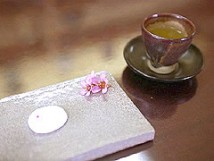
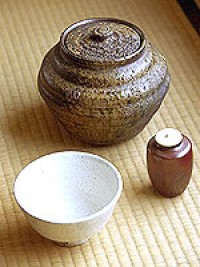
    • Three teas

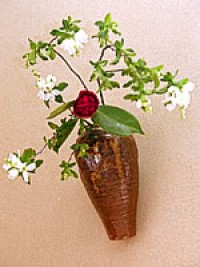
    • Flower arrangements, wall hangings


overview

Craft item name AGANO Yaki (Pottery)
Reading Aganoyaki
Classification of crafts Ceramics
Main Products Tea sets, sake sets, flower vases, drinking utensils, incense burners, decorative items
Main manufacturing area Fukuchi Town, Tagawa District
Designated date April 27, 1983

contact address

■ Production area association

AGANO Yaki (Pottery) Cooperative
822-1102
2811 Ueno, Fukuchi-machi, Tagawa-gun, Fukuoka Prefecture
Ueno no Sato Fureai Exchange Hall
TEL: 0947-28-5864
FAX: 0947-28-5864

https://www.aganoyaki-fukuchi.com/

Features

You can enjoy various aspects of pottery, such as color development, glaze flow, texture, sheen, and kiln changes. Painting is rarely done; the focus is mainly on glazing. As it developed as tea ceremony pottery, it is characterized by many thin, beautiful pieces.

How to make it

There are various shaping techniques, including the potter's wheel, hammering, hand-building, slab building, and mold making, but the potter's wheel is the most common. When applying patterns to the base material, techniques such as slip application, brushwork, spatula marks, carving, and comb marks are used. When painting, since the pieces are often thin, they are first bisque-fired, then painted, and finally fired again at around 1200 degrees Celsius to complete the process.

Please see here for information on traditional craftspeople.

Japanese traditional craftsman
top