IMARI-ARITA Yaki (Porcelain)

Saga Prefecture

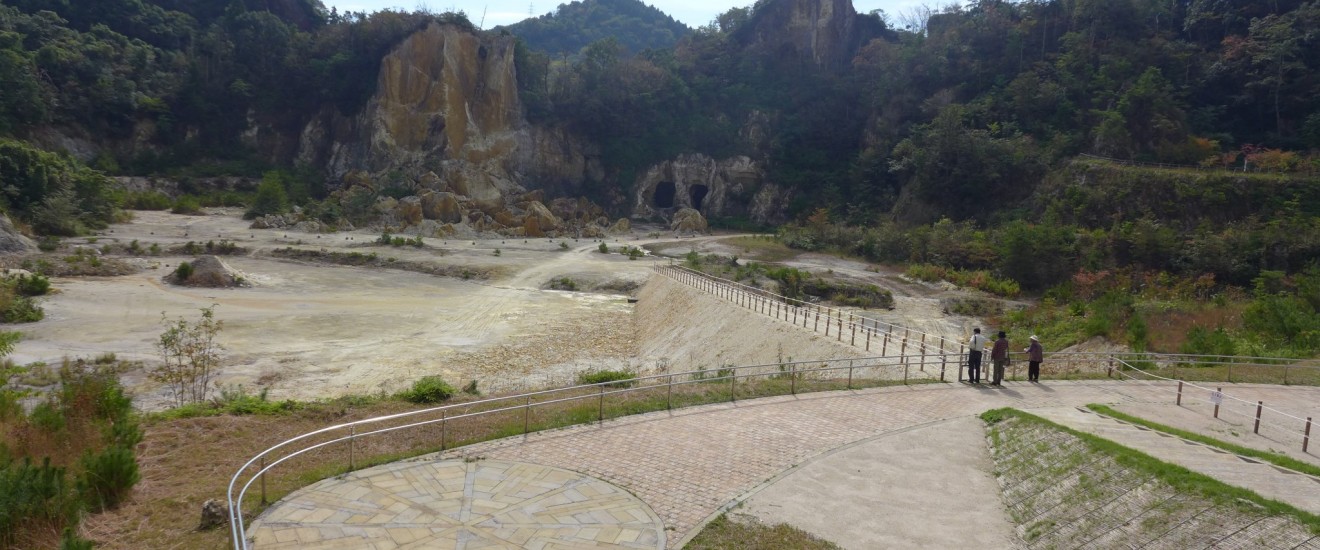
The history of IMARI-ARITA Yaki (Porcelain) began at the end of the 16th century when the lord of the Saga domain, who had participated in Toyotomi Hideyoshi's invasion of Korea, brought back a potter named Lee Sam-pyeong from Korea. This potter discovered kaolin, the raw material for porcelain, at Izumiyama in Arita.
It is said that the pottery fired at this time was the first porcelain produced in Japan.
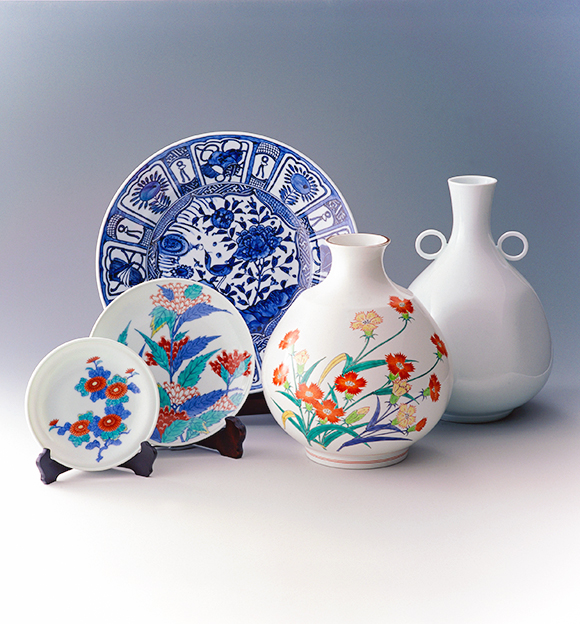
The porcelain currently known as IMARI-ARITA Yaki (Porcelain) was also called Imari ware because Imari Port was the port from which it was shipped at the time. There are various styles, from underglaze blue decoration to brightly colored overglaze decoration. The styles include Ko-Imari, Kakiemon, Kinrande, and Nabeshima, and the Kakiemon and Ko-Imari styles in particular captivated Europeans with their beauty. IMARI-ARITA Yaki (Porcelain) were exported in large quantities through the Dutch trading post during the Edo period.

  • Technology/techniques/raw materials

    Technology/techniques

    1. The molding shall be done by wheel-throwing, press molding, stamping, hand-twisting, or by bag-casting or "double-casting" which involves scraping and finishing the entire surface of the base material so that it has properties equivalent to those obtained by these molding methods.

    2. When decorating the base material, the following methods may be used: carving, combing, slip trailing, chamfering, pasting, raised decoration, plane carving, weaving, firefly pattern, cloth pattern, stamping, or decorative application.

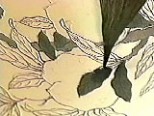
    3. When applying underglaze decoration, the following methods may be used: line drawing, smearing, application, blown ink, brush strokes, ink splatter, scraping, or cloth texture. In this case, the pigments used shall be "cobalt blue pigment," "underglaze red," or "rust pigment."

    4. Glazing shall be done by dipping, pouring, or brushing. In this case, the glaze shall be "lime glaze," "oak ash glaze," "celadon glaze," "iron glaze," or "lapis lazuli glaze."

    5. When applying overglaze decoration, the method shall be line drawing, smearing, brushwork, lacquer sprinkling, or gold leaf application. In this case, the paints shall be "Japanese pigments" or "gold and silver pigments."
     

    raw materials

    1. The pottery stone used for the clay layer shall be Amakusa pottery stone, Izumiyama pottery stone, or a material of equivalent quality.

    2. The ceramic stone used for the celadon glaze shall be Izumiyama celadon, Okawachi celadon, or a material of equivalent quality.

    3. The foil shall be gold or silver foil.

  • Work scene

    Like other ceramics, Arita ware is made following the process of clay preparation → shaping → finishing and drying → bisque firing → underglaze painting → glazing → main firing → overglaze painting → overglaze firing. In the case of IMARI-ARITA Yaki (Porcelain), these processes are mostly divided and carried out by highly skilled craftsmen.

    Process 1: Earthwork

    Izumiyama pottery stone and Amakusa pottery stone are mined through open-cut and tunnel excavation, and the pottery stone is sorted. The pottery stone is crushed and further ground into a fine powder. Elushing (a process that separates soil particles into groups of different sizes by utilizing the fact that soil particles of different sizes settle at different rates in water) increases the viscosity and removes impurities such as iron and silica from the pottery stone. To create clay that is easy to mold, excess water is removed to create pottery clay of the appropriate hardness.

    工程2: 成形

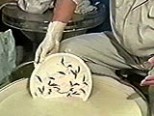
    The clay is kneaded to homogenize the particles and moisture content of the clay and to completely eliminate air bubbles. If this process is insufficient, it can cause cracks and distortions after shaping. There are various methods of shaping, including wheel throwing, slip casting, machine wheel throwing, and roller machine throwing.

    画像をクリックすると動画が再生されます

    Step 3: Finishing and Drying

    The partially dried molded pieces are then given their final shape. Depending on the product, this may involve trimming the base, trimming the outside, creating the knob, and finishing the rim. Furthermore, to ensure smooth processing during the painting and glazing stages, the surface of the vessel is carefully wiped with a damp cloth to make it smooth. Rapid drying of raw products can cause cracks and distortions during shrinkage. The products are then arranged on a plate and require drying according to their type, such as air drying in the shade or sun drying.

    Process 4: Bisque firing

    To prevent damage to the pottery and kiln equipment, the kiln temperature is gradually increased, and firing takes place at approximately 850-950 degrees Celsius. During cooling, the pieces are also cooled gradually to prevent damage due to sudden temperature changes. The finished products are then removed from the kiln and sorted.

    Step 5: Underpainting

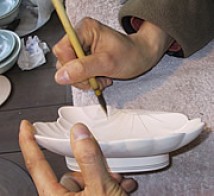
    Mixing and blending paints is one of the most important tasks for a ceramic painter. There are paints for line drawing (the outlines of the patterns) and underglaze paints (the shades of underglaze within the line drawings), which are prepared by grinding them in a mortar and pestle. For underglaze painting, cobalt oxide is the main component and is often used. Painting requires considerable skill because it is done directly on the surface of the unglazed pottery with a brush. It is even said that the quality of the finished product is determined by the brushwork and technique used for the line drawing. The underglaze painting technique is also performed in this process.

    Process 6: Glazing

    Glaze is a thin, glassy substance that covers the surface of ceramics, and is made by refining feldspar, limestone, silica, oak ash, etc. Small pieces are immersed in a well-mixed glaze bath. Larger pieces are glazed by pouring or spraying the glaze from above using a tool called a chopper. The glazed surface is then leveled to ensure an even finish. The glaze on the base is scraped or wiped off to prevent it from sticking to the kiln shelves during the final firing.

    Step 7: Final firing

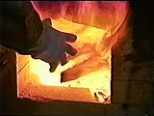
    The firing process brings out the beauty of white porcelain by allowing it to mature and become porcelain. The temperature is raised to approximately 1300 degrees Celsius through various firing methods such as roasting, firing, and flicking.
    Products that are ready to be made after firing include white porcelain, underglaze blue, celadon, and lapis lazuli, while others undergo an overglaze painting process.

    Process 8: Overglaze

    For overglaze decoration, many pigments are prepared, including red, yellow, green, black, gold, and silver. Overglaze decoration involves painting on the glaze with these pigments, and it is a combination of outlining the design and applying the paint in a smear. After painting, the pottery is fired at a low temperature of 760-830 degrees Celsius to ensure the paint adheres well. The finished product, including the overglaze decoration, is called overglaze (red painting) or dyed brocade. After that, it is sorted and shipped.

    画像をクリックすると動画が再生されます

  • Close-up

    Entrusting pure feelings to pottery ~ IMARI-ARITA Yaki (Porcelain)

    With its translucent, beautiful white hues and clear, metallic sound, Arita ware is considered the most noble of all ceramics, the highest quality achievable in pottery. We spoke to a young underglaze painter working at "Shin-gama," a pottery studio that is particular about hand-painted designs, to learn about its allure.


    The emotion of the moment that decided your life

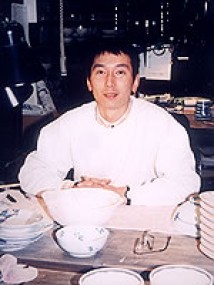
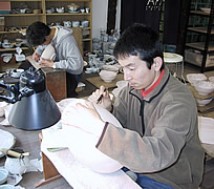
    Hiroyuki Hashiguchi, a craftsman at Shin-gama pottery studio, is the youngest of the Arita traditional craftspeople. We asked him why he chose this profession. "I remember it very well. I think I was in the fifth grade of elementary school. We had a pottery class and I made a vase. I was so impressed when the clay-colored vase changed into a beautiful green and white after I applied glaze and fired it. That piece was selected for a children's art exhibition, and I became interested in the idea of my designs taking shape and the joy of being recognized. I graduated from the design department of Arita Technical High School, and I decided on my current workplace because I was attracted to its commitment to hand-painting."

    Hashiguchi-san maintained a gentle smile throughout.

    The vessel is a testament to teamwork.

    Pottery production involves many steps: digging the clay, kneading the clay, using the potter's wheel, painting, and firing. The painting process that Mr. Hashiguchi is involved in is only a small part of the Arita ware production process. That's why he believes that a wonderful piece cannot be created without gratitude for all the people and things involved in each stage. "I've grown through friendly competition with those who create the forms and those who fire the pottery. I was thrilled when my work was selected for a pottery exhibition, and it's encouraging when customers buy my pieces and cherish them. I find the charm of this work in the way that dialogue is born around the pottery itself."

    The character is a reflection of the person.

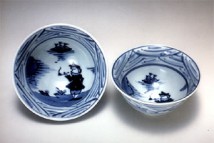
    Shin-gama pottery studio produces tableware featuring a figurine called "Red-Haired Man." The artist's emotions are said to be reflected in the figurine's expression. "When you experience sadness, pain, or suffering, those feelings come through directly. Unless you maintain a calm and peaceful state of mind, you cannot create expressive, vibrant lines."
    Expressive lines are those that are thin yet powerful. "The works of Fujii (Yoshiji, a traditional craftsman working at Shin-gama), whom I look up to, have both power and delicacy. In comparison, I feel that what I make is rigid. I still have a long way to go in terms of composition, the movement of lines, design that takes into account the consumer's feelings and the purchase price, and the overall manufacturing process."

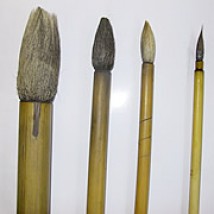
    • Brushes of various thicknesses are used for painting.

    • The artist's feelings are reflected in the expressions of the red-haired characters.

    I'm finally starting to see who I really am.

    Hashiguchi, who has been working as a craftsman doing underglaze painting for 18 years, says, "I've finally come to understand the path I want to take and what makes me unique. Because my work has delicate lines, people often ask me, 'Was this made by a woman?' They also say, 'It's cute,' and 'It's gentle,' which I'm very happy to hear. After all, those are compliments when used to describe a person."
    Recently, she's been involved in many projects that put her abilities to the test. "Every time I work on something for a pottery exhibition or a large-scale piece, I feel like I'm overcoming a huge mountain. I think the most important thing in all of that is humility and a sincere attitude."

    I'm working on a draft for a major project. Fujii-san is next to me.

    Works that allow people to communicate through vessels.

    Hashiguchi says he has many dreams. "Firstly, from the company's perspective, I'd like to see around 100 people moving around inside and outside the factory. And personally, I want to hone my skills. I've finally come to understand what I like and what kind of world I love, but I'm embarrassed to say that it's still vague and I can't see a concrete form yet. However, I'm looking forward to it becoming clearer through my work and conversations with customers."
    My goal is to create tableware that allows people to communicate through it, that allows pure feelings to be entrusted to the vessel and conveyed to others. Whether large or small, or unconventional, I want to create tableware that brings joy to people, tableware that makes the atmosphere around it feel more refined, tableware that makes people say, "The food looked so much better and tasted delicious when served on this plate."

    • Hashiguchi's hands skillfully draw delicate lines.

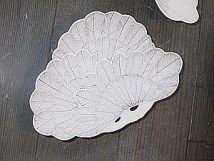
    • The finished work is delicate and beautiful.

    Craftsman Profile

    Hiroyuki Hashiguchi

    After graduating from the local Arita Technical High School, he worked as an underglaze painter at Shin-gama pottery workshop.


overview

Craft item name IMARI-ARITA Yaki (Porcelain)
Reading Imari Arita-yaki
Classification of crafts Ceramics
Main Products Japanese and Western tableware, decorative items
Main manufacturing area Imari City, Takeo City, Ureshino City, Arita Town, Nishimatsuura District
Designated date October 14, 1977

contact address

■ Production area association

Saga Prefecture Ceramic Industry Cooperative Association
844-0026
1217 Hei, Sotoomachi, Arita-cho, Nishimatsuura-gun, Saga Prefecture
TEL: 0955-42-3164
FAX: 0955-43-2917

https://www.aritayaki.or.jp/

Features

IMARI-ARITA Yaki (Porcelain) ware are characterized by their beautiful white porcelain surface, vibrant painted designs, and ease of use and durability as tableware.

How to make it

The pottery stone is crushed into a powder, and water is added to make clay. This clay is then used to shape the pieces using a potter's wheel or molds, and they are bisque-fired at a low temperature. Underglaze decoration is applied with paints, a glaze is applied to the surface, and the pieces are fired in a kiln at a high temperature of around 1300 degrees Celsius. When applying multi-colored decoration, the overglaze is painted on the fired pieces and fired again.

Please see here for information on traditional craftspeople.

Japanese traditional craftsman
top