SHODAI Yaki (Pottery)

Kumamoto Prefecture

It is said that in 1632, when Hosokawa Tadatoshi was transferred from Buzen Province to Higo Province, the potters Genshichi (first generation of the Mekoji family) and Hachizaemon (first generation of the Katsuragi family), who accompanied him, were appointed as potters and started SHODAI Yaki (Pottery).
Later, in 1836, the mountain magistrate, Segami Rin'emon, received orders from the domain to build the Segami kiln as part of an industrial development plan. The techniques of SHODAI Yaki (Pottery) were passed down, and then continued through the Noda, Chikashige, and Jojima families to the present day.

  • Technology/techniques/raw materials

    Technology/techniques

    1. The clay body should be prepared by elutriation.

    2. The molding shall be done by wheel-throwing, mold-making, hand-building, slab building, or coil building.

    3. When decorating the base material, the following techniques may be used: carving, inlay, brushwork, chamfering, line carving, comb work, stamping, pasting, rim carving, openwork, slipcarving, slip trailing, or ninari.

    4. Glazing shall be done by "dipping," "ladling," "pouring," "spraying," "painting," "slip trailing," "snake's eye," or "double glazing." In this case, the glaze shall be "wood ash glaze," "straw ash glaze," "bamboo grass ash glaze," "reed ash glaze," or "iron glaze."
     

    raw materials

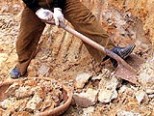
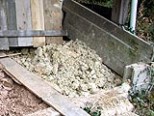
    The clay used shall be Shodai clay or a material of equivalent quality.

  • Work scene

    Step 1: Extraction of raw soil

    We will collect clay from the clay layer near Mt. Shodai.
    This clay, which contains a lot of iron and small pebbles, is called Shodai clay.
    The rough texture that is characteristic of SHODAI Yaki (Pottery) comes from Shodai clay.

    工程2: 乾燥

    The collected clay is dried outdoors.

    Process 3: Elutriation

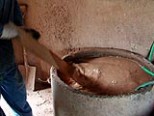
    The dried clay is crushed and placed in a tank with water, then stirred to remove debris, sand, stones, and other impurities.
    The muddy clay mixture is strained and transferred to another tank, where it is allowed to settle before being removed.
    Place the removed clay in an unglazed pot or similar container and let it dry in the sun until it reaches a suitable hardness.

    Step 4: Resting

    Once the clay has reached a suitable consistency, it is stored indoors. This process is called "resting." During this resting period, bacteria in the clay multiply, increasing its stickiness and making it easier to work with.

    Process 5: Kneading the soil

    The matured clay is kneaded to remove the air from within. First, it is roughly kneaded using the feet or a clay mixer, and then it is carefully kneaded by hand. The clay kneaded by hand resembles a chrysanthemum flower, so this method is called "chrysanthemum kneading" or "chrysanthemum kneading."
    Thorough kneading improves the clay's elasticity, making it easier to shape.

    工程6: 成形

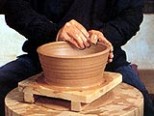
    There are several techniques for shaping clay, including "wheel-thrown shaping" using a potter's wheel, "mold-pressed shaping" where clay is pressed into a plaster mold, "hand-molding" where clay is kneaded and stretched by hand to create shapes, "slab shaping" where clay is formed into a sheet and then shaped, and "coil building" where clay is formed into a coil and then shaped.

    Step 7: Surface preparation

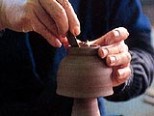
    After 1-2 days have passed since molding, and the clay has reached a suitable hardness, finishing processes such as carving the base are carried out.
    Attaching the spout and handle of teapots and other utensils, as well as beveling the edges, are done at this stage.
    Decorative techniques such as carving, inlaying, chamfering, combing, pasting, openwork, and plane work are also performed at this stage.

    工程8: 乾燥

    Let it dry slowly in the shade until all the moisture is gone.

    工程9: 素焼き

    The pieces are bisque-fired at a temperature of 800-900°C. This bisque firing improves the glaze's adhesion.

    Step 10: Glaze preparation

    Glazes are made by mixing ash from plants such as straw, bamboo grass, and reeds, wood ash from trees such as deciduous trees, oak, cedar, and pine, and finely crushed feldspar.
    In addition, sometimes a finely crushed iron-containing ore called "oniita" is added to the mixture.

    Step 11: Glazing

    In SHODAI Yaki (Pottery), wood ash glaze, straw ash glaze, bamboo grass ash glaze, reed ash glaze, and iron glaze are used.
    The color of the glaze, as well as the firing temperature and flame conditions, creates various shades such as blue, yellow, and white glazes.
    Furthermore, glazing techniques include "dipping," "ladling," "pouring," "spraying," "painting," "slip trailing," "snake's eye," and "double glazing."

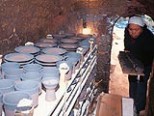
    Step 12: Kiln loading

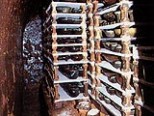
    The pottery is packed into the kiln, taking into consideration the distribution of heat and how well the heat is distributed.

    工程13: 本焼き

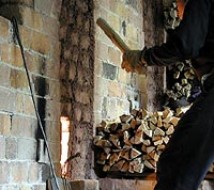
    The pieces are fired at a high temperature of 1300℃. When firing in a climbing kiln, the firing process is affected by factors such as the season, temperature, weather, wind conditions, and the amount and dryness of the firewood, so the work is carried out while keeping these conditions in mind.

    工程14: 窯出し

    After the final firing, the pottery is removed from the kiln once the temperature has cooled down.


  • Close-up

    SHODAI Yaki (Pottery) 400 years of history condensed into an instant

    In the northern part of Kumamoto Prefecture, near the border with Fukuoka Prefecture, lies a mountain called Mount Shodai. From the foot of this mountain, a type of clay is produced that, when used for pottery, develops a unique dark, smooth texture. This clay, known as Shodai clay, has been used to produce pottery called SHODAI Yaki (Pottery) for several hundred years, starting from the Edo period.
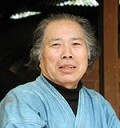
    Even today, various types of pottery that make the most of the texture of Shodai clay are produced at different kilns in this area. Among them, we visited Yasuaki Inoue, who is committed to creating works that are "the origin of SHODAI Yaki (Pottery)," at the "SHODAI Yaki (Pottery) Fumoto Kiln" located at the foot of Mt. Shodai.


    In search of the origins of SHODAI Yaki (Pottery)

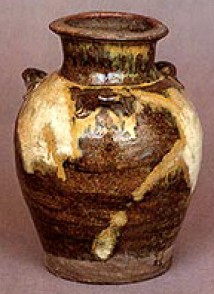
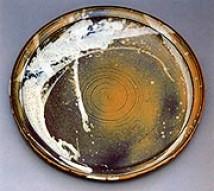
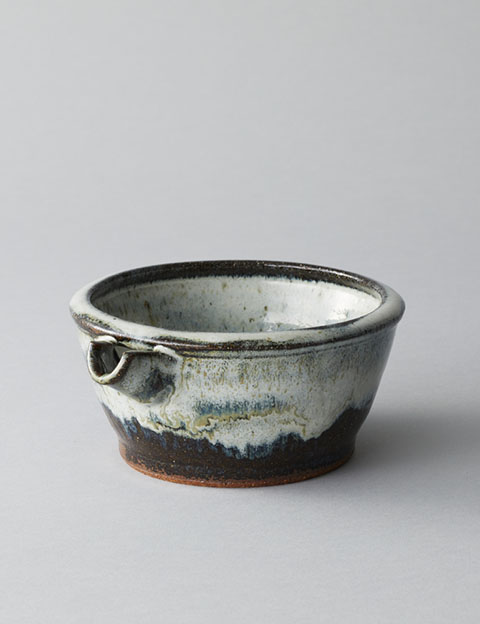
    Mr. Inoue possesses a large collection of old SHODAI Yaki (Pottery), which he has been collecting since his apprenticeship. The white glaze spreads across the dark, rustic-looking clay, creating interesting and powerful patterns that are a major attraction of the older SHODAI Yaki (Pottery) known as "Ko-Shodai."
    While Inoue had a strong interest in "Ko-Shodai" pottery, his creative curiosity led him to produce various types of pottery without specializing in any particular style for about two years immediately after becoming independent. This allowed him to better understand the beauty and power of "uchikake-nagashi," a representative technique of SHODAI Yaki (Pottery). When his deepening understanding of SHODAI Yaki (Pottery) turned into a passionate desire to "share the greatness of SHODAI Yaki (Pottery) with the world," he moved his production base to the foot of Mt. Shodai and opened a kiln to fire SHODAI Yaki (Pottery). That is the "SHODAI Yaki (Pottery) Fumoto Kiln."
    His goal was to return to the origins of SHODAI Yaki (Pottery). Using the "old Shodai" pottery he had collected as a guide, he searched for clay and researched the methods of preparing straw ash and wood ash used in glazes. This steady accumulation of effort supports his current works.

    The true pleasure of a flowing ceremonial ware

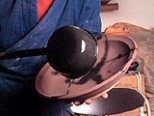
    The defining characteristic of SHODAI Yaki (Pottery) lies in a technique called "uchikake-nagashi." This technique, in which glaze is vigorously sprinkled onto the surface of a vessel using a ladle, and patterns are created by the flow and dripping of the glaze, has been passed down for 400 years since the Edo period.
    Before applying the glaze, the craftsman visualizes the general pattern on the object he will be working on. Then, he wields the ladle to bring that image to life. Through the smooth, fluid movements of the skilled craftsman's arm, the glaze transforms into a free-flowing, vibrant pattern as it settles onto the surface of the object.
    "Even after trying tens of thousands of times, it still doesn't quite go the way you want it to. But that's where the depth lies. It's infinite," Inoue says.
    When the skills of a master craftsman are combined with a touch of serendipity, a one-of-a-kind piece is born. That is the true charm of SHODAI Yaki (Pottery) 's "uchikake-nagashi" technique.

    All with the flames

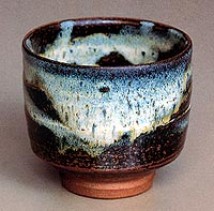
    SHODAI Yaki (Pottery) is classified into four types based on its color: yellow Shodai, blue Shodai, white Shodai, and amber Shodai. These colors are determined by the components of the glaze used and the state of the flame inside the kiln.
    The raw materials for the glaze of SHODAI Yaki (Pottery) are ash made from burning plants such as straw, bamboo grass, and reeds, as well as ash made from burning wood such as deciduous trees, oak, cedar, and pine, and finely crushed feldspar. Depending on the glaze, iron-containing ore called onita is also used. These are mixed together to make the glaze. At this time, the type of plants used and the ratio of the mixture will affect the color and tone of the finished product.
    Furthermore, even when using the same glaze, the finished product will vary depending on factors such as the firing conditions of the climbing kiln, the position of the piece within the kiln, and the types of materials packed inside.
    Sometimes, the glaze can produce different shades of color on a single piece of pottery.
    "In the climbing kiln, we fire it by hand, adding each piece of firewood one by one. The shape and color can change depending on the piece of firewood, and sometimes the way the glaze melts and the firing of the clay body look distinctly different on the side that is exposed to the fire and the other side. That's the charm and what's so interesting about 'earthenware.' The fact that each piece is different is what makes it so good," Inoue says.

    Pottery that you'll never tire of

    The intriguing beauty born from the flowing glaze, the charm emanating from the thickness and bleeding of the glaze, and the subtly changing colors in response to the clay body—the diverse expressions that appear in SHODAI Yaki (Pottery) never cease to fascinate the viewer.
    Inoue expresses the charm of SHODAI Yaki (Pottery) in its simple forms.
    Many of the everyday items that Ms. Inoue makes are simple. She says that if the shapes of things that you use every day are too elaborate, they actually become more difficult to use.
    "It's nothing special, but it's easy to use, so I always keep it on my table. I think that's the best thing about it."
    Inoue smiles, saying that it makes him very happy to hear comments from people who have bought his work, such as, "It was easy to use," or "I'm still using it."
    "When you're with it, you want to keep it by your side forever. I aspire to create pottery that evokes that feeling, and I want to continue making it," Inoue told us.

    Craftsman Profile

    Yasuaki Inoue

    (Inoue Taishu)

    Born in 1941. In 1957, he joined the Ceramics (Pottery) Department of the Kumamoto Prefectural Industrial Research Institute. In 1968, he opened the "SHODAI Yaki (Pottery) Fumoto Kiln" in Fumoto, Arao City. In 1977, he built a climbing kiln. In 1989, he won the Grand Prize at the West Japan Ceramics Art Exhibition (Prime Minister's Award). In 2001, he received the Mainichi Shimbun Award at the Japan Ceramics Exhibition.
    Director of the Kumamoto Prefectural Cultural Roundtable, President of the Kumamoto Prefectural Folk Craft Association, Member of the Kumamoto Prefectural Art Association. Associate Member of the Kokugakai (National Painting Association), Instructor at the Mainichi Shimbun Women's Cultural Classroom.

    Anecdotes

    SHODAI Yaki (Pottery) Exhibition and Museum

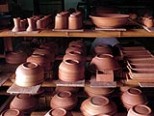
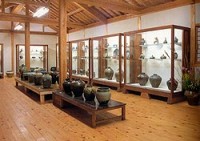
    SHODAI Yaki (Pottery) from the early Edo period to the Meiji era is called Old Shodai. Mr. Inoue has spent many years collecting numerous pieces of Old Shodai ware. His collection of nearly 100 items, ranging from small items such as tea bowls, small plates, and teapots to larger items such as tea caddies, water jars, and braziers, is displayed in the SHODAI Yaki (Pottery) Exhibition Museum built on the grounds of the Fumoto Kiln.
    Furthermore, very close to the museum are the remains of the Furuhata kiln, which is considered to be the birthplace of SHODAI Yaki (Pottery), and pottery fragments and kiln tools excavated from there are also on display.


overview

Craft item name SHODAI Yaki (Pottery)
Reading Shodaiyaki
Classification of crafts Ceramics
Main Products Tea sets, vases, tableware, decorative items
Main manufacturing area Arao City, Kumamoto City, Uki City, Nankan Town (Tamana District), Nagasu Town
Designated date March 17, 2003

contact address

■ Production area association

SHODAI Yaki (Pottery) Kiln Association
864-0166
1712-2 Fumoto, Arao City, Kumamoto Prefecture
Inside the Kodai ware Sueyasu kiln
TEL: 0968-68-1623
FAX: 0968-68-1623

Features

SHODAI Yaki (Pottery) is characterized by its simple yet powerful style, using Shodai clay which is rich in iron. By varying the glaze mixture ratio and firing temperature, subtle coloring techniques known as blue Shodai, yellow Shodai, and white Shodai are used. The deep beauty of the glaze and the free-flowing patterns harmonize with the shape of the vessel, creating a dynamic yet rustic feel.

How to make it

Clay that has been elutriated is shaped using methods such as potter's wheel or slab building, then dried and bisque-fired at around 800°C. Furthermore, a glaze mainly composed of straw ash and wood ash is applied by dipping or pouring, and the piece is fired at a high temperature of 1,300°C.

top