JOBOJI Nuri (Lacquerware)

Iwate Prefecture

The name JOBOJI Nuri (Lacquerware) comes from the Jōhōji clan, who ruled the northern part of Iwate Prefecture during the Middle Ages, and it is also a place name.
According to local legend, when Gyoki built Tendai-ji Temple in this area during the Nara period, monks were sent from the central government, and they brought with them the technique of making lacquerware to create vessels for their own use.
During the Edo period, JOBOJI Nuri (Lacquerware) an important product of the Nanbu clan that ruled this region, expanded its production area from around Tendai-ji Temple to the vicinity of present-day Anshiro-cho, and became known as "Oyama Goki" (mountain ware). This forms the basis of the current production area.

  • Technology/techniques/raw materials

    Technology/techniques

    1. The base preparation shall be carried out by one of the following methods:
    (1) In the case of "sprinkled ground," refined lacquer is applied, ground powder or charcoal powder is sprinkled on, and then "powder hardening" is performed using refined lacquer.
    (2) In the case of "lacquer base coat," the process involves repeatedly applying refined lacquer and then sanding it with water.


    2. The lacquering shall be carried out using the following techniques or methods:
    (1) Apply a base coat and an intermediate coat.
    (2) The "top coat" shall be a floral or multi-colored finish.


    3. When decoration is to be applied, it shall be done using "lacquer painting," "powdered gold leaf painting," or "Nanbu foil painting."
     

    raw materials

    1 漆は、天然漆とすること。

    2. The woodwork shall be one of the following:
    (1) In the case of turned wood, the material shall be zelkova, magnolia, horse chestnut, beech, or a material of equivalent quality.
    (2) In the case of joinery, the materials shall be zelkova, magnolia, cypress, or materials of equivalent quality.

  • Work scene

    The drying speed of lacquer varies depending on the region of origin, the amount of urushiol it contains, the scraping method, and the refining method, resulting in a variety of appearances. This is why it is called a "living paint." The world of lacquer craftsmen is so demanding that it is said, "Eight years of spatula application, three years of polishing." It seems that connecting with this living paint is the key to mastering the art of lacquering.

    Process 1: Grinding

    Currently, the raw timber used for JOBOJI Nuri (Lacquerware) includes horse chestnut, zelkova, birch, and mulberry. While wood is easy to process, it is susceptible to humidity, and shrinkage, warping, and cracking occur during the drying process. Therefore, the logs are harvested when the trees have stopped growing and the wood is well-solidified.

    Step 2: Cutting into pieces

    Cut the corn into pieces to match the diameter of what you're going to grind.

    Step 3: Dimension determination, large cuts, and small cuts

    We determine the type of lacquerware to be made by examining the wood grain, and then perform the large and small cuts of wood to approximate those dimensions. This wood selection process requires careful attention to minimize waste.

    Process 4: Rough grinding

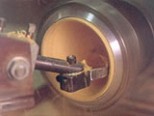
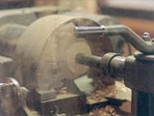
    The wood, which has been split into smaller pieces, is roughly turned on a lathe while it is still green to create a rough shape. At this stage, to prevent shrinkage and cracking during drying, it is planed to be 10 to 20 mm thicker than the final dimensions. Then it is left to cure for several more months.

    Process 5: Artificial drying/natural drying

    In the past, rough shaping involved boiling or smoking the wood before drying to reduce the moisture and resin content. Currently, hot air dryers and dehumidifiers are used to reduce the moisture content to 7-8 percent over two to three weeks. After artificial drying, the rough shaping is exposed to the open air until its moisture content becomes uniform with the moisture in the air (natural drying).

    Process 6: Medium grinding/finish grinding

    The wood is planed 5-10 mm thicker than the finished product to remove any distortions, and then the medium-ground wood, which has been left to rest for 2-3 days, is finished.

    Process 7: Groundwork

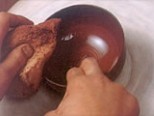
    Before the base preparation, the wood surface is prepared, inspected for imperfections, and thoroughly sanded with sandpaper. Then, a generous amount of raw lacquer is applied with a brush to harden the wood surface.
    Makichika
    After applying lacquer, a powder made from diatomaceous earth (a powder produced by burning diatomaceous earth) is sprinkled on top, and then hardened with another coat of lacquer. Applying a generous amount and allowing it to soak in increases water resistance and prevents the wood from expanding or contracting.
    lacquer basement
    We apply multiple coats of lacquer.
    We perform many processes, including sealing, polishing, powder application, powder compaction, decorative rusting, and rust prevention.

    Process 8: Lacquer

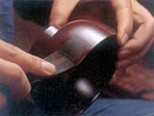
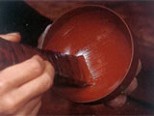
    The process begins with preparing the lacquer, followed by undercoating, decorative rusting, polishing, intermediate coating, and topcoating, until the flower-painted finish is complete.


  • Close-up

    JOBOJI Nuri (Lacquerware), embodying the principle of "use and beauty," truly shines when used in everyday life.

    It is said that in the past, "Good quality lacquerware comes from Wajima, while simple lacquerware comes from Joboji." However, this does not refer to quality or prestige. Rather, it indicates that JOBOJI Nuri (Lacquerware) is made with the intention of being used in everyday life, and that it was so widespread among ordinary people. This simple and understated lacquerware truly comes alive when it is used and appreciated.


    The simpler something is, the more difficult it is to make.

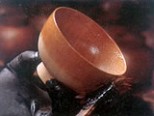
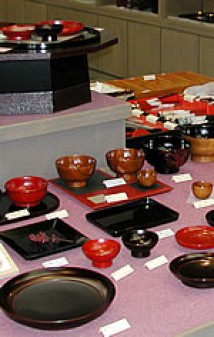
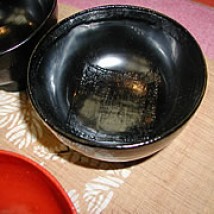
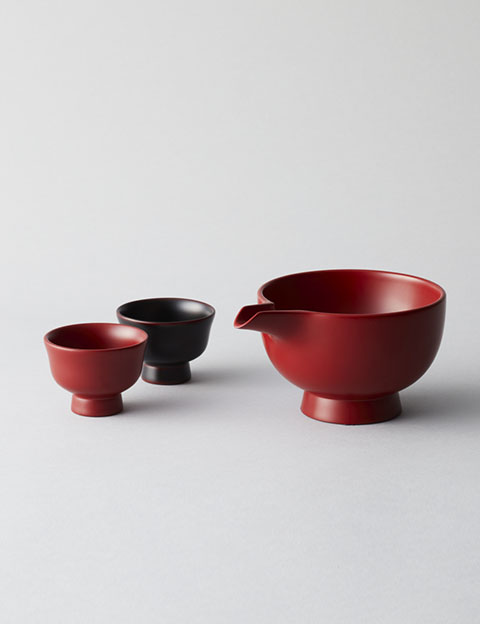
    Bowls, pitchers, trays, and small plates in a subdued vermilion and a deep, rich black. They have a smooth feel and fit comfortably in the hand. Plain pieces with almost no ornamentation are the true essence of Joboji lacquerware. These are not lacquerware for special occasions or when guests come over, but for everyday use. They are extremely simple, but there is an indescribable sense of refinement and warmth emanating from them.
    "The simpler something is, the harder it is. You can't get away with anything," says lacquerer Takashi Iwadate. I immediately thought it was similar to knitting. A simple stockinette-knit sweater may look easy, but in reality, it's more difficult for the maker than knitting in patterns or colors, because the evenness of the stitches is clearly visible. Perhaps there's something in common between the two.

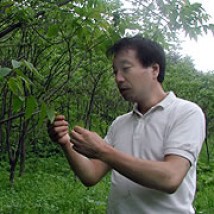
    In a lacquer forest where a refreshing atmosphere permeates the air, we meet Takashi Iwadate. He says he loves the smell of lacquer.

    Joboji Town, a place that has lived alongside lacquer

    Located in the northwesternmost part of Iwate Prefecture, bordering Kazuno City in Akita Prefecture, Joboji Town is renowned as a producer of high-quality raw lacquer. Before the war, it even influenced the lacquer market, and even today it produces about 60% of Japan's domestic lacquer. Place names and surnames prefixed with "lacquer," such as Urushibata, Urushida, Urushihara, and Urushizawa, can be found throughout the town, preserving the remnants of the town's heyday as a lacquer market.
    As is the case in the manufacturing world everywhere, after the war, domestic lacquer production was forced into decline due to the rise of inexpensive Chinese lacquer. Joboji Town was no exception. However, although their numbers had decreased, the lacquer tappers (see "Anecdotes") continued to patiently extract sap from the lacquer trees. Although the lacquering process ceased for a time, the production of lacquerware resumed in the 1970s.

    At the lacquerware hall "Tekiseisha" (see related facilities), works by Mr. Iwadate are on display and for sale.

    Guided by the fragrant scent of lacquer

    The Iwadate father and son are the ones who have pinned their hopes on its revival. The father, Shoji, is a lacquer tapper with over 60 years of experience in the field. His son, Takashi, initially worked in the steel and steel frame industry after graduation, and for almost four years he was away from his hometown and from lacquer. However, he couldn't abandon his desire to "not let the work related to lacquer disappear with my father's generation," so he returned to his birthplace and entered the world of lacquer painting.
    "When I was a child, I still remember the smell of lacquer that clung to my father's work clothes when he came back from the mountains. It was such a fragrant, wonderful smell."
    When he was working with iron, he loved the smell of welding. Perhaps it was as if guided by that smell that Takashi found the path he loved and the path he should follow. Looking back now, he says that the four years he spent working in a different job were by no means wasted.
    "I feel like my perspective has broadened. There's a saying about having a craftsman's spirit, but from now on, just making things isn't enough; we also have to think about selling them."
    Just like everywhere else, the lack of successors is a major concern here in Joboji. People come to learn the techniques not only from the local area but also from outside the prefecture, and sometimes even from overseas.
    When it comes to lacquerware, it's known as "Japan" overseas. Japan boasts a world-class lacquer culture, and it's a major source of raw materials. The lacquer tapping and application techniques are precious skills and assets that have been passed down through generations. More than anything, Takashi earnestly hopes that the young people in his hometown will understand this.

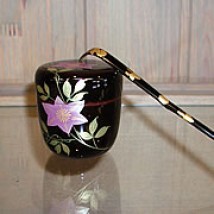
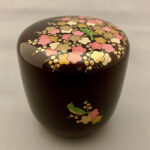
    A tea caddy (natsume) and tea scoop (chashaku) made by Mr. Iwadate.

    Lacquerware is only truly complete when it is used.

    This year marks his 25th year in this field. Even so, Takashi smiles wryly and says, "I still have a long way to go to get the hang of lacquer. I haven't been able to get that perfect, ultimate color yet."
    "The color and sheen of the skin change depending on the weather and humidity of the day. My own sense of touch is more important than the readings on the hygrometer."
    As JOBOJI Nuri (Lacquerware) absorbs the warmth of the hands of many people—lacquer tappers, woodworkers, toolmakers, and so on—it gradually approaches its final stage. However, it's not finished once the lacquering is complete.
    "The craftsman's work is 80-90% of the job. Lacquerware can only be considered complete when it's used by a customer."
    Instantly, a vivid image came to mind of a dining table filled with simmered dishes, salads, and soups, gently cradled in the hands of each family member, with warm steam rising in streaks.

    • A cloth-covered bowl made by Mr. Iwadate.

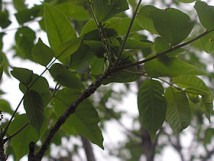
    • The fruit of the lacquer tree. I was treated to coffee made from roasted lacquer tree fruit at Mr. Iwadate's workshop. It had a wonderfully gentle flavor.

    Craftsman Profile

    Takashi Iwadate

    Born in 1954, she works alongside her father, Shoji, to revive JOBOJI Nuri (Lacquerware). In 2000, she received the Minister of International Trade and Industry Award for the second time. "When a Living National Treasure in lacquer art visited Joboji, I was deeply moved and felt fortunate to be in this place."

    Anecdotes

    Etcetera related to lacquer


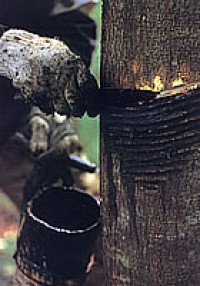
    • The seven tools used for lacquer tapping. From left to right: two tapping spatulas, one bark-peeling sickle, and two more tapping sickles. In the background is a lacquer jar made from linden bark.

overview

Craft item name JOBOJI Nuri (Lacquerware)
Reading Joboujinuri
Classification of crafts lacquerware
Main Products Bowls, plates, trays, tea sets, flower vases
Main manufacturing area Morioka City, Ninohe City, Hachimantai City, Takizawa City
Designated date May 22, 1985

contact address

■ Production area association

Iwate Prefecture Lacquerware Cooperative Association
〒020-0124
1-18-13 Kurikawa, Morioka City, Iwate Prefecture
Urumi Kogeisha Co., Ltd.
TEL: 019-641-1725
FAX: 019-641-9133

Features

We have been making lacquerware for everyday use, such as soup bowls, rice bowls, and sake pitchers, since ancient times. Some of the bowls that have been passed down through generations have decorations, but most are plain, solid colors such as vermilion, black, and dark red, with a subdued finish. As the largest lacquer production area in Japan, our greatest feature is the timeless texture achieved by using high-quality raw materials.

How to make it

The wooden base is made using woods such as horse chestnut, Japanese cherry, and zelkova. After drying, the wood base is soaked in raw lacquer to harden it. A coat is then applied to smooth the surface of the wood base, and a mixture of polishing powder (tonoko) kneaded with water and raw lacquer is applied on top of that. The surface is then sanded until smooth to create the base. Finally, a finishing lacquer is applied to prevent brush marks and dust from remaining, and the piece is either left to dry as is ("hananuri") or polished after applying the finishing lacquer ("roiro-nuri") to complete the piece.

Please see here for information on traditional craftspeople.

Japanese traditional craftsman
top