Kamo Kiri Tansu

Niigata Prefecture

It is said that the Kamo Paulownia Chest of Drawers originated with a carpenter who made one at the beginning of the 19th century. A chest of drawers with the inscription "Purchased in Bunka 11 (1814)" on its back panel is still in use in the city today.
In the early Showa period, the "Yashatoso" (arrow wheel painting) technique was developed, completing the design of modern paulownia chests of drawers. Kamo produces 70% of all paulownia chests of drawers in Japan, shipping them widely throughout the country from Hokkaido to Kyushu.

  • Technology/techniques/raw materials

    Technology/techniques

    1. Drying should be done by natural drying.


    2. The boards used shall be solid wood. In this case, the thickness of the boards shall be 19 millimeters or more for the top board, side boards, shelves, and support boards, and 7 millimeters or more for the base board, back board, and drawer bottom board.


    3. The top and bottom boards shall be joined to the side boards by front joints, using dovetail joints of five or more boards with wooden nails, or dovetail joints of eleven or more boards. The shelves shall be joined by end-hole mortise and tenon joints, overlap-hole mortise and tenon joints, or pointed-hole mortise and tenon joints.


    4. The drawer components shall be joined by a dovetail joint, a mortise and tenon joint, a dovetail joint, or a mortise and tenon joint.


    5. When installing doors or sliding doors, the following techniques or methods shall be used:
    (1) In the case of sheet metal, the thickness of the sheet metal shall be 19 millimeters or more, and the members shall be joined by mortise and tenon joints or mortise and tenon joints.
    (2) In the case of framed structures, the thickness of the board material shall be 19 millimeters or more for frame members and 7 millimeters or more for end panels, and the members shall be joined by miter joints or mortise and tenon joints.


    6. Use "sewn nails" to join the side panels to the legs.


    7. The finishing touches involve polishing using the "uzukuri" technique, followed by "yashabushi" coloring, and then "wax polishing."
     

    raw materials

    1. The wood used should be paulownia.

    2. The nails shall be made of Deutzia wood or of equivalent material.

    3. The metal fittings shall be made of copper, copper alloy, or iron.

  • Work scene

    KAMO Kiri Tansu (Paulownia Chests) feature particularly intricate craftsmanship. Even just creating the paulownia wood planks involves joining several planks together to create a magnificent single piece, and then using a special technique to align the grain on both sides to bring out the natural beauty of the plank—an extremely time-consuming process. Furthermore, KAMO Kiri Tansu (Paulownia Chests) uphold the tradition of various joining techniques, such as mortise and tenon joints and wooden pegs, without using any iron nails. The finish is kept relatively simple, prioritizing functionality while also highlighting the natural beauty of the pale yellow paulownia wood grain.

    Process 1: Building material

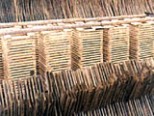
    Unlike other production areas, Kamo's paulownia chests are made using a single, integrated process from raw timber production to finished product, making material selection easy. After felling, the wood is naturally dried for approximately three years, which removes the astringency from the paulownia wood and prevents discoloration and warping in the finished product.
    Paulownia trees grow faster than other tree species, reaching a height of 4-5 meters in their first year. However, this rapid growth also means larger branches, and because the wood is soft, it is susceptible to pests and easily damaged. As a result, virtually no paulownia trees are undamaged; about two-thirds of a single paulownia tree is unsuitable for processing, and only about one-third is of good quality. To make the most of this limited amount of good quality wood, meticulous care and skill are required during the milling process.

    Process 2: Tree cutting

    Each component is selected for its appropriate use, and experienced craftsmen carefully sort and combine materials of the same quality, paying attention to matching the wood grain and color.
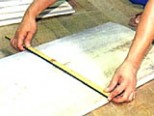
    In this process, several paulownia wood boards are joined together to create a single board. At this time, a process called "grain straightening" is applied to make it appear as if it is a solid board with a straight grain. This involves thinly splitting the wood along the grain and gluing several pieces to each side of the core wood. In this way, the front straight-grained wood, back straight-grained wood, and core wood are created, and these are then combined to create each component.

    Step 3: Assembly

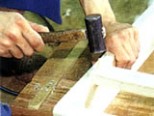
    Kamo's paulownia chests are sturdily assembled using a unique traditional technique of driving in wooden pegs, and the main body is then finished.
    Joining methods include mortise and tenon joints. In addition to wooden pegs, bamboo pegs about 10 centimeters long with pointed ends, called sewing pegs, are used to join the side panels to the legs.

    Step 4: Drawer (tray) door processing

    The drawers and doors are adjusted with a plane and fitted snugly into the main body without any gaps.
    The process of making drawers (trays) begins with preparing the front panel. The drawer front panel is cut to the dimensions of the shelf where it will be placed and then planed to ensure there are no gaps. The side panels and back panel (the part at the back of the drawer), which have been similarly planed, are assembled using wooden pegs and other tools, employing the same techniques as the main body of the chest.

    Step 5: Painting

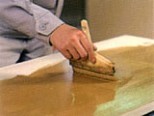
    After preparing the wood, a brushing technique called "uzukuri" (using a bundle of straw, similar to a scrubbing brush, to finish the surface of wood, especially paulownia) is applied to bring out the wood grain. A mixture of polishing powder and yaksha fruit is then brushed on several times. After natural drying, wax is applied evenly along the wood grain to finish the piece. Mixing the polishing powder and yaksha fruit requires considerable skill, intuition, and experience from the craftsman. Furthermore, mastering brushwork requires at least three years of experience.

    Step 6: Attaching the hardware

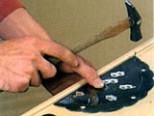
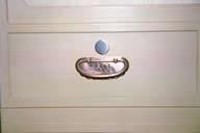
    The appearance of a paulownia wood chest of drawers changes dramatically depending on the design of the metal fittings. Experienced craftsmen carefully attach the drawer pulls, hinges, and locks, completing the chest of drawers.


  • Close-up

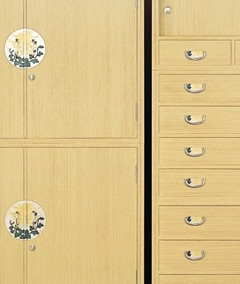
    KAMO Kiri Tansu (Paulownia Chests) retaining the gentle feel of the wood grain.

    The beautiful straight grain of the paulownia wood reveals its unique character. It exudes a dignified elegance amidst the warmth of nature, deepening in character with age. Just looking at a paulownia chest of drawers inexplicably inspires a desire to straighten one's posture; perhaps this is because it awakens something within the Japanese spirit.


    Kamo City, a town lined with chests of drawers.

    Walking through the streets of Kamo, you'll find rows of chest shops, and if you venture a little further, you'll see scattered lumberyards everywhere. The area around Kamo City is naturally rich in paulownia wood, and the history of paulownia chests dates back 200 years. Even today, it remains a firmly established local industry in Kamo. The beautiful grain and warm texture of the paulownia wood are characteristic features of KAMO Kiri Tansu (Paulownia Chests).

    A paulownia wood chest of drawers that combines beauty and practicality.

    Yoshiaki Tateno has been making paulownia wood chests in Kamo City for about 50 years. He was the first person to receive certification under the Traditional Craftsman system. As soon as you enter the chest-making workshop, you are enveloped in the scent of paulownia wood. The first and most important point in making paulownia wood chests is the raw material. High-quality paulownia wood is carefully air-dried for about three years before use. "If the drying is insufficient, tannins remain and the wood turns red. Even though we're talking about drying, we also expose it to rain. If it's not exposed to water, the tannins won't come out. Ideally, it would be half sun and half water, but that's not always possible." Although the naturally dried paulownia wood looks black, the original white wood grain is immediately revealed when it is planed. Paulownia wood that has been detanned over many years not only doesn't discolor, but it also doesn't warp.
    Secondly, there's the exquisite craftsmanship of handcrafted work, meticulously finished piece by piece. The "finishing" of the front of the chest of drawers in the final stage requires the skill of a craftsman. This process of planing the surface of the chest of drawers by hand requires the delicate touch of a skilled craftsman, and "it's impossible to replace it with a machine," they say. "Paulownia wood is soft and therefore easily damaged. The most nerve-wracking part of the work is definitely the 'finishing'." The drawers and doors are carefully planed to avoid any gaps, and then fitted into the main body. This high level of airtightness is one of the characteristics of paulownia chests of drawers. The paulownia wood itself absorbs moisture and expands, protecting clothing from dampness. Also, even if a paulownia chest of drawers ages, a little sanding of the surface reveals new wood grain, so the beautiful color of paulownia can always be reproduced. And the use of wooden pegs, one of the characteristics of KAMO Kiri Tansu (Paulownia Chests), plays a role in "cleaning the chest of drawers." "With a paulownia wood chest of drawers, even if the surface gets dirty, you can plane it down, nails and all. That's not possible if you use metal nails. Moreover, metal nails rust, and when you remove them, they damage the soft wood."

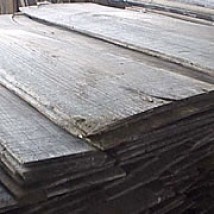
    Paulownia wood, naturally dried and waiting to be made into chests of drawers. In Kamo, it's common to see paulownia wood propped up outdoors.

    The three essential steps to becoming a full-fledged adult

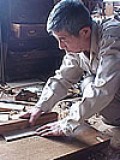
    "It took about four years after I started working to be able to make a chest of drawers that I was truly satisfied with," says Mr. Tateno. Mr. Tateno began making paulownia wood chests of drawers in his teens, and at the age of 20, he was given a complete set of tools by the company and entrusted with making his first chest of drawers. The tools used to make paulownia wood chests of drawers number from 20 to 30 different types of planes alone. "Because it's all done by hand, it's impossible to make the same chest of drawers, and no two chests of drawers are exactly alike. After all, the condition of the plane and the type of wood used vary from day to day. That being said, I have to make chests of drawers of high quality. For that, a craftsman's intuition is essential." "The sharpness of the plane, the beauty of the finish, and efficiency—when you have all three of these, you're a full-fledged craftsman," says Mr. Tateno, who has been making highly skilled paulownia wood chests of drawers for many years, and his confidence and pride are palpable. In the past, it was customary to plant a paulownia sapling when a girl was born, and to make a wedding chest from that paulownia wood on the day she got married. Even in modern times, with the increasing Westernization of lifestyles and changes in consumers' living environments, many people still purchase paulownia chests when they get married. "I hope that they will live a happy life with the chest I made," says Mr. Tateno, explaining that he makes the chests with that thought in mind.

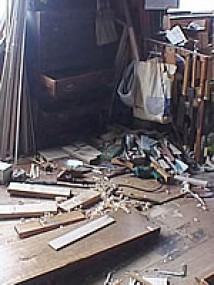
    This is Mr. Tateno's workshop. Tools that have been used for many years are placed haphazardly.

    My desire for chests of drawers has not diminished.

    The elegant warmth of the wood grain is created through a variety of extremely time-consuming processes, such as preparing the paulownia wood boards. No matter what era it is, paulownia wood will always remain the most suitable material for Japanese storage furniture. "I want as many people as possible to know about the economic advantages of paulownia chests of drawers. And I want them to actually touch and feel the goodness of paulownia wood. I want to continue this work even after I turn 70 and take on more technically advanced pieces," says Mr. Kanno, whose strong passion for making paulownia chests of drawers seems likely to continue for a long time to come.

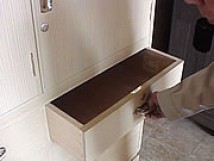
    The smoothness and ease with which the drawers open and close is a key factor in determining the quality of a chest of drawers.

    Craftsman Profile

    Yoshiaki Tateno

    Born in 1935 in Wakkanai City, Hokkaido, into a fisherman's family. At the age of 17, he apprenticed at Takahashi Shingo Tansu Store Co., Ltd., where he remains to this day.

    Anecdotes

    The evolution of metal fittings on paulownia wood chests of drawers

    Sanjo City, located 6 kilometers from Kamo, has long flourished as a center for metalworking and continues to thrive today. Sanjo City was also once deeply connected to KAMO Kiri Tansu (Paulownia Chests). Until around 1950, almost all of the metal fittings used in KAMO Kiri Tansu (Paulownia Chests) were produced in Sanjo.
    However, with the Westernization of lifestyles from the 1950s onward, the demand for and production of chests of drawers plummeted. Consequently, manufacturers of hardware for paulownia wood chests were forced to switch to manufacturing other tools and household hardware. As a result, manufacturers specializing in hardware for paulownia wood chests naturally concentrated in major cities, and production became limited to Tokyo, Osaka, and Kyoto. This situation continues to this day, and the proportion of hardware produced in Sanjo City is not particularly high.
    The shape of metal fittings has also changed with the times. From the late Edo period to the Meiji era, large iron fittings were used to represent weight and solidity, but as time passed, they changed to those that made use of the original paulownia wood. There was a growing demand for smaller size and functionality in metal fittings.

    • The exquisitely crafted metal fittings further enhance the elegance of the paulownia wood chest of drawers.


overview

Craft item name Kamo Kiri Tansu
Reading Kamokiritansu
Classification of crafts Woodwork/bamboo products
Main Products Chest of drawers
Main manufacturing area Kamo City
Designated date December 15, 1976

contact address

■ Production area association

Kamo Tansu Cooperative
959-1313
2-2-4 Saiwai-cho, Kamo City, Niigata Prefecture
Kamo City Industrial Center, 2nd Floor
TEL: 0256-52-0445
FAX: 0256-52-0428

https://www.kamokiritansu.com/

Features

Paulownia wood is white and lustrous, possessing an elegant beauty often compared to silk. The straight grain of the chest of drawers has a unique beauty unlike any other furniture, with dark reddish-brown lines swept across a light base color as if brushed across. The drawers have no gaps, open and close easily, and protect stored items from moisture and heat, ensuring long-term preservation.

How to make it

The raw timber is carefully prepared over three years, undergoing processes such as sawing, leaching, and drying. Everything from board assembly, planing, mortise and tenon joints, to the final assembly and colored metal fittings is done by hand. The craftsmanship, using hand tools like chisels and planes, is truly impressive.

top