
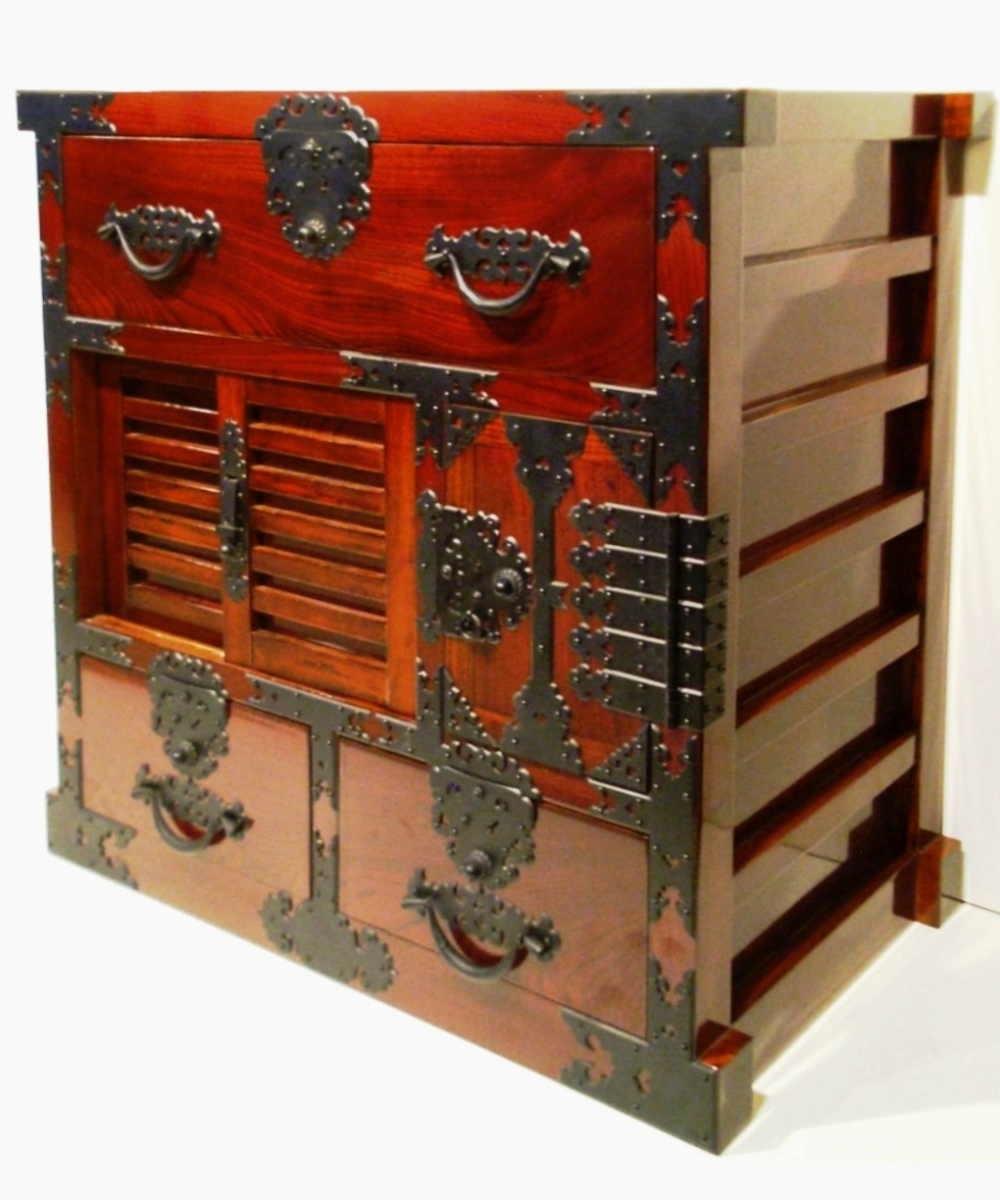
Technology/techniques
1. Wood should be dried naturally.
2. Woodworking shall be carried out by one of the following methods:
(1) In the case of framed chests of drawers, the following techniques or methods shall be used:
(i) The visible and hidden dimensions of the frame (excluding the horizontal frame) shall be 20 millimeters or more and 40 millimeters or more, respectively.
(b) The thickness of the board material used for the shelf boards and backing boards shall be 7 millimeters or more.
The joints of the frame and frame shall be made using flat tenon joints, mortise and tenon joints, wedge tenon joints, or mortise and tenon joints.
2. The top plate is joined to the frame by fitting the top plate into the small grooves in the frame.
The drawer components shall be joined by dovetail joints, mortise and tenon joints, front dovetail joints, dovetail joints, mortise and tenon joints, concealed dovetail joints, or mitered concealed dovetail joints.
When attaching a door, the door components shall be joined using a dovetail joint or a concealed three-piece joint.
When installing sliding doors, the components of the sliding doors shall be joined using flat mortise and tenon joints or mortise and tenon joints with a rib.
The finishing touch is to polish it using horsetail leaves or similar materials.
(2) In the case of a wooden chest of drawers, the following techniques or methods shall be used:
(i) The thickness of the boards used for the top panel, side panels, and support boards shall be 18 millimeters or more.
(b) The thickness of the board material used for the backing plate shall be 7 millimeters or more.
(h) The joint between the top panel and the side panels shall be a dovetail joint of five or more panels, a front-facing dovetail joint, or a wrap-around dovetail joint.
2. The drawer members shall be joined by dovetail joints, mortise and tenon joints, front dovetail joints, dovetail joints, mortise and tenon joints, concealed dovetail joints, or mitered concealed dovetail joints.
When a door is to be attached, the door components shall be joined using a dovetail joint or a concealed three-piece joint.
When installing sliding doors, the components of the sliding doors shall be joined using flat mortise and tenon joints or mortise and tenon joints with a rib.
The finishing touch is to polish it using horsetail leaves or similar materials.
3. Painting shall be done by one of the following methods, except when using paulownia wood.
(1) In the case of wiped lacquer painting, raw lacquer is applied and wiped off repeatedly, and then a clear lacquer is used as a finishing coat.
(2) In the case of Shunkei lacquerware, the surface is sealed with polishing powder or red iron oxide, then an undercoat is applied using rust lacquer, the surface is sanded to make it smooth, and then a finish coat is applied using transparent lacquer.
(3) In the case of black lacquerware, a base coat is applied using rust lacquer, a top coat is applied using black lacquer, then the top coat is polished and the surface is rubbed.
4. The manufacture of metal fittings shall be carried out using the following techniques or methods:
(1) Steel plates shall be used after being hammered and stretched by forging.
(2) The outline shall be cut by hand using a chisel.
(3) Chamfering shall be done by hand using a file.
(4) Washers, keys, locks, and trim fittings shall be made by hand.
(5) Hand-drawn shape is formed by hand into a "warabite" shape, "hirute" shape, or "kakute" shape.
(6) To prevent rust, rub raw silk onto the heated metal fittings and polish them.
(7) For the finishing touch, wipe with rapeseed oil or camellia oil and let it dry.