Technology/techniques
1. Drying should be done by natural drying.
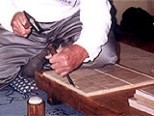
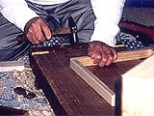
2. Woodworking shall be carried out by one of the following methods:
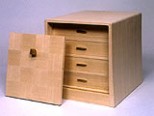
(1) In the case of chests of drawers, the following techniques or methods shall be used:
(i) The boards used shall be solid wood. In this case, the thickness of the boards shall be 20 millimeters or more for the top board, bottom board and side boards, and 16 millimeters or more for the shelf boards and support boards.
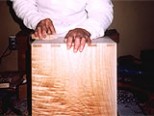
(b) The joint between the top panel and the side panels shall be a dovetail joint of seven or more panels, a dovetail joint with concealed mitered joints, or a wrap-around dovetail joint.
H. Attach the side foot.
2. The drawer components shall be joined using wrap joints and dovetail joints.
(e) When installing doors or sliding doors, both sides shall be covered with decorative panels, and the decorative panels shall be sawn boards with a thickness of 3 mm or more. In this case, the members shall be joined using mitered tongue and tenon joints and end fittings.
(2) In the case of a display shelf, one of the following shall apply:
(i) In the case of pillar-supported structures, the following techniques or methods shall be used:
1) The boards used shall be solid wood. In this case, the thickness of the boards shall be 15 mm or more for the top board, 12 mm or more for the bottom board and shelves, and 6 mm or more for the side boards and support boards.
2) The visible and deep dimensions of the columns shall be 18 millimeters or more.
3) When joining the top or bottom plate to the side plate, a mortise and tenon joint with a small hole shall be used.
4) The joints between the column or support post and the top board or bottom board shall be made by mortise and tenon joints, and the joints between the column and the side board and the support post and the support board shall be made by grooving.
5) The joints of the members at the four corners of the base frame shall be made by mitered joints or dovetail joints.
6) When installing doors or sliding doors, the thickness of the board material used shall be 11 millimeters or more. In this case, the members shall be joined by mortise and tenon joints and end fittings.
7) If decoration is to be added, it shall be done by openwork, relief, or flat carving.
(b) For board-mounted items, the following techniques or methods shall be used:
1) The boards used shall be solid wood. In this case, the thickness of the boards shall be 15 millimeters or more for the top board, bottom board, side boards, shelves, and support boards.
2) The top panel and side panels shall be joined by dovetail joints, mitered dovetail joints, wrapped dovetail joints, or mortise and tenon joints.
3) The shelf boards and side boards shall be joined by mortise and tenon joints with small holes.
4) The joints of the members at the four corners of the base frame shall be made by a mitered joint or a dovetail joint.
5) When installing doors or sliding doors, the thickness of the board material used shall be 11 millimeters or more. In this case, the members shall be joined by mortise and tenon joints and end fittings.
6) If decoration is to be applied, it shall be done by openwork, relief, or flat carving.
(3) For low tables, the following techniques or methods shall be used:
(i) The tabletop shall be made of solid wood or double-sided decorative laminate with a thickness of 20 mm or more. In this case, the decorative laminate shall be sawn veneer with a thickness of 3 mm or more.
The legs used must be made of solid wood.
The tabletop and legs shall be joined by a two-piece mortise and tenon joint or a concealed mortise and wedge joint.
The joint between the base and the legs shall be made by mortise and tenon joint, and the joint between the base and the tabletop shall be made by perforated mortise and tenon joint.
(4) In the case of a writing desk, the following techniques or methods shall be used:
(i) The tabletop shall be made of solid wood or double-sided decorative laminate with a thickness of 17 mm or more. In this case, the decorative laminate shall be sawn veneer with a thickness of 3 mm or more.
(b) The joint between the tabletop and the legs shall be made by a mortise and tenon joint of five or more plank legs, and by a mortise and tenon joint of two planks for square legs.
In the case of square legs, the joint between the base and the leg shall be made by mortise and tenon joint.
2. When doors are to be installed, the boards used shall be solid wood with a thickness of 11 millimeters or more. In this case, the members shall be joined using mortise and tenon joints and end fittings.
If drawers are to be installed, the boards used shall be solid wood. In this case, the thickness of the front board shall be 9 mm or more, and the components shall be joined using wrap joints and three-piece joints.
(5) For tea ceremony shelves, the following techniques or methods shall be followed:
(i) The board material used shall be a single piece.
(b) If there is a top plate, bottom plate, or shelf, the members shall be joined by a mortise and tenon joint or a mortise and tenon joint.
(c) If there are columns, the columns shall be joined to the top or bottom boards by mortise and tenon joints or notched joints.
2. If there are side panels, the side panels shall be joined to the top or bottom panel by mortise and tenon joints.
If decoration is to be added, it should be done by openwork.
(6) For wooden items used in the tea ceremony, the following techniques or methods shall be used:
(i) The board material used shall be a single piece.
(b) In the case of a lidded container, the joining of side panels to side panels, and in the case of a door container, the joining of side panels to the top or bottom panel, shall be by dovetail joints or flat nail joints of three or more panels.
(c) In the case of doors, the door panel members shall be joined by mitered end-fittings.
(7) For boxes used in the tea ceremony, the following techniques or methods shall be used:
(i) The board material used shall be a single piece.
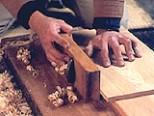
(b) To make a "removed bevel" using a beveling plane or spear plane, or to make a "finishing bevel" using a base plane.
H. When performing "finishing cuts," the joining of components shall be done by end fittings.
(8) For turned wood products for the tea ceremony, the following techniques or methods shall be used:
(i) To shape using a potter's wheel and a potter's plane.
(b) After rough grinding, allow to air dry.
(9) In the case of bentwood items for the tea ceremony, the following techniques or methods shall be used:
(i) The lumber to be used shall be straight-grained board, and shall be either "spliced" or "finished planed".
(b) Manual bending or cutting.
If there is a spout, handle, lid, or legs, shape them using a plane, carving knife, or chisel, respectively.
(10) For carvings and carved items for the tea ceremony, the following techniques or methods shall be used:
(i) To make it from a single piece.
(b) For carvings, carvings are made using carving tools or chisels in the form of round carving, relief carving, or flat carving; for carved objects, carvings are made using small planes, bean planes, or chisels.
(11) For tea ceremony buckets, the following techniques or methods shall be used:
(i) The lumber used shall be quarter-sawn board.
For joining the wooden boards, use dovetail nails.
When using bamboo for the taganoki, the bark must be removed and the nodes shaved off.
2. The bottom boards shall be fitted using dovetail cuts and wood-blocking techniques.
3. The finishing process, with the exception of cedar and cypress wood, shall be carried out using the following techniques or methods.
(1) Polish the paulownia wood using ibotaro wax.
(2) After coloring the mulberry wood with lime, apply "rubbed lacquer" or "oil coating".
(3) The zelkova wood should be treated with "rubbed lacquer".
(4) Others should be polished using horsetail and hackberry leaves.
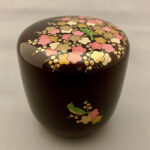
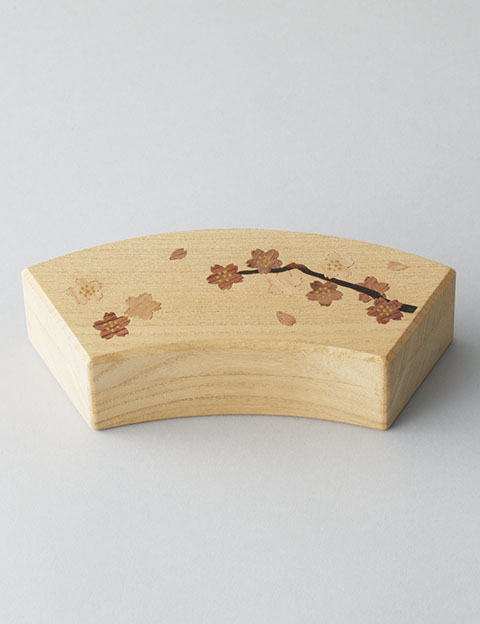
4. When decoration is applied, it shall be done using lacquer painting, color painting, maki-e (gold or silver powder), inlay, foil painting, gold or silver paint, or gold or silver dust.