Technology/techniques
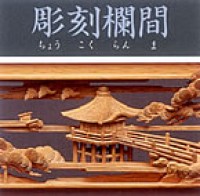
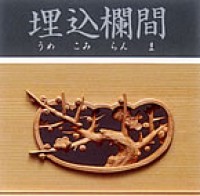
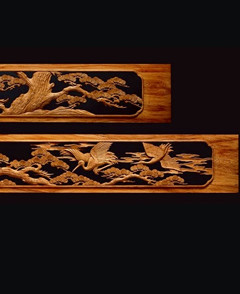
1. For carved transoms, the following techniques or methods shall be used:
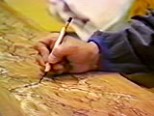
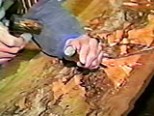
(1) The preliminary drawing should be drawn directly onto the board using a brush and ink.
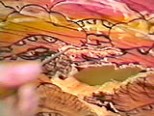
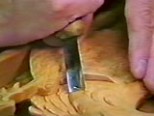
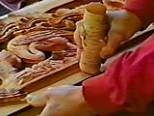
(2) The carving on both the front and back sides shall be done using "three-dimensional carving".
(3) The finishing touches should be polishing with "ibotarō" or something of equivalent properties and "uzukuri".
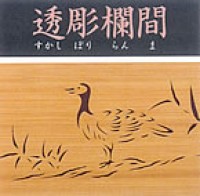
2. In the case of openwork transoms, the following techniques or methods shall be used:
(1) The end grain of the openwork pattern should be carved so that it is perpendicular to the board.
(2) When carving a "flower, bird, and landscape pattern," the underpainting should be drawn directly onto the wood using a brush and ink, and the carving should be done using a "solid wood carving knife" and a "corner carving tool" to "draw in" the fine details of the underpainting.
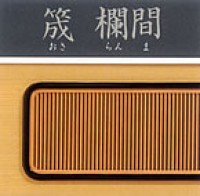
3. For transoms with reeds, the following techniques or methods shall be used:
(1) The division of the reed's timbers should be done by "turning the wood."
(2) The reed shall be fitted into the "beaded edge." In this case, the fitting shall be done by "overlapping."
(3) The "beaded edge" is to be coated with lacquer.
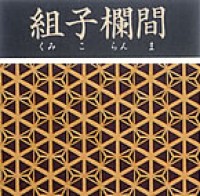
4. For kumiko transoms, the following techniques or methods shall be used:
(1) The division of the kumiko (latticework) is done by "interlocking".
(2) For joint cutting, use a joint cutting stand and a template.
(3) The sparring will be in the form of a three-person sparring match.
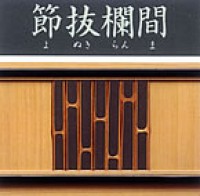
5. For transoms without sections, the following techniques or methods shall be used:
(1) Remove the nodes. In this case, the bamboo should be smoked bamboo.
(2) The part adjacent to the joint should be "notched".
(3) Remove the fleshy parts of the bamboo.
(4) The knot-removed work shall be fitted into the "beaded rim" or "trimmed rim". In this case, the fitting into the "beaded rim" shall be done by "overlapping".
(5) The "beaded edge" and "trimmed edge" shall be coated with lacquer.
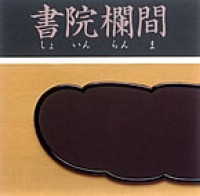
6. For transoms in a shoin (study room), the following techniques or methods shall be used:
(1) The preliminary drawing should be drawn directly onto the board using a brush and ink.
(2) The carving shall be done using "three-dimensional carving" on one side.
(3) The finishing touches should be polishing with "ibotarō" or something of equivalent properties and "uzukuri".
7. In the case of a folding screen, the following techniques or methods shall be used:
(1) The preliminary drawing should be drawn directly onto the board using a brush and ink.
(2) The carving on both the front and back sides shall be done using "three-dimensional carving".
(3) The finishing touches shall be polishing using "ibotarō" or a material of equivalent quality and "uzukuri".
8. The following techniques or methods shall be used for the calculation of the amount:
(1) The preliminary drawing should be drawn directly onto the board using a brush and ink.
(2) The carving shall be done using "three-dimensional carving".
(3) The finishing touches shall be polishing using "ibotarō" or a material of equivalent quality and "uzukuri".