KANAZAWA Butsudan (Household Buddhist Altars)

The origins of KANAZAWA Butsudan (Household Buddhist Altars) can be traced back to the 17th century.
The origins of Buddhist altar production in Kanazawa stem from several factors: during the Muromachi period, a Jodo Shinshu Buddhist monk named Rennyo Shonin spread his teachings in the Hokuriku region, leading to widespread Jodo Shinshu faith among many in the area; and the establishment of a workshop by the lord of the Kaga domain, which fostered skilled craftsmen. Furthermore, the Kaga domain encouraged every household to have a Buddhist altar in accordance with the Tokugawa shogunate's religious census, and the vibrant Kaga culture, supported by the domain's immense wealth (known as Kaga Hyakumangoku), contributed to the creation of KANAZAWA Butsudan (Household Buddhist Altars), which are characterized by their solemn and beautiful use of gold leaf and maki-e (lacquerware) techniques.

  • Technology/techniques/raw materials

    Technology/techniques

    1. The structure of the "wooden base" is assembled using "mortise and tenon joints".

    2. Palace construction is based on the "masu-gumi" method, which uses "kumimono-jiita" (bracket system boards).

    3. The painting shall be done by hand using refined lacquer, and the body panels and door panels shall be finished with a "roiro finish".

    4. The carving shall be done using "wood carving" and "gold leaf carving".

    5. Apply maki-e (lacquerware with gold or silver powder) and gold leaf.
     

    raw materials

    1. For the wooden parts, the inlaid boards of the "shoji lower section" and the "front sash" shall be made of tabu, camphor, or ebony, or materials of equivalent quality, and for the other parts, ginkgo, cypress, pine, or cedar, or materials of equivalent quality.

    2. The metal fittings shall be made of copper, copper alloy, silver, or a metal of equivalent material.

    3 漆は、天然漆とすること。

  • Work scene

    We will introduce the general process of making KANAZAWA Butsudan (Household Buddhist Altars), following the 10 main steps. The moment a Buddhist altar is completed is a moment in which the traditional techniques of KANAZAWA Butsudan (Household Buddhist Altars), which take many months to complete through numerous steps, truly shine.

    Process 1: Wood base manufacturing process

    The wood is prepared from ginkgo and cypress. After the wood has been thoroughly dried, it is "cut" to the required dimensions, and then "rough shaping" is done using a saw to create the desired thickness and width. The measuring tool used is a ruler developed by the woodworker himself, which allows him to determine all dimensions, such as the length of each piece of wood and the position of holes, with just this one ruler. After the rough shaping is complete, tenons, holes, grooves, dovetails, and other details are added. The woodworker also considers the thickness of the lacquer that will be applied later, always working with the finished product in mind. Determining the angles of the altar also requires skill, and the angles and surfaces are matched using unique techniques. Once all the parts are made, they are assembled once, dried for about six months to prevent shrinkage, and then handed over to the lacquerer.

    Process 2: Palace manufacturing process

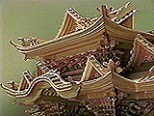
    The "kuden" (palace) is the inner roof section of a Buddhist altar. For this section, red pine, cypress, cedar, ginkgo, etc., that have been dried for more than six months in a sunny and well-ventilated place are used. The wood is cut to the required dimensions and roughly shaped to the desired thickness and width. Here too, the wood is cut using tools unique to the craftsman. The roughly shaped pieces are then finished by hand using chisels and knives. In particular, there are 300 to 400 of the "masugumi" (square brackets) in the kuden, and since each one is made by hand, it takes a considerable amount of time. The kuden, consisting of more than 1000 parts in total, can be seen all the way to the top of the roof, so no detail can be overlooked, resulting in a heavy and luxurious finish. The finished product is then handed over to the lacquerer.

    Process 3: Foil engraving manufacturing process

    Hakubori (gold leaf carving) is the process of creating sculptures that have been coated or foil-stamped. Raw wood such as red pine, which is suitable for intricate carving, is used. An outline is drawn on the cut wood, and then it is carefully carved using many carving tools. The shape is refined while considering the balance and creating a sense of three-dimensionality. The finished product is then handed over to the lacquerer.

    画像をクリックすると動画が再生されます

    Process 4: Wood carving manufacturing process

    Wood carving is the process of creating the front fingers, upper, middle, and lower sections of the shoji screen, where the wood grain is exposed. The materials are hard woods such as yew, boxwood, and mulberry, which are naturally dried in a well-ventilated, shady place for more than six months. First, an outline is drawn with ink or pencil. Rough carving is done using only hammering, and then the carving is done up to near-finish using only carving tools (kozukuri). The finishing is done by polishing with horsetail or sandpaper. After completion, it is passed on to the assembly process.

    Process 5: Metal fittings manufacturing process

    The metal fittings for Buddhist altars are usually made from processed copper alloy or copper sheet, and each one is meticulously crafted by artisans. The metal is measured to the required size, and the shape is traced with a needle. The shape is cut out with a cutting chisel, and then fine patterns are added with a patterning chisel. Unnecessary parts are removed with pliers, and the shape is completed. These are then dipped in nitric acid for 2-3 seconds, rinsed thoroughly with water, and air-dried. This is called acid washing, and it removes oil and rust. Next, the surface is flattened with a leveling hammer to remove any distortions. Care is taken not to stretch the material at this time.
    The final step is plating. The upper door fittings are plated in a bluish-black color, and the sliding door fittings are plated in gold or silver. The finished products are then passed on to the assembly process.

    Process 6: Coating process

    The finished wooden base, palace, and gold leaf carvings enter this stage. A mixture of wood powder and cloth powder kneaded into solder lacquer is called kokuso lacquer. In this process, knots and flaws in the wooden base are carved out with a small knife, and then the kokuso lacquer is applied in a slightly raised layer and allowed to dry. For the base coat, a rust-colored base coat (a mixture of polishing powder and water mixed with base lacquer) is applied repeatedly several times. Then, to remove any unevenness, it is polished with a water-soaked whetstone. This is called ground polishing. After ground polishing, a decoration called sabihimo (rust cord) is applied to all the edges to give them a three-dimensional effect. The outline is raised using a cord spatula, and after it has dried completely, it is polished with sandpaper.
    Next is the undercoat. A thin layer of lacquer is applied with a brush and allowed to dry completely. Since lacquer dries with humidity, it is placed in a lacquer drying chamber. The humidity inside the chamber is always maintained at 80%. The surface is then polished again with water using Shizuoka charcoal to make it flat before the topcoat is applied. It is important that the topcoat is applied evenly and to the appropriate thickness without any brush marks. Particular care is taken to prevent dust from settling on it. The finished piece is then handed over to the roiro master.

    Step 7: Makie (lacquerware) process

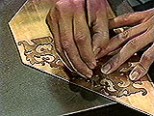
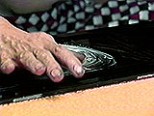
    Makie is applied to the front pillars, middle pillars, platform rim, the inside of the front doors, and drawers. First, a detailed underpainting is drawn on Mino paper with a fine brush. Then, the paper is turned over and the underpainting is traced with lacquer. Next, it is placed on the object and lightly rubbed with a brush. When silver powder is sprinkled on top of the painted lacquer on the lacquered surface, the underpainting stands out. Togidashi makie is a technique for depicting mountains and rivers in the background. The picture is drawn with lacquer, and before it dries, makie is drawn with gold powder and other materials. After applying seashells or gold and silver cutouts and polishing by a roiro master, it is brought back to the makie artist for the next step.
    In the rust-raising process, a three-dimensional effect is created. The base lacquer and tonoko (a type of lacquer) are mixed, the consistency is adjusted with water, and the design is painted in raised layers. After air drying, the surface is polished with ink to remove any unevenness. Further polishing is done on the areas not covered by the design, and a raised maki-e lacquer made by mixing bengara (a pigment) and ash ink is applied and dried in a drying room. This process is called urushiage (lacquering). For powder sprinkling, when the lacquer for powder application is about 80% dry, gold powder is sprinkled with silk floss. Powder sprinkling is a skilled technique as the drying time of the lacquer is affected by changes in weather. After powder sprinkling, the surface is dried in a drying room for a day, and then the lacquering process is done twice. Raw lacquer mixed with bengara (a pigment) is rubbed into the powder-sprinkled areas and dried for a day. Raw lacquer is then rubbed in again and dried for another half day. Finally, whetstone powder or antler powder (powdered deer antlers) is applied to the fingertips and polished to a finish. Just like with lacquerware, meticulous care is taken to prevent dust from settling on the piece. After applying the overglaze and sprinkling gold powder, the piece is complete. The finished product is then handed over to the lacquer craftsman.

    Process 8: Roiro process

    Roiro is the process of polishing lacquered or maki-e (gold lacquer) items to give them a shine. Roiro lacquer is applied, dried in a bath for more than a week, and then wet-sanded with Shizuoka charcoal or Roiro charcoal to make the surface smooth. The process of applying a mixture of polishing powder and rapeseed oil to a cloth and rubbing the surface is called "do-zuri".
    The scratches left by polishing with black charcoal are shallow, but this process is done to remove scratches, eliminate oil and impurities, and smooth the sharpened surface. After sharpening, wipe with hot water, and then wipe again with a soft cloth.
    "Suri-urushi" involves applying raw lacquer to cotton, rubbing it all over, wiping it with softly crumpled Japanese paper, and then letting it dry. To create a shine, a mixture of horn powder and rapeseed oil is rubbed between the palms of the hands to "gloss up." The suri-urushi and gloss-up process is repeated two to three times to achieve a deep, lustrous finish. Once the roiro (blackened lacquer) process is complete, the piece is returned to the lacquerer or maki-e (gold lacquer) artist.

    Process 9: Foil stamping process

    The piece is finished using gold leaf, a specialty of Kanazawa. A generous amount of gold leaf is used to create a magnificent effect, and each piece is applied individually. The arranged gold leaf is pressed down with cotton, removing any excess and ensuring a tight fit. Small pieces of gold leaf are cut and applied to the intricate carvings to fill in any gaps. As part of the traditional technique, lightly wiping off the lacquer makes the gold leaf matte, while using a different cotton and wiping off more lacquer results in a glossy finish. After drying in a bath for a day, the finished product is passed on to the assembly process.

    画像をクリックすると動画が再生されます

    Process 10: Assembly Process

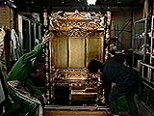
    The finished products from each stage of production are gathered here and assembled. Here too, with the next several decades in mind, most of the assembly is done without using nails or other fasteners.


  • Close-up

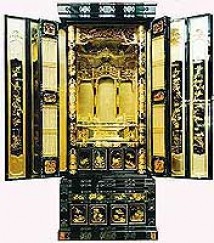
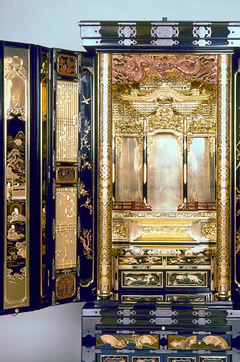
    KANAZAWA Butsudan (Household Buddhist Altars) are exceptionally beautiful, with their exquisite combination of maki-e (gold lacquer) and lacquer work.

    KANAZAWA Butsudan (Household Buddhist Altars) have flourished, deeply rooted in the city's historical background. Without the profound skills and interconnectedness of woodworkers, lacquerers, metalworkers, maki-e artists, and sculptors, such works of art could never have been created.


    A precious digital archive, a source of pride for traditional craftspeople.

    "To talk about the history of KANAZAWA Butsudan (Household Buddhist Altars), we must first discuss Buddhism. The prosperity of KANAZAWA Butsudan (Household Buddhist Altars) manufacturing stems from the fact that Rennyo Shonin visited the Hokuriku region. That's why Higashi Honganji (Jodo Shinshu Buddhism) took root among the common people here in Kanazawa."
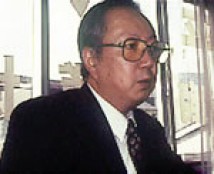
    The person who told me this was Taizo Yamada, a traditional KANAZAWA Butsudan (Household Buddhist Altars). He has been using computers for eight years already, and he skillfully used his computer while carefully explaining things to me while showing me digital images of Buddhist altars.
    Mr. Yamada began painting Buddhist altars and religious implements during his university days, and has also worked on maki-e (gold lacquer) decoration. The brilliance and elegance of maki-e are one of the characteristics of KANAZAWA Butsudan (Household Buddhist Altars), and their luxuriousness is further enhanced by the soft, handcrafted gold leaf made locally.

    Mr. Yamada explains the Buddhist altar while looking at the computer screen.

    Technique is truly acquired through physical experience. But techniques learned through the body last a lifetime.

    The world of Buddhist altars is not based on an apprenticeship system; you have to learn by watching. I learned by observing the craftsmen's techniques and gradually making it my own. The world of Buddhist altars is based on a division of labor system, so each job is important, but they must be made as a whole. With maki-e (gold lacquer) work, the key is how to make the most of the whole powder. Various designs are created using techniques such as polished maki-e and polished maki-e, and these skills cannot be acquired halfway.
    Originally, in Kanazawa, during the time of Maeda Toshitsune, the third lord of the Kaga domain, Jodo Shinshu Buddhism spread among the common people, and the craftsmanship necessary for making Buddhist altars was established. Later, under the fifth lord, Tsunanori, various workshops were developed, and it seems that many skilled craftspeople were nurtured. In 1471, Rennyo Shonin visited Yoshizaki in southern Kaga, and gradually spread his teachings throughout the Kaga region, and along with that, Buddhist altars also became widespread.
    "At that time, the workshops were divided into 23 categories, including maki-e (gold lacquer), lacquerware, paper and metalwork, painting, needlework, armor, craftsmanship, knives, inlay, sword forging, polishing, madder dyeing, carpentry, Noh costume making, and court attire. These craftsmen received stipends from the domain and were given surnames as official craftsmen, enjoying a status close to that of samurai, and were distinguished from ordinary townspeople."

    A new three-sided Buddhist altar for people in their 70s, showcasing Mr. Yamada's skills.

    Historical background: Demand increased due to the policies of the shogunate.

    "The products made by these artisans were once used as gifts during social occasions with noble families, court officials, feudal lords, and temples and shrines, as well as for fly repellents and donations to temples and shrines within the territories of their retainers. Later, many craftsmen who inherited the tradition of these workshops settled in the city of Kanazawa, and they branched out and developed into various specialties such as woodworkers, lacquerers, metalworkers, maki-e artists, and carvers."
    "In fact, during the Tokugawa shogunate, households without a Buddhist altar were severely punished as belonging to a heretical sect. Originally, Kaga was a region with a strong tradition of Shinshu Buddhism, and the demand for Buddhist altars was higher than elsewhere, but it seems that the demand increased dramatically during this period."

    A Buddhist altar that exudes elegance amidst its luxuriousness is something I would want to buy for myself.

    The quality of KANAZAWA Butsudan (Household Buddhist Altars) can be said to be the culmination of Kanazawa culture. The process of creating the altars from carefully selected woods (such as Machilus thunbergii, camphor wood, and ebony) using mortise and tenon joints, and the construction of the inner front roof called the "kuden" (palace) using a specific type of joinery technique, are all governed by established rules. The lacquering is also primarily done by hand using natural lacquer. Of course, the maki-e (gold lacquer) is durable and refined, and together with the locally produced gold leaf finish, it exudes elegance.
    Until now, I've only ever thought of Buddhist altars as places to enshrine Buddha, but I'm sure I'm not the only one who would want to display an altar like this in my room as a work of art (a piece of craftsmanship).

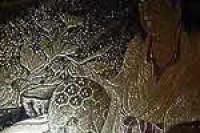
    A magnificent turtle in maki-e (lacquerware with gold or silver powder).

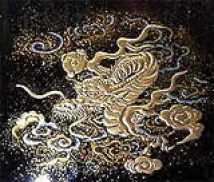
    A dragon lacquerware piece that looks as if it's alive.

    Craftsman Profile

    Taizo Yamada

    Taizo Yamada also serves as the vice-chairman of KANAZAWA Butsudan (Household Buddhist Altars) Altar Industry Association.

    For 35 years, he has worked on the lacquering and maki-e (gold lacquer) of KANAZAWA Butsudan (Household Buddhist Altars). He is a certified traditional craftsman. He is currently the owner of Yamada Buddhist Altar Shop.

    Anecdotes

    Traditional Buddhist altar digital brochure J-Eve

    Currently, KANAZAWA Butsudan (Household Buddhist Altars) Altar Manufacturers' Cooperative Association is conducting research and investigation into the techniques of traditional Buddhist altars made in the Edo period and earlier, and is in the process of creating a digital version of the altar.
    Some of the most magnificent Buddhist altars owned by wealthy farmers in Kanazawa in the past are priceless. There were many wealthy farmers in Kanazawa, and it wasn't uncommon to hear stories of people having to choose between their house and their Buddhist altar. That's how important the responsibility of the head of the household was to protect the Buddhist altar.
    "Some of these pieces feature exquisite craftsmanship, lacquering, and maki-e (gold lacquer) work, and I am truly impressed by the skills of the artisans of that time. If we were to try to reproduce them using today's materials and techniques, it would cost more than 50 million yen for many of them," said Mr. Yamada, whose computer contains these valuable digital archives.

    Now, let's take a look at just a small part of that archive—a magnificent example of Buddhist altar-making craftsmanship, owned by a wealthy farmer.

    • Sliding door with maki-e (gold lacquer)

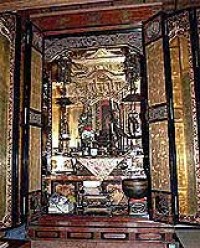
    • A traditional Kanazawa-style Buddhist altar owned by a wealthy farmer in Kanazawa (circa 1881).

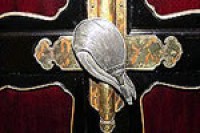
    • Decorative metal fittings for the latch on the upper door.


overview

Craft item name KANAZAWA Butsudan (Household Buddhist Altars)
Reading Kanazawa Buddhist Altar
Classification of crafts Buddhist altars and Buddhist ritual objects
Main Products Buddhist altar
Main manufacturing area Kanazawa City
Designated date June 2, 1976

contact address

■ Production area association

KANAZAWA Butsudan (Household Buddhist Altars) Manufacturers and Traders Cooperative Association
〒920-0855
8-2 Musashimachi, Kanazawa City, Ishikawa Prefecture
Sezawa Building, 2nd Floor
TEL: 076-223-4914
FAX: 076-232-6714

http://kanazawa-butsudan.or.jp/

Features

Kaga is a region where Jodo Shinshu Buddhism is so prevalent that it is sometimes called a "Shinshu Kingdom," resulting in a greater demand for Buddhist altars compared to other areas. Based on the tradition of utilizing the lacquerware and carving techniques of the Kaga domain's workshops in Buddhist altars, products featuring abundant use of gold leaf are a distinctive feature.

How to make it

The process involves wood preparation, carving, painting, decorative metalwork, maki-e (gold lacquer) application, gold leaf application, and finishing. The raw materials mainly consist of ginkgo, cypress, pine, and cedar wood, while ivory and coral are used for carving. The maki-e is applied using the honkin todashi migaki (genuine gold polishing) technique to achieve a vibrant finish. Gold and silver kirikane (cut gold leaf) finishes are also applied to express luxury.

Please see here for information on traditional craftspeople.

Japanese traditional craftsman
top