OZU Washi (Papers)

Ehime Prefecture

Iyo paper is mentioned in the "Engishiki," a document written during the Heian period. Historically, it is said that in the mid-Edo period, a Buddhist monk served as a papermaking master for the Ozu domain, teaching the techniques, which led to the flourishing of papermaking as an industry within the domain.
Under the protection and encouragement of the feudal domain, the industry gradually developed, and its quality gained high acclaim. Even today, many people continue the legacy of their ancestors and are involved in the production of washi paper.

  • Technology/techniques/raw materials

    Technology/techniques

    1. Papermaking shall be carried out using the following techniques or methods:
    (1) Using the "flow-casting" method.
    (2) The mats used shall be made of bamboo or reeds.
    (3) The paste should be made from either Abelmoschus manihot or Hydrangea paniculata.

    2. Drying shall be done by "board drying" or "iron plate drying".


    raw materials

    The main ingredients shall be paper mulberry, mitsumata, ganpi, hemp, or straw.

  • Work scene

    Process 1: Water immersion/boiling

    First, the raw materials—kozo (paper mulberry), mitsumata (paper mitsum), and ganpi (a type of sedge)—are placed in a tank of water and soaked for several days to soften and swell. Next, these softened materials are placed in a Japanese cauldron filled with water, and 10-20% of the materials' volume in chemicals such as soda ash and caustic soda are added. The mixture is then boiled for 2-3 hours. This process ensures that even the non-fibrous parts of the materials dissolve.

    Step 2: Removing bitterness and bleaching

    Next, the boiled raw materials are transferred from the Japanese cauldron to a water tank and rinsed to remove non-fibrous parts and debris. They are then left to soak in water and sun for about a week. Subsequently, a fixed amount of bleaching solution and water are added to the water tank, the raw materials are spread out and mixed well, and the colored fibers are bleached.

    Process 3: Washing and beating

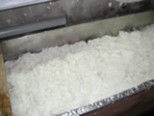
    After bleaching the materials, they are rinsed in a tank of water. After rinsing, any unbleached fibers and debris are carefully removed by hand. The removed material is then beaten using a beating machine, which separates the bundled fibers into individual strands, creating a cotton-like consistency. This loosens the material, making it ready for papermaking. Depending on the type of paper to be made, the main and secondary raw materials are mixed together thoroughly.

    Step 4: Papermaking

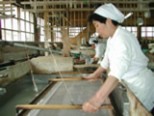
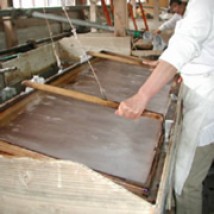
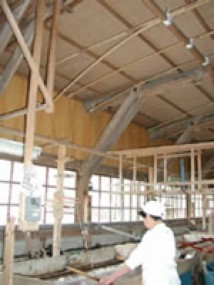
    Finally, we begin the papermaking process. The raw material for the paper and the natural glue used for papermaking are added to a water-filled vat and mixed well. Papermaking is then carried out using a bamboo screen fitted with a frame. The appropriate amount of the dissolved paper pulp solution is scooped into the frame and shaken back and forth. This is the highlight of papermaking, where the experience and intuition of the craftsman come into play. They concentrate intently to create uniform paper. When making thicker paper such as shoji paper, the process of scooping up the paper pulp and shaking is repeated several times. A bamboo pole is tied to the end of a rope suspended from the ceiling. The moderate elasticity of the bamboo acts as a spring, and although the frame containing the dissolved paper pulp is quite heavy, with practice, even women can shake it. This mechanism has remained unchanged for a very long time. Once paper of uniform thickness is achieved, the bamboo screen is carefully removed from the frame and neatly stacked on a stand placed directly behind it.

    Step 5: Pressing

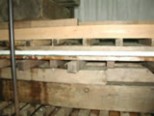
    The paper, which has been layered to a certain extent, is left overnight. The next day, it is slowly dehydrated using a press until the moisture content is reduced by about half. For calligraphy paper, this takes a full day, while for shoji screen paper, it takes about three hours.

    工程6: 乾燥

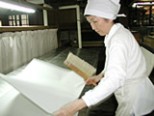
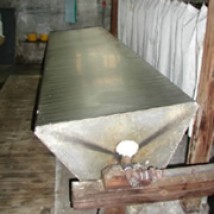
    Next, the paper from which the water has been squeezed is dried in a dryer. One sheet of the damp paper is carefully peeled off and spread onto a stainless steel plate in a dryer, which is a triangular prism through which steam passes. A special soft, large brush is used to quickly smooth out any wrinkles and stick the paper down. When the stainless steel plate is full, it is rotated, and the previously stuck and dried sheets are peeled off one by one again. These are then carefully stacked on a table.

    Step 7: Sorting and Cutting


  • Close-up

    OZU Washi (Papers), Japan's best calligraphy paper.

    OZU Washi (Papers) is said to have been produced as early as the Heian period. During the Edo period, it flourished greatly under the protection and encouragement policies of the Ozu domain. In Ozu, one of Japan's leading washi paper production areas, the traditional manufacturing methods are still preserved, and high-quality washi paper, including calligraphy paper and shoji screen paper, continues to be supplied.


    OZU Washi (Papers) has a long history.

    Although its origins are unclear, during the Heian period, the Imperial Library and Paper Bureau was established in Kyoto to designate official paper. The "Engishiki" records that Ōzu was among the more than 40 provinces that contributed paper at that time. Historically, the temple register at Kōrinji Temple in Ikazaki town records that a monk named Zennoshin came to this area, taught the art of papermaking as a master, and that papermaking flourished as an industry within the Ōzu domain.

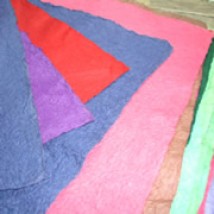
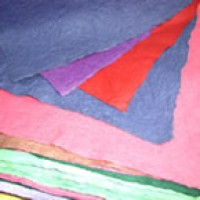
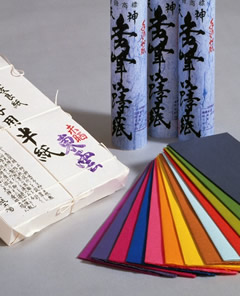
    Washi paper in various colors

    Traditional ingredients and methods

    The raw materials for washi paper are natural materials such as mulberry, paperbush, dill, hemp, bamboo, and straw. A natural glue called tororo aoi is added to these. These materials then undergo processes such as steaming, beating, and papermaking to become paper. And the water is also important. Tap water contains chlorine, so groundwater is drawn up and used. OZU Washi (Papers) is made using the same materials and methods as in the Edo period.
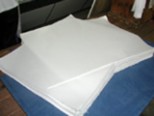
    The products mainly include calligraphy paper, shoji screen paper, art paper, printmaking paper, mounting paper, colored Japanese paper, and tako paper. 90% of the paper produced here is calligraphy paper and shoji screen paper, with these two types accounting for almost half and half of the total. In particular, the calligraphy paper boasts the largest quantity and quality in Japan.

    Traditional papermaking process

    The secret to good health is work

    Stepping into the workshop, I saw only women working efficiently. Despite their small stature, they were making paper with remarkable agility. Watching their movements closely, it became clear that papermaking is a full-body exercise, utilizing the arms, legs, and waist. For these petite women, it must be quite physically demanding work.
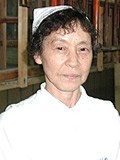
    Ms. Inazuki, a traditional craftswoman, is a veteran with 43 years of experience in this field. She can make about 300 sheets of thick calligraphy paper, 350 sheets of thin paper for kana calligraphy, and 200 sheets of paper for shoji screens in a single day. "Even in the middle of winter, I do it wearing just this light polo shirt." Where does such power come from in such a slender body? "My figure hasn't changed much since I was a girl, so I can still wear my old clothes," Ms. Inazuki replies with a carefree smile. It seems that the secret to maintaining her slim figure and good health lies in this work.

    A mechanism where bamboo acts as a spring.

    A humble attitude and hard work produce uniform paper.

    When she was younger, she was paid on a piece-rate basis, so she worked so hard that she didn't even want to take breaks, and she was very happy when her hard work was recognized. Now that she's older, she takes tea breaks and works at a more relaxed pace. Perhaps because they've all known each other since they were girls, they call each other by their first names with the suffix "-chan," and they work in a very friendly atmosphere. She says that "her physical condition and mood on any given day affect the quality of the paper." That's why she always makes an effort to stay healthy and have peace of mind. Truly a professional.
    Apparently, fans of Inazuki's paper creations have traveled from far away to come and ask for his autograph. "Even now, I don't consider myself a full-fledged artist," Inazuki says. This humble attitude is probably the source of his tireless efforts over more than 40 years.
    The individuality of the person who made the paper is reflected in it. There are no specific rules regarding the ratio or timing of adding glue; it's left up to the individual. The most challenging part is making paper of the same thickness. This is a difficult task, as everything is done based on the craftsman's experience and intuition. That's why "the joy of finding paper of the exact weight you've made is exceptional."

    A smile backed by confidence

    In the next room, they are drying the paper that has been made. Good paper is produced when the people who make the paper and those who dry it work together effectively. Steam circulates inside a large stainless steel plate that is shaped like a triangular prism on its side, keeping the room warm. The still slightly damp paper is spread and attached to this dryer with a special brush, and the iron plate is rotated, the previous layer is peeled off, and the next layer is attached. This process is repeated, and it is quite physically demanding. It requires both the boldness to peel off the paper quickly and the delicacy to move the brush with just the right amount of force to prevent wrinkles.
    Looking at it this way, you can see that a woman's sensibility is utilized in both stages of the process. "I've been able to continue because of my family's support. I want to keep doing it as long as my physical strength allows," says Ms. Inazuki. Her smile shines brightly, reflecting the genuine confidence she has gained from honing a single skill for so long.

    Triangular prism-shaped dryer

    Craftsman Profile

    Chizuko Inazuki

    He's a veteran with 43 years of experience in this field, but his brisk work style makes him seem really young.

    Traditional craftsman, Mr. Inazuki

    Anecdotes

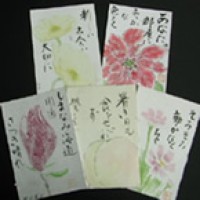
    Anecdotes: Torn paper art, illustrated letters... The expanding charm of washi paper

    Sliding doors, paper screens, folding screens, hanging scrolls, lanterns... Japanese homes were once filled with washi paper. We want to bring the good taste of our ancestors, who pursued simple beauty even in practicality, into our modern lives. Handmade washi paper is gentle on the hands and eyes, and provides a comforting sense of peace and nostalgia.
    Chigiri-e (torn paper art) and picture postcards, which make the most of the advantages of washi (Japanese paper), are currently experiencing a quiet boom. Both are appealing because they don't require much in the way of materials and can be easily started. In chigiri-e, by repeatedly tearing, peeling, and pasting, you can freely express everything from soft to deep colors by layering the paper. Flowing curves are also unique to washi.
    Picture postcards are a way to condense overflowing creative energy onto the small canvas of a postcard. The basic principle of picture postcards is "It's okay to be bad at it, being bad is good." Even those who think they are not good at drawing are said to become hooked once they start. Above all, it's wonderful to send something you've drawn with all your heart to someone and see them happy.


overview

Craft item name OZU Washi (Papers)
Reading Oozwashi
Classification of crafts Japanese paper
Main Products Shoji paper, tako paper, calligraphy paper
Main manufacturing area Seiyo City, Uchiko Town, Kita District
Designated date October 14, 1977

contact address

■ Production area association

Ozu Handmade Washi Paper Cooperative
795-0303
1240-1 Hiraoka-ko, Uchiko-cho, Kita-gun, Ehime Prefecture
TEL: 0893-44-2002
FAX: 0893-44-2162

Features

Unlike Western paper, washi paper is handmade sheet by sheet, conveying a sense of warmth and human touch. In addition to being used for shoji screens and calligraphy, it is increasingly being used in new applications such as torn paper art.

How to make it

Washi (Japanese paper) is made from raw materials such as mulberry, mitsumata, gampi, hemp, or straw, and traditional techniques are still followed, including "steaming" the plant materials, "beating" the boiled materials to create fine fibers, "papermaking" the fibers dissolved in water and then strained into paper, and "drying." In particular, the traditional "nagashi-zuki" (flow-casting) technique is used for papermaking, preserving the skills of yesteryear.
Please see here for information on traditional craftspeople.

Japanese traditional craftsman
top