TOSA Washi (Papers)

Kochi Prefecture

The name of TOSA Washi (Papers) (Tosa paper) appears as a tribute item in the "Engishiki," a document written during the Heian period.
From this, it can be inferred that a washi (Japanese paper) production area had already been established at that time. Washi production continued to flourish thanks to the abundant natural resources, and during the Edo period, Tosa Nanairogami (seven-colored paper) was presented to the Tokugawa shogunate.
In the mid-Meiji era, it became the largest producer of washi paper in the country. As a prefecture that has advanced in washi paper making among all prefectures in Japan, the tradition has been preserved and passed down through generations.

  • Technology/techniques/raw materials

    Technology/techniques

    1. Papermaking shall be carried out using the following techniques or methods:
    (1) By "flowing water" or "bottle water".
    (2) The mats used shall be made of bamboo, reeds, or gauze.
    (3) The paste should be made from either Abelmoschus manihot or Hydrangea paniculata.

    2. Drying shall be done by "board drying" or "iron plate drying".


    raw materials

    The main ingredients shall be paper mulberry, mitsumata, ganpi, hemp, bamboo, or straw.


  • Work scene

    The process of making TOSA Washi (Papers) is divided into many steps. Here, we will introduce the main steps involved.

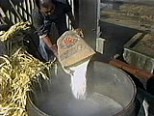
    Step 1: Boil

    The bark of paper mulberry (kozo), paperbush (mitsumata), and paper dwarf (ganpi) is the main raw material for handmade Japanese paper. To remove impurities from the raw materials, they are boiled for 2 to 4 hours in an alkaline solution such as slaked lime or soda ash to extract only the pure fibers.

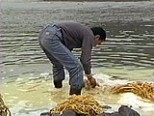
    Step 2: Washing and bleaching

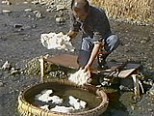
    The boiled raw materials are roughly rinsed in a clear stream, then spread thinly in running water and rinsed overnight. After that, they are bleached in the sun or with bleaching solution. Even the steamed raw materials, which have a slightly reddish tint, will turn white after 3-4 days due to the natural action of water and light.

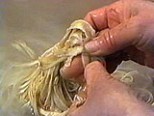
    Step 3: Dustpan

    We carefully remove any dust particles from the raw materials one by one using our fingers. There are two methods for doing this: using water and using air.

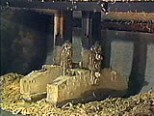
    Step 4: Tap

    The beating process involves using oak sticks to break up the bundles of raw materials. The more it is beaten, the better the fibers disperse in water. After this process, the raw materials become "paper pulp." Currently, this beating process is mainly carried out by machines.

    Step 5: Small

    The thoroughly beaten pulp is placed in a small basket, submerged in water, and stirred to break it down. This process is called "koburi" and is an important step in determining the quality of the paper.

    Step 6: Papermaking

    The raw materials are placed in a papermaking vat and stirred well with a stick. Mucus extracted from the roots of the "tororo aoi" plant is then added to evenly disperse the fibers of the raw materials, and the paper is made sheet by sheet using a screen frame.

    画像をクリックすると動画が再生されます

    Step 7: Dehydration

    A weight is placed on top of layers of paper, left overnight, and then dewatered in a press the next morning. The pressure is gradually increased, starting with light pressure. In the past, a lever was used.

    画像をクリックすると動画が再生されます

    工程8: 乾燥

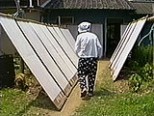
    There are two methods for drying paper: sun drying and heat drying. In sun drying, wet paper sheets are peeled off one by one from the paper bed and attached to drying boards with a brush.

    Step 9: Cutting and Packaging

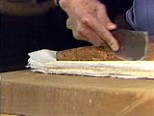
    The dried paper is sorted sheet by sheet, a marker is placed in each bundle, and the paper is cut to the specified dimensions. The paper is then bundled into units of bundles, stacks, and rolls, and wrapped in packaging paper stamped with the manufacturer's mark. Finally, it is delivered to various paper wholesalers.


  • Close-up

    The world's thinnest yet strongest handmade Japanese paper

    Blessed with abundant nature and the beautiful, clear waters of the Niyodo River, Ino Town is the hometown of Genta Yoshii, a benefactor of the Japanese paper industry. From the late Edo period to the early Meiji era, he improved papermaking tools and devised "Tosa Tengujo Paper," which boasts the world's greatest strength and thinness, spreading handmade Japanese paper not only throughout Japan but also around the world.


    The tradition of Tosa Tengujo paper must not be allowed to disappear.

    Tosa Tengujo paper, the world's thinnest yet strongest handmade Japanese paper at just 0.03 mm thick, was once highly valued as the base paper for typewriters and widely exported overseas. However, repeated changes in office equipment, the rise of Western paper, and the wave of mechanization led to a drastic decline in demand for handmade Japanese paper. While many were forced to close their factories and leave their jobs, we were able to speak with one craftsman who quietly continued to preserve the tradition.

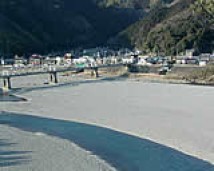
    The Niyodo River basin in Ino Town, where beautiful nature remains.

    A papermaker from my grandfather's generation.

    "I entered this profession when I was exactly 20 years old, and it's been 50 years since then. At the time, there were four or five craftsmen in the family, but none of them, including my father, ever taught me by hand." It is said that it takes three years to become a full-fledged papermaker, but Tosa's Tengujo paper is said to be particularly difficult to make evenly because it is extremely thin. "I learned the techniques by watching and imitating, but I didn't want to copy anyone else at all, so I devised my own method of devising ways to control the flow of water and improve my movements so that I could make stronger paper than others."

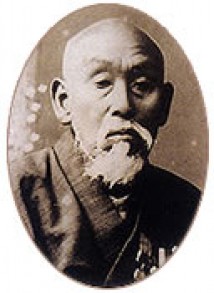
    Genta Yoshii was born in 1826 in a papermaking family in Ino Village.

    My encounter with torn paper art

    With the rapid spread of office automation equipment, the demand for imported Western paper such as copy paper and computer paper surged, and the demand for handmade Japanese paper, especially "Tengujo-shi," became almost zero. "That was the hardest time. But I decided to continue making Japanese paper, even if it meant working odd jobs, in order to protect the handmade papermaking techniques that I had inherited from my grandfather." It was around that time that a wholesaler in Kyoto suggested that he try coloring Tengujo-shi. After about a year and a half of trial and error during his difficult life, he finally created the beautiful dyed Tengujo-shi he had envisioned. Around that time, a torn-paper art boom occurred, and torn-paper art artists from all over Japan began visiting Ino Town in search of this "legendary handmade Japanese paper."

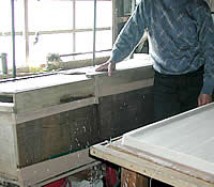
    The workshop of the last remaining craftsman of the legendary Tengujo paper.

    Characteristics of handmade Japanese paper "Tosa Tengujo Paper"

    "Well, take a look at the paper I made," he said, placing a feather-thin sheet of washi paper in the palm of my hand. "See? No matter how hard you crumple it, it won't tear or produce any powder, and when you spread it out, it goes back to its original state." When I tore it with my hands, I could clearly see that the fibers were long and intertwined. When soaked in water, the fibers dissolve completely, and it can be recycled. This is the characteristic of Tosa Tengujo paper. I actually crumpled it in my hands, and it had a gentle, soft, and warm texture, like thin gauze. It felt as supple as a celestial maiden's robe. It's no wonder that torn-paper art artists come seeking out this paper.

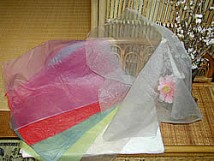
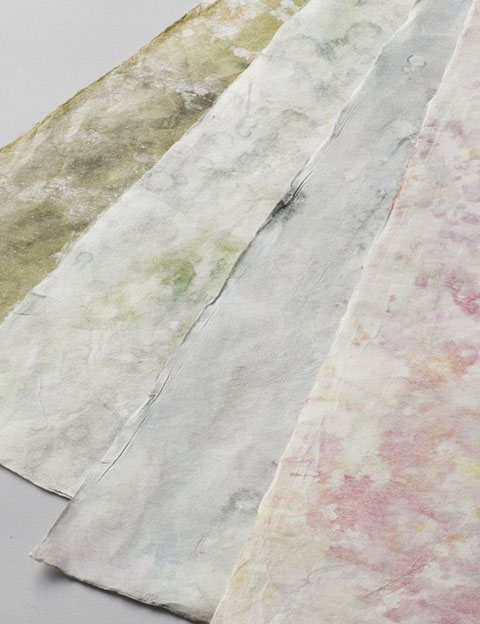
    The world's thinnest handmade Japanese paper: Tosa Tengujo paper and dyed Tengujo paper

    The birth of a successor who will carry on the tradition to the next generation.

    This is the only place left where Tengujo paper is made by laying thin silk on a sugeta (a framed mat) made of extremely thin bamboo strips woven with silk thread, and then making the paper. The raw material is 100 percent kozo (mulberry). Because the impurities are completely removed, less than 4 percent can be used in the end. It is a full day of standing work, and in that time, about 100 sheets of ultra-thin Tengujo paper are produced. "About a year and a half ago, my grandson told me, 'I'll take over from you, Grandpa.' I don't say anything, but it seems he's really putting his heart and soul into making the paper." It seems that the flame of the Tosa Tengujo paper tradition is indeed being passed on to the next generation.

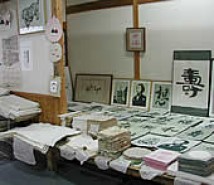
    Handmade Washi Paper Sales Corner inside the Ino Town Washi Museum

    none

    I was granted permission to interview him without revealing his name, but he is a well-known figure who has been featured on television and in newspapers as a modern master craftsman, and he has received the Order of the Sacred Treasure, 6th Class.

    Craftsman Profile

    Anecdotes

    The Kingdom of Washi Paper: A Trinity of Abundance (Raw Material Production, Toolmaking, and Technology)

    In the history of papermaking, which began before the Common Era, the tools used have been improved to meet the needs of the times as technology advanced. Kochi Prefecture has produced craftsmen who excel in toolmaking, as exemplified by Genta Yoshii, a benefactor of the Japan Paper Industry Association.
    It is said that the artisans who crafted the basic materials necessary for making extremely thin and exquisite paper, such as bamboo strips, reed strips, woven threads, and silk gauze, were found only in Kochi Prefecture. Furthermore, blessed with abundant forest resources, raw materials were readily available, making Kochi a true kingdom of washi paper, with a perfect balance of raw material production, tool making, and technology.
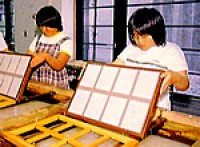
    A popular handmade Japanese paper making experience corner for children.


overview

Craft item name TOSA Washi (Papers)
Reading Tosawashi
Classification of crafts Japanese paper
Main Products Calligraphy paper, craft paper, mounting paper, shoji screen paper, painting and printmaking paper, Japanese paper products
Main manufacturing area Nankoku City, Tosa City, Ino Town (Agawa District), Tsuno Town (Takaoka District), and others.
Designated date December 15, 1976

contact address

■ Production area association

Kochi Prefecture Handmade Washi Paper Cooperative
781-2128
287-4 Namikawa, Ino-cho, Agawa-gun, Kochi Prefecture
TEL: 0888-92-4170
FAX: 0888-92-4168

http://www.tosawashi.or.jp/

Features

The raw materials for washi paper, the tools used for making it, and the papermaking process itself are all sourced locally. The abundant and high-quality raw materials available in Tosa (present-day Tosa) contribute to its superior quality. Furthermore, each papermaking workshop produces a unique type of paper, resulting in a remarkable variety of washi varieties.

How to make it

The soil and sand are removed from the bark of plants used as raw materials, such as paper mulberry, mitsumata, gampi, hemp, bamboo, or straw, and then it is boiled. The non-fibrous parts and any remaining alkali from the boiled material are washed away with water, bleached, and then the impurities are removed and the material is beaten to extract the fibers that will become the raw material for paper. When making paper, tororo aoi is used to give viscosity to the water in which the fibers have been dissolved. There are also two techniques for papermaking: "nagashi-zuki" and "tame-zuki".
Please see here for information on traditional craftspeople.

Japanese traditional craftsman
top