KOSHU Inden (Lacquered Deerskin Crafts)

Yamanashi Prefecture

During the late Edo period, production areas were established, mainly in the region corresponding to present-day Kofu City in Yamanashi Prefecture.
In the humorous book "Tokaidochu Hizakurige," written in the late Edo period, there is a passage that says, "He takes out and shows the Inden drawstring bag that he had hanging from his waist," which shows that KOSHU Inden (Lacquered Deerskin Crafts) was popular among people as a material for wallets, drawstring bags, and other pouches even back then.

  • Technology/techniques/raw materials

    Technology/techniques

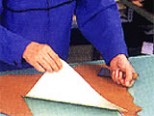
    1. To rub the leather. In this case, burn off any remaining hair using an iron.

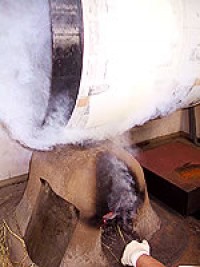
    2. The base color shall be achieved by smoking or immersion dyeing using straw and pine resin.

    3. The pattern shall be applied in one of the following ways:
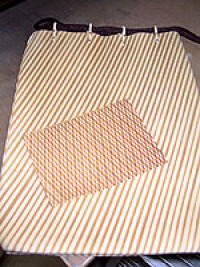
    (1) For those whose base color is achieved by smoking, one of the following methods shall be used: "thread winding," "thread tie-dyeing," "resist paste application," or "lacquer application" (including those that are combined with stencil printing; the same applies hereinafter).
    (2) In the case of items whose base color is applied by immersion dyeing, the method shall be "lacquer application".

    4. When applying the pattern, if "lacquer application" is performed, a mixture of raw lacquer, polishing powder, pigment, and egg white is applied in a raised mound using a stencil.

    5. When turning the edges, thin the edges.
     

    raw materials

    1. The outer leather shall be deerskin.

    2 漆は、天然漆とすること。

  • Work scene

    The defining characteristics of KOSHU Inden (Lacquered Deerskin Crafts) are its beautifully dyed deerskin and its finely raised patterns. Because the patterns use intricate designs reminiscent of Edo Komon, skilled craftsmanship is required to apply the lacquer evenly and without any unevenness. Only when this pattern application is done properly does the smooth, raised, and pleasant lacquer texture unique to KOSHU Inden (Lacquered Deerskin Crafts) come into being. This technique is called the lacquering technique, and it is a unique technique KOSHU Inden (Lacquered Deerskin Crafts) that harmonizes the excellent properties of deerskin and lacquer.

    工程1: 染色

    White deerskin is dyed in black, navy, brown, maroon, and wine red using a core dyeing (dip dyeing) method. Hundreds of pieces are dyed in a single drum dyeing session. Since the properties of deerskin vary from one animal to another, there will be slight differences in the dyeing process, but this can be considered a characteristic of natural materials.

    Step 2: Cutting

    A single piece of leather is roughly cut according to the pattern. Areas with significant antler misalignment, characteristic of deerskin, are avoided, and only the best parts are selected for cutting. Slight antler misalignment is considered proof of authenticity.

    Step 3: Patterning

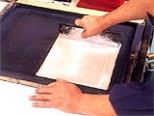
    Fine patterns are applied to deerskin using lacquer. The stencils for the patterns are made from washi paper, hand-carved in Shiroko, Ise, just like those used for Edo komon patterns. The stencil is placed on the deerskin, and a spatula coated with lacquer is used to rub it in horizontally. When the leather is peeled off the stencil, a beautiful pattern emerges on the deerskin according to the cut-out design. Single colors of lacquer are applied, mainly vermilion, black, and white. After drying in a lacquer drying room for several days, a hard, glossy lacquer pattern is completed. This raised texture of the lacquer is one of the appealing features of Inden.

    Process 4: Sewing and finishing

    After precisely cutting the leather according to the pattern, each piece is meticulously sewn. Straight and curved lines are sewn freely according to the design, but since the surface of the Inden leather has a textured lacquer pattern, this also requires skilled craftsmanship. Next, the folded seams are neatened with a hammer. A piece of leather or other material is attached to the back to prevent deformation. Finally, the clasp or zipper is attached to finish the product.
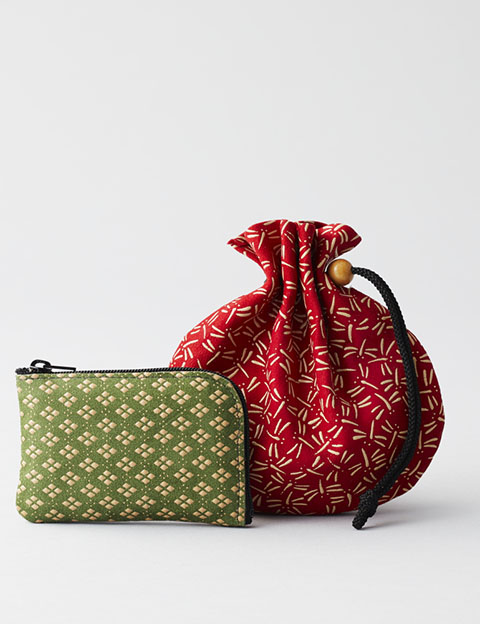
    In the past, these were mainly used for Japanese clothing accessories, drawstring bags, and pouches, but nowadays they are used for a variety of purposes that suit modern lifestyles, such as wallets, stamp cases, and handbags.

  • Close-up

    KOSHU Inden (Lacquered Deerskin Crafts) leather goods become irreplaceable the more you use them.

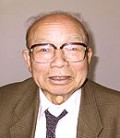
    KOSHU Inden (Lacquered Deerskin Crafts) name known to anyone who loves traditional crafts. With a history dating back to the Sengoku period, its leather goods such as wallets continue to be loved by people of all ages. What is the secret to its irresistible appeal? We asked Takaji Akaike, who has dedicated 60 years to this craft.


    The more you use it, the more it fits your hand, and you won't want to let go of it.

    You often see the words "KOSHU Inden (Lacquered Deerskin Crafts)" in bag shops and the wallet sections of department stores. Inden is deerskin with patterns applied using lacquer. Edo-style patterns are applied to leather dyed in black, navy, maroon, purple, etc., making them stand out and shine with a glossy finish. Nowadays, it is used for a variety of everyday items, not only wallets but also stamp cases, handbags, drawstring bags, and more. The origins of Inden date back to the Nara period, and it was even used in the armor of samurai during the Sengoku period.
    Inden has been loved by people from ancient times to the present day. What exactly is the secret to its appeal? "Deerskin is light, durable, and soft. Moreover, it becomes more comfortable to the touch as you use it," says Mr. Akaike. Holding Mr. Akaike's wallet, which he has used for over 10 years, the soft, supple feel is irresistible. New Inden is stiff like an ironed dress shirt, but well-used Inden absorbs the warmth of the person who used it, giving it a comforting warmth. "It can easily be used for 10 to 20 years. Even when it gets worn out, many people have it repaired and use it many more times."

    They make not only wallets but also business card holders.

    "Sixty years dedicated solely to Inden (a type of leather craft), 'My apprenticeship was the hardest part.'"

    Inden leatherwork involves four processes: dyeing, cutting, pattern application, and sewing. Mr. Akaike is a craftsman who mainly handles the sewing. "It's really difficult to bring the corners of bags together. You have to carefully cut the pleats at the corners with a knife so that they don't become too thick." Even with thin fabric, it's difficult to avoid unevenness at the corners, but deer leather is inherently thick. Sewing Inden products, such as wallets, which have many corners and curves, smoothly requires skilled techniques.
    Mr. Akaike started working with Inden leatherwork at the age of 15, and aside from eight years in the military, he has dedicated a remarkable 60 years to this craft. "I worked as an indentured servant for five years starting at the age of 15. That was the toughest time. The military I joined afterward was much easier. I was already well-trained by then. They didn't teach me the job. They just told me to 'watch and learn.' I learned by observation and experimentation, figuring out how to improve quickly."

    The intuition of a craftsman is still needed everywhere today.

    Craftsmanship is a world without textbooks. Although times have changed and management has become more quantifiable, the intuition of a craftsman is still necessary in many areas. "Inden uses lacquer, you see. Lacquer is tree sap, a living thing, so it's difficult to handle. It's not enough for the building to be sturdy and the humidity and temperature to be constant. To properly handle lacquer, the experience and intuition of a craftsman over many years are essential."
    The craftsman's intuition is essential for making Inden leather goods. Currently, there is a gradual generational shift between the younger and older generations. By the way, how long does it take for a craftsman to be considered fully-fledged? "You can do the basics in 5 or 6 years, but it takes many years of practice to be able to make something truly authentic. You probably become satisfied around the age of 30 or 40. Well, I've been doing this for 60 years and I'm still not completely satisfied."

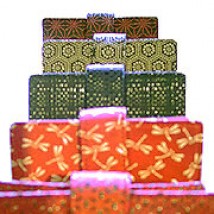
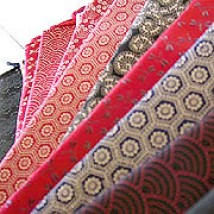
    There are dozens of different patterns for the small-patterned Inden fabric.

    It only has meaning if people use it today.

    Inden has always enjoyed stable support, maintaining a loyal following. Originally in the form of wallets and bags, it suited modern lifestyles. That's probably why Inden continues to spread. From the Sengoku period to the present day, this deerskin craft has flexibly adapted to changing lifestyles and has been loved by many people without interruption. "What makes me happiest is when people find the things I've finished to be easy to use," says Akaike. Rather than treating traditional crafts as antiques, he believes that they only have meaning when they are used by people today, and he aims to continue creating even more stylish and high-quality products in the future.

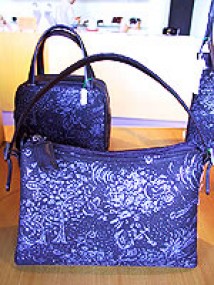
    Even this stylish handbag is made with Inden leather.

    Craftsman Profile

    Koji Akaike

    Dedicated solely to making Inden leather goods.
    His extensive experience spans well over 60 years.
    He is a person who could be called a witness to the history of the Inden world.

    Anecdotes

    The "Fusube Method" uses natural ingredients and natural flavoring.

    The Fusube technique allows for the creation of only about a dozen pieces at a time. Natural leather is colored over time by people using the smoke from straw. This is what creates this indescribably gentle flavor. Humans flavoring natural materials with natural ingredients, and that becomes a sophisticated culture. A joyful relationship between nature and people. This leather made using the Fusube technique reminds us of this unique and delightful Japanese culture.

    • The thread is wrapped around the deerskin attached to the drum.

    • Products made using the traditional Fusube technique. Gentle colors.

overview

Craft item name KOSHU Inden (Lacquered Deerskin Crafts)
Reading Koshuinden
Classification of crafts Other crafts
Main Products Stamp case, wallet, bag, handbag
Main manufacturing area Kofu City, Kai City, Ichikawamisato Town, Nishiyatsushiro District
Designated date April 18, 1987

contact address

■ Production area association

Kofu Inden Commercial and Industrial Cooperative Association
400-0811
201 Aria, Kawada-cho, Kofu City, Yamanashi Prefecture
TEL: 055-220-1660
FAX: 055-220-1666

https://www.pref.yamanashi.jp/shouko/kogyo/densan/inden_01.html

Features

These bags, made from soft, durable, and lightweight deerskin with a lacquered pattern, become more comfortable to the touch and cherished with each use.

How to make it

There are two main methods: 1. After the dyeing process, the deerskin is cut to the required size, taking care not to damage it, and then a lacquer pattern is applied using a stencil to create a bag. 2. The deerskin, whose surface has been treated with a branding iron, is wrapped around a drum and then smoked with straw to create a frosted pattern to make a bag.

Please see here for information on traditional craftspeople.

Japanese traditional craftsman
top