RYUKYU Kasuri (Ikat)

Okinawa Prefecture

The origins of Okinawan textiles are believed to date back to trade with China and Southeast Asia in the 14th and 15th centuries.
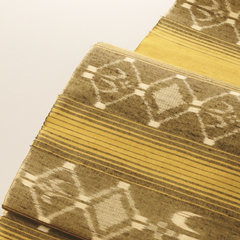
The dominant motifs are geometric patterns derived from southern Okinawan ikat weaving techniques. It was during the Taisho era (1912-1926) that Okinawa became a major textile production center. Okinawa's unique traditional techniques and methods spread throughout the region, continuing to this day.

  • Technology/techniques/raw materials

    Technology/techniques

    1. The fabric must be a kasuri textile woven using one of the following techniques or methods.
    (1) The fabric shall be plain weave with pre-dyed yarn.
    (2) A hand-thrown shuttle is used to insert the weft threads.

    2. The dyeing method for ikat threads shall be by "drawing a pattern," "using a core," "hand tying," or "hand printing."

     

    raw materials

    The yarn to be used shall be raw silk, spun silk, floss silk, cotton yarn, or linen yarn.

  • Work scene

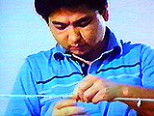
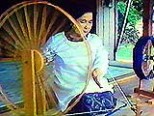
    RYUKYU Kasuri (Ikat) is made by tying and dyeing threads according to a design, and then weaving. There are 16 steps involved, and it takes about a month to complete one bolt of fabric. Each step is performed by specialists through a division of labor. Almost all of the threads used are silk. The designs are based on traditional kasuri patterns, but the size and arrangement are changed, or several patterns are combined. When tying and dyeing the kasuri patterns, a method called "picture diagram" is used to allow weavers to work faster.

    Step 1: Design

    We combine traditional ikat patterns to create new designs.

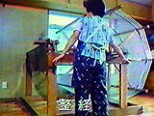
    工程2: 整経

    Based on the design, we prepare the necessary lengths of warp and weft threads. We then determine the length by calculating the number of rolls of fabric needed and the shrinkage during weaving.

    Step 3: Kasuri tying

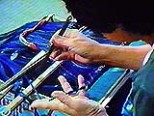
    After the warp threads have been prepared, starched, and stretched, the core is attached. The number of warp threads is adjusted according to the design for each type of ikat, and they are pulled up and down. The tying is done by hand, so it is a physically demanding task.

    工程4: 染色

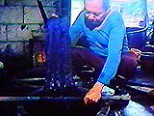
    The fabric is dyed after the starch is removed. Plant dyes are used in a pot, while chemical dyes are mainly dyed using a skein dyeing machine. The indigo used is Ryukyu indigo, which is harvested in the northern part of the main island. After dyeing, the fabric is starched again and stretched out.

    Step 5: Unraveling the Kasuri (ikat) pattern

    Untie the ikat threads. Untie the core and arrange the ikat fabric according to the design, then stretch it out.

    画像をクリックすると動画が再生されます

    Step 6: Reed threading

    After splitting the ikat threads and ground threads according to the pattern, pass them through the reed. Pass two threads through each eye.

    Step 7: Winding

    The thread is wound carefully to prevent tangling or slack. The process is powered by a motor to increase speed and accuracy.

    Step 8: Heddle setting

    Instead of using pre-made heddles, we create the heddles by threading the warp threads. After the warp threads are threaded, we attach them to the loom.

    Step 9: Seed thread preparation

    For the weft threads, a diagrammatic method for selecting seed threads is used. The marked areas are tied with the seed threads and then dyed. The threads are separated one by one using a kasuri (ikat) method, and then wound onto small bobbins using a yama (a type of weaving tool).

    Process 10: Weaving

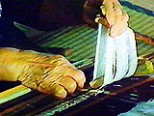
    The weft thread is set in the hand-thrown shuttle and weaving begins. Once woven, it is washed with water, steamed, widened, and dried to complete the process.

    画像をクリックすると動画が再生されます


  • Close-up

    I'm working on the homework my grandmother and father left me.

    Kasuri, introduced through trade with Southeast Asia, spread from Okinawa to various parts of Japan. Kasuri patterns are commonly incorporated into Okinawan textiles. Kasuri produced in Haebaru Town, a major production area, is called RYUKYU Kasuri (Ikat).


    The patterns of ikat fabric are derived from everyday objects, plants, and animals.

    In Okinawa, where there are as many as ten types of textiles, RYUKYU Kasuri (Ikat) boasts the overwhelmingly largest production volume. The secret lies in its division of labor and rational methods. When tying the kasuri, a method called "picture diagram" is used, so weavers don't have to worry too much about the misalignment of the kasuri pattern. This allows them to weave at a speed of one bolt per week.
    The division of labor involves design, ikat tying, dyeing, preparation for weaving, and weaving, and the finished product goes through the hands of many people. We spoke with Tetsuya Oshiro, who is in charge of design and dyeing at Oshiro Textile Factory.
    There are as many as 500 different patterns of RYUKYU Kasuri (Ikat). These patterns depict everyday objects, animals, and plants, such as touiguwa (swallow), tizukun (fist), jindama (coin ball), and kourigumu (cloud).
    "We can't deviate from traditional patterns, so we decide on the design by changing the placement, size, and combinations. It's more of an arrangement than creating something completely new. We have samples made in my grandmother's and father's time, so we look at those and adapt them to suit the present day."
    Tetsu is the fifth generation to take over the family business from his father, Kiyoe, in 1990. His grandmother, Kame, was also well-known as an artist who created bold designs.
    "We have samples from my father's time, my grandmother's time, and even earlier. You can't come up with new designs without looking at a lot of things, so this is a strength," he says.

    Selected works for the Japan Traditional Crafts Exhibition

    The allure of natural dyeing: the subtle variations it produces.

    Perhaps inheriting his grandmother's genes, Tetsu's works feature bold use of color. While he primarily uses natural dyes, he doesn't limit himself to them.
    "I think it's okay to use chemical dyes. The range of colors that can be covered by natural dyeing is limited, and it's becoming increasingly difficult to obtain dyeing materials these days. You can't just easily cut down trees in the mountains, after all."
    Whenever he gets his hands on the bark of the Fukugi tree, which produces a yellow dye, he stocks it up. As time passes, the color it dyes changes from lemon yellow to a more subdued shade. Tetsu seemed to find this subtle change in dyeing process incredibly fascinating. When using plants, he uses acacia, bayberry, Iju, Tikkachi, Murraya paniculata, and Ilex rotunda as mordantes to produce the colors. Depending on the combination of dye and mordant, and the number of times it's done, thousands of colors can be produced. It's an endless cycle. He says that dyeing alone could take a lifetime.

    Tetsu's distinctive use of color is his hallmark.

    I want to catch up to the advanced technology of the past.

    Even if the yarn is dyed well, it doesn't necessarily mean the finished product will turn out exactly as intended.
    "The colors and patterns rarely turn out exactly as I envisioned. Sometimes I think I've created something good, but when I start weaving, it's a bit disappointing. On the other hand, there are times when it turns out surprisingly well."
    Cloth is only created when the warp and weft threads intertwine. The results of tying and dyeing cannot be known until the fabric is woven.
    "My grandmother and father made some incredibly intricate ikat fabrics. That's my goal right now. Each step of the process involved professionals, and my dyeing skills aren't quite there yet. Skill is largely something that a person develops over time, so it really comes down to experience. The skills of the past were amazing. I have no choice but to keep trying."
    Tetsu said this emphatically.

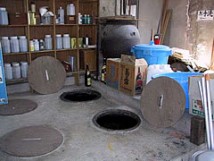
    A dyeing workshop with indigo vats embedded in the floor.

    Craftsman Profile

    Satoru Oshiro

    Born in 1963. Selected for the Japan Traditional Crafts Exhibition. Full member of the Japan Crafts Association.

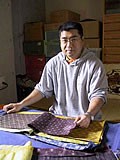
    Tetsuya Oshiro looking at a sample book of his past works.

    Anecdotes

    Three generations of a family in Haebaru Town, the town of Ryukyu RYUKYU Kasuri (Ikat)).

    Haebaru Town, located next to Naha City, is known as a production center for RYUKYU Kasuri (Ikat)). Kazuo Oshiro of Oshiro Hiroshiro Textile Workshop, who exhibits his work at exhibitions such as "Oki-ten," also grew up listening to the sound of looms. He has been helping his father, Hiroshiro, since childhood and has been involved in design, tying, and dyeing for 32 years.
    "Everyone in town was involved in weaving, so I naturally entered this world. I gradually became hooked on the joy of craftsmanship," she says.
    Haebaru Town was one of the first towns in Okinawa to recover after the war, thanks to its textile industry. "In central and northern Okinawa, many people worked for the U.S. military, but there were no bases here, so they were able to focus their efforts on the textile industry, which had been around for a long time."
    Although the looms and materials were lost, the techniques remained. Skilled artisans also gathered from Tomari in Naha, a pre-war production area. By adopting a rational method for ikat tying through an efficient division of labor, they were able to increase production while still hand-weaving. Currently, approximately 5,500 bolts of fabric are produced annually.
    Kazuo laughs, saying, "Making things is fun, but it's no use if they don't sell. For a craftsman, the joy comes when their work sells." His son, Takuya, who works with him, is creating ikat fabrics on denim and has attracted attention from fashion industry professionals in Tokyo. New developments are constantly emerging from Haebaru.

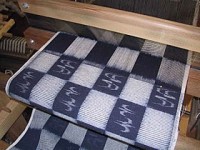
    • A stunning photograph with a beautiful contrast of indigo and white.

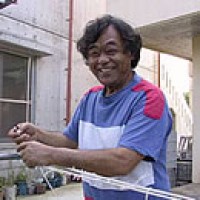
    • Kazuo Oshiro skillfully ties the ikat fabric with expert hands.


overview

Craft item name RYUKYU Kasuri (Ikat)
Reading Ryukyu Kasuri
Classification of crafts fabric
Main Products Kimono fabric
Main manufacturing area Naha City, Yaese Town (Shimajiri District), Haebaru Town (Shimajiri District)
Designated date April 27, 1983

contact address

■ Production area association

RYUKYU Kasuri (Ikat) Business Cooperative
〒901-1112
157 Motobu, Haebaru-cho, Shimajiri-gun, Okinawa Prefecture
TEL: 098-889-1634
FAX: 098-889-2275

https://ryukyukasuri.com/

Features

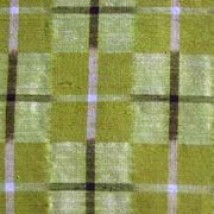
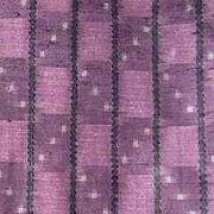
Many designs incorporate names of Okinawan nature, plants, and animals, and these are still referred to by their local dialect names. Silk threads are primarily used, and dyes include both natural plant dyes and chemical dyes. The fabric is mainly woven in bolts, and summer wall coverings (kabejofu) are also produced.

How to make it

The warp and weft threads are each tied by hand according to a predetermined pattern, then dyed, and the tied sections are untied to create the ikat pattern. The fabric is then placed on a wooden loom and woven using a hand-thrown shuttle.

top