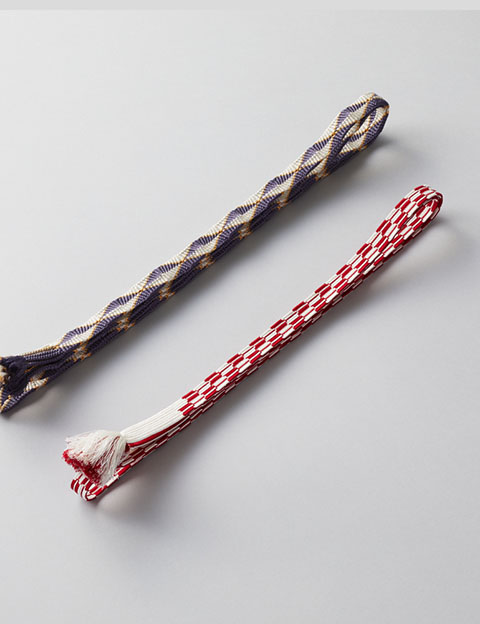
KYO Kumihimo (Braiding)

Kyoto Prefecture

In the Jomon period, twisted cords and simple braided cords were used in daily life.
The origins of KYO Kumihimo (Braiding) are said to date back to the Heian period. In the Kamakura period, their use in armor and weapons increased, and practical kumihimo-making techniques developed. During the Edo period, haori cords (cords for jackets) began to be mass-produced.

  • Technology/techniques/raw materials

    Technology/techniques

    1. The yarn dyeing shall be done by "plain dyeing," "tie-dyeing," or "gradation dyeing."

    2. For assembly, use a round stand, square stand, raised stand, basket-making stand, woven bamboo stand, or inner stand.
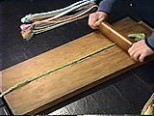
    (1) When using a raised stand or a bamboo stand, use a spatula for "striking".
    (2) When creating a pattern using a raised base, the "antler pattern" method should be used.
    (3) When using a braiding stand, the braided thread used shall be a twisted thread that has been "water-stretched".
     

    raw materials

    The threads used shall be raw silk, spun silk, or silk, cotton, gold, or silver threads of equivalent quality.

  • Work scene

    KYO Kumihimo (Braiding) (braided cords) are said to have originated in the Heian period, and a production center was established during the Edo period. Using silk threads, gold and silver threads, the cords are braided on braiding stands such as the round stand, square stand, high stand, woven bamboo stand, and basket-weaving stand that have been used since the Edo period, producing products with an elegant taste cultivated in Kyoto's culture. The beautifully dyed silk threads, each strand intertwined, create a unique texture and flavor of the cord. This technique has been passed down continuously since ancient times. Its characteristics can be seen in the elegant style cultivated in Kyoto's culture. Today, it is used in a variety of places such as shrines and temples, clothing, obi sashes, armor and helmets, and sword cords, and there are as many as 3,500 different braiding methods depending on the application.
    Here, we will introduce the general flow of KYO Kumihimo (Braiding) (braided cord) making process.

    Step 1: Splitting the thread

    Thread splitting is the process of sorting the required amount of silk thread. The threads are weighed and divided by weight to determine the number of strands needed to make the cord. The threads used here are said to be raw silk, spun silk, or silk, cotton, gold, or silver threads of equivalent quality.

    工程2: 染色

    In the dyeing process, the yarn is dyed evenly and faithfully according to the color sample, following the design of the braided cord to be made. The dye mixture is adjusted, and the yarn is dipped in the dye, repeating this process to express the shades and depths of color. Depending on the design, blurring effects may also be used. This is a meticulous process that requires skill, so this dyeing part is outsourced to a specialized dye shop.

    Step 3: Thread winding

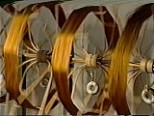
    The yarn is split, dyed, and then reeled into small bobbins using a reeling machine.

    Step 4: Length Measurement

    In the warp-laying process, the reeled threads are further wound onto a warp-laying frame. The outer circumference of the warp-laying frame is 4 shaku (120.12 cm), which is half the length of 8 shaku (240.24 cm) required for one obi sash. The frame is rotated to adjust the length and number of threads needed for assembly.

    Step 5: Twisting

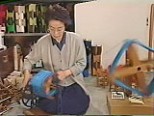
    The yarn, whose length and weight are matched according to the warp length, is twisted using a twisting machine called an "Hatcho twisting machine."

    画像をクリックすると動画が再生されます

    Step 6: Assembly

    Beautiful braided cords are created using various braiding stands and machines. Braided cords can be broadly classified into three types: round braids, square braids, and flat braids. There are four types of braiding stands that are common today: round stands, square stands, twill bamboo stands, and high stands. Each braiding stand has its own characteristics, so they are used according to the type of braid.

    画像をクリックすると動画が再生されます

    工程7: 仕上げ

    The assembled cord is then sent to the finishing process, beginning with attaching the tassels to both ends. Each strand is carefully unraveled by hand, the tassels are securely tied with thread, and the tassels are then steamed and shaped. Finally, the braids are smoothed on a rolling board, completing the beautiful flat-braided obi cord.


overview

Craft item name KYO Kumihimo (Braiding)
Reading Kumihimo (braided cord)
Classification of crafts Other textile products
Main Products Japanese decorative items, obi sashes, haori cords, and accessories for both Japanese and Western clothing.
Main manufacturing area Kyoto City, Uji City
Designated date December 15, 1976

contact address

■ Production area association

KYO Kumihimo (Braiding) Industrial Cooperative Association
602-8205
462-4 Shinshirazumaru-cho, Kamigyo-ku, Kyoto City, Kyoto Prefecture
TEL: 075-441-6755
FAX: 075-411-3778

Features

Kumihimo (braided cords) have been used for over a thousand years, and are used in all sorts of things, including shrines and temples, clothing, armor and helmets, and sword cords. There are different braiding methods depending on the purpose, and the number of variations reaches 3,500. Since the Meiji era, they have been used as obi ties for traditional Japanese clothing accessories.

How to make it

KYO Kumihimo (Braiding) (braided cords) are made through a series of processes including preparation (thread splitting, thread matching, warp measurement, etc.), braiding, tassel attachment, and steaming. In the main braiding process, the cords are hand-braided using round braiding stands, square braiding stands, raised braiding stands, basket braiding stands, twill bamboo stands, and inner braiding stands.

Please see here for information on traditional craftspeople.

Japanese traditional craftsman
top