KOISHIWARA Yaki (Pottery)

Fukuoka Prefecture

This was the first kiln in Chikuzen, established in the 17th century during the early Edo period by the lord of the Kuroda domain.
Initially, it was called "Nakano-yaki" after the place name, and they fired large porcelain items such as jars, pots, and sake bottles. However, it is said that from the beginning of the 18th century, earthenware began to be produced, and it came to be called KOISHIWARA Yaki (Pottery).

  • Technology/techniques/raw materials

    Technology/techniques

    1. The shaping shall be done by pottery wheel forming.

    2. Applying glaze using the "raw glaze" method.

    3. When applying patterns, use the following methods: "flying plane," "comb drawing," "brush marks," "finger drawing," "splashing," or "flowing."
     

    raw materials

    1. The clay to be used shall be "Koishiwara clay".

    2. The slip used shall be "Koishiwara slip".

    3. The feldspar used for "raw lacing" shall be "Akatani feldspar".

  • Work scene

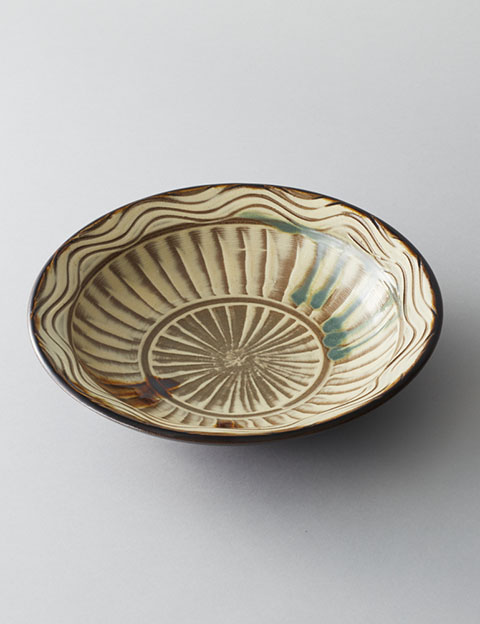
    The defining characteristic of KOISHIWARA Yaki (Pottery) lies in the application of a white slip called "keshou-dei" (slip) to the clay, followed by the carving of patterns using various techniques. Techniques such as the brushwork on large plates, the "tobikanna" (flying plane) technique where patterns are applied while the clay is still damp, and the "kushime" (comb-marked) technique, which remains unchanged to this day, possess a simple yet charming appeal.


    Step 1: Excavating the raw soil

    Originally, Koishiwara had an abundance of clay suitable for pottery making, and that remains true today.


    Process 2: Soil drying

    The soil that has been collected is first allowed to dry.


    Step 3: Grinding

    Using water from the valley stream, the collected soil is finely crushed using machines such as a "karausu" (water-powered mortar). Until around 1965, approximately 30 karausu were still in operation in Koishiwara.
    The sound of the water-powered mortar and pestle pounding, "Gigotton, Gigoton," echoes through the valley stream day and night.


    Step 4: Soil preparation

    The finely crushed soil is thoroughly mixed in a tank and filtered repeatedly. The soil gradually transforms into a fine-grained, sticky soil.


    Step 5: Dehydration

    Dehydrate the soil that has absorbed moisture.


    Process 6: Kneading the soil

    Before starting pottery making, the clay is thoroughly kneaded. This kneading process is called "chrysanthemum kneading" because the clay is kneaded in a way that resembles the shape of chrysanthemum petals. Chrysanthemum kneading removes air from the clay and gives it the necessary stickiness and hardness for the finished product.


    Step 7: Mixing the soil

    This process is meticulously carried out by hand to ensure uniformity in particle density, even out moisture content, and completely eliminate air bubbles within the clay.


    Step 8: Wheel-thrown

    Once the clay is ready, the shaping process begins. This is where the potter's wheel is used. In the days before electricity, people would kick the wheel with their feet to turn it. This was called a "kick wheel." Nowadays, electric potter's wheels are the norm, but the speed at which they turn can be freely adjusted by adjusting a lever.
    Regarding the techniques, the clay is stretched into a long, rod-like shape with both hands. The stretched clay is then carefully kneaded and piled up. This is called the "kneading" technique. Next is the "pulling" technique. One product is made from the clay on the potter's wheel, and once it is finished, it is cut off with a string, and the remaining clay is used to make the next product. Multiple products are made from the clay placed on the potter's wheel. The technique of making one product from one piece of clay is called "ball making." Also, the technique of making without using a potter's wheel is called "coil building" or "hand building."


    Step 9: Semi-drying

    Once the shaping is complete, the dough is dried in the sun before moving on to the next step. The sight of the dough drying in the sun is a characteristic scene of Koishiwara Village.


    Step 10: Applying the finishing coat

    While KOISHIWARA Yaki (Pottery).


    Step 11: Shaving

    While the slip-coated piece is rotated, a curved iron piece is applied to it. The iron piece bounces, leaving scattered patterns carved into the piece. This technique is called "tobikanna." Surprisingly, this iron piece is actually a spring from an old-fashioned spring-driven clock. Each potter carves then shapes it to fit their own hand, creating a tool that is easy to use. This technique requires considerable skill.
    Another technique involves applying slip to the clay body and, while rotating it on a potter's wheel, tapping it at equal intervals with a brush to create unique patterns. This is called "uchihakeme" (brushed pattern). Another technique involves putting slip into a dropper and freely drawing patterns. This is called "ittchin-gaki" (slip-on drawing). These are all original techniques of KOISHIWARA Yaki (Pottery) ware.


    工程12: 素焼き

    The pieces are bisque-fired to facilitate painting and glazing.


    Step 13: Glazing

    Glaze coats the surface of pottery with a thin, glassy film. It gives the pottery a glossy finish, making it look beautiful and also prevents water from penetrating. The raw materials for KOISHIWARA Yaki (Pottery) glaze are locally sourced materials such as straw, wood, ochre, and rust-colored clay. Potters create their own unique blends of these glazes to produce the distinctive colors of their kilns.
    Glazing can be done either when the pottery is semi-dry after sun-drying, or after bisque firing. Unique to KOISHIWARA Yaki (Pottery) are the "ladle-applied" method, where glaze is applied evenly using a ladle, and the "pour-over" method, where glaze is poured onto the surface of the product in one go from a small container such as a sake cup. This creates a variety of unpredictable patterns. In the "flow-applied" method, glaze is poured from a small container onto the pottery at equal intervals. The way the glaze flows determines the character of the piece.


    工程14: 本焼き

    It's finally time for firing. We'll be using a "climbing kiln." Recently, gas and electric kilns are also widely used. Climbing kilns are typically 20 meters long. There are four kilns. When loading the kilns, the most difficult part is arranging the pieces. Starting from the back, pieces with easily melting glazes are placed, and the pieces are arranged using shelves and shelves to prevent them from touching each other. Then the kiln is fired up. There is a firebox at the very bottom, and the firing gradually progresses upwards. The firing continues at the bottom firebox for about 15 hours, and when the kiln temperature reaches about 1000 degrees, "side firing" begins, where firewood is added from the side firebox. In "side firing," firewood is added evenly from the back to the front. This is a job that requires experience. When the kiln temperature reaches about 1300 degrees, "side firing" of the kilns further up begins. From firing to completion, it takes about 40 hours. The work continues without sleep or rest, requiring patience and physical strength.
    Approximately one week after firing, the kiln is allowed to cool, and then it's time for "unloading," when the finished products are taken out of the kiln. For potters, the moment of unloading is always a mix of anticipation and anxiety. The potter's heart leaps with joy. Feeling the warmth of the flames on the shelves, they carefully remove the products with all their heart.


    工程15: 検品

    We inspect the unglazed pieces for any scratches or other defects.


    工程16: 完成

  • Close-up

    KOISHIWARA Yaki (Pottery) Traditional techniques convey the warmth of the clay.

    At the foot of Mount Hikosan, the birthplace of myths and legends, stands a climbing kiln that emits purple smoke throughout the seasons.
    A lump of clay takes shape on the potter's wheel, is adorned by skilled hands, and is given eternal life by the flame.


    The history and characteristics of KOISHIWARA Yaki (Pottery)

    Established in 1682, KOISHIWARA Yaki (Pottery) is favored for its timeless simplicity, encompassing everything from large jars, pots, bowls, and mortars to everyday tableware. Unique techniques such as tobikanna (carving patterns with a hard metal blade while KOISHIWARA Yaki (Pottery) is still damp), kushime (creating patterns with a comb), hakeme (creating patterns with a brush), yubigaki (finger painting), nagashigake (pouring glaze), and uchigake (splashing glaze) are still alive and well in Koishiwara. For centuries, many potters and kilns in Koishiwara have cherished and passed down these traditional techniques, while also striving to develop KOISHIWARA Yaki (Pottery) and establish new styles. This time, we spoke with Yasuo Kumagai, a traditional craftsman of KOISHIWARA Yaki (Pottery).

    Expressing individuality is the essence of KOISHIWARA Yaki (Pottery)

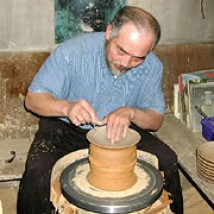
    In the warm spring sunshine in the front yard of his workshop, Mr. Kumagai was drying semi-dry pottery in the sun. He began without much of a greeting, immediately launching into a powerful explanation of his work: "If you don't dry them upside down like this, the pottery will deform when the sun gets this strong." He is a traditional craftsman with a distinctive personality, and his beard suits him well. The workshop smells of earth. The climbing kiln is built using the slope of the mountain. The water-powered mortar uses river water to make the clay. Everything in Koishiwara village seems to have been there for hundreds of years. Mr. Kumagai said, "I wasn't originally a potter. After graduating from school, I worked as a salaryman at first. After that, I also worked as a sushi chef. A distant uncle of mine was a potter, and one day when I went to visit him, he said, 'Making food and making tableware aren't that different. If you're going to 'make' something, it's better to make something that people will cherish for a long time. Help me with my work.' So I entered this world with a light heart. But it's not that easy, is it? My master trained me..." "Yes, I was told repeatedly, 'You joined the company many years later than everyone else, so you have to work dozens or even hundreds of times harder than others to become a full-fledged potter.' I was very competitive, so I threw myself into it with all my might. There were times when things didn't go the way I wanted, and I would work intently on the potter's wheel until around 3 a.m. every day. Pottery isn't just about preserving traditional techniques. It's very important to express what you want to express in your work, and how you express your own individuality," Kumagai passionately explained.

    Yasuo Kumagai at the potter's wheel

    A fusion of modernity and tradition: KOISHIWARA Yaki (Pottery)

    Many young people in their twenties are involved in KOISHIWARA Yaki (Pottery). While many traditional crafts are struggling with a lack of successors, here in Koishiwara, local young people are proudly pursuing the path of pottery. Mr. Kumagai's son also graduated from the art department of a university and has taken over the family business.
    "All the potters in Koishiwara have strong personalities, but rather than stubbornly clinging to family secrets, they want to pass on their skills to younger generations," says Kumagai. Veteran craftsmen are enthusiastically sharing their specialized techniques with younger generations and juniors, going beyond workshops and the boundaries of their own kilns. In fact, he sometimes learns techniques he never knew before from his own apprentice, his son.
    "Those in their 60s and 70s showcase the mature individuality of veterans, while younger generations skillfully blend new sensibilities with traditional techniques to express their own individuality. Both sides inspire each other, capturing the demands of the times, and while inheriting the basic traditional techniques, KOISHIWARA Yaki (Pottery) has evolved. That is how the new tradition of KOISHIWARA Yaki (Pottery) will be created," Mr. Kumagai said with a warm smile, pointing to the new style of pottery made by his son.
    Beyond the garden, the rhododendrons were in full bloom.

    Craftsman Profile

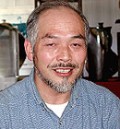
    Yasuo Kumagai

    Born September 18, 1949.
    Pottery making since 1969
    Received the Kyushu Bureau of International Trade and Industry Director's Award in 1983.
    Became a Traditional Craftsman in 1994.

    Yasuo Kumagai, a traditional craftsman who values individuality.

    Anecdotes

    The history and culture of Koishiwara Village

    In the cedar grove I look up to, the familiar voices of people from ancient times echo.
    In the past, when Shugendo (mountain asceticism) flourished, Koishiwara was the most important training ground for mountain ascetics before ascending Mount Hiko. Even today, the Gyōja-dō (ascetic's hall), carefully preserved by the villagers, houses a wooden statue of En no Gyōja, the founder of Shugendo. In front of the Gyōja-dō is a stone altar for fire rituals, and nearby are numerous remains and ruins related to Shugendo, such as the Kōseidō (incense hall) and Kōsuiike (fragrant pond).
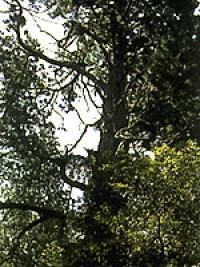
    And there, as if watching over the Gyōjadō (ascetic's hall), are a group of giant cedar trees reaching towards the sky. These were planted by ascetic monks when they entered the mountains, and these cedars, which are 300 to 500 years old and have grown to be over 50 meters tall, are affectionately known as Gyōja Cedars.

    The border of the Gyōja no Mori forest: to the west is Chikuzen, and to the east is Buzen, the Kokura domain.
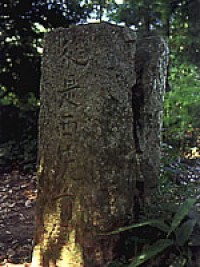
    In the Gyōja Forest, overgrown with Gyōja cedar trees, stand two moss-covered boundary stones back to back. These were erected in 1701, during the Edo period, when a border dispute between Chikuzen and Buzen provinces, which had been constantly clashing over the rights to the beautiful Gyōja cedar trees, was resolved. The stone statue of Boundary Kannon that had previously stood at the border was enshrined in a temple in the Gyōja Forest, and a new wooden Boundary Kannon was erected in Chikuzen. However, this Kannon statue was frequently stolen, so it was moved to Jōmanji Temple by order of the domain, and since then, only the boundary stones have continued to watch over the border for many years.

    • Ascetic cedar trees 300 to 500 years old

    • Moss-covered boundary stone


overview

Craft item name KOISHIWARA Yaki (Pottery)
Reading Koishiwarayaki
Classification of crafts Ceramics
Main Products Jar, pot, ornament, drinking utensils
Main manufacturing area Higashimine Village, Asakura District
Designated date May 10, 1975

contact address

■ Production area association

KOISHIWARA Yaki (Pottery) Pottery Cooperative
838-1601
730-9 Koishiwara, Toho Village, Asakura District, Fukuoka Prefecture
Inside KOISHIWARA Yaki (Pottery) Traditional Industry Hall
TEL: 0946-74-2266
FAX: 0946-74-2266

Features

The craft is characterized by its decorative techniques, such as brushstroke-patterned large plates and vases with a distinctive planing pattern. Even today, vases, tableware, and flower arrangements are made using techniques that have remained largely unchanged since ancient times.

How to make it

The decorative techniques established in the late 17th century, such as tobikanna (flying plane), keshokake (decorative glaze), and hakeme (brushwork), are applied, and the glaze is applied and fired without bisque firing.

Please see here for information on traditional craftspeople.

Japanese traditional craftsman
top