EDO Sekku Ningyo (Seasonal Festival Dolls)

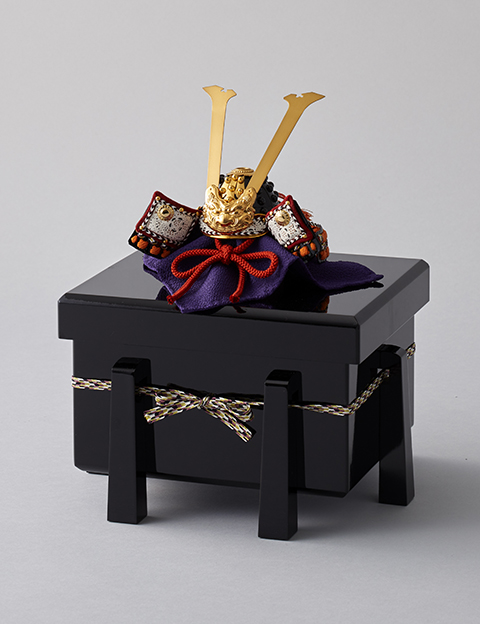
Edo doll making began in the early Edo period under the influence of Kyoto, but it is believed that the unique Edo style was established around the Hōreki era, about 250 years ago. From this time onward, Hina dolls and May dolls took on the realistic and refined Edo style. Edo doll culture reached its peak during the Bunka-Bunsei period in the late Edo period, when armor decorations that had been displayed outdoors in the early Edo period were displayed indoors, and elaborate Edo armor decorations modeled after May dolls and actual suits of armor were created.
Furthermore, the town became filled with small, intricately crafted dolls, folk dolls that closely resembled popular actors, and Ichimatsu dolls.

  • Technology/techniques/raw materials

    Technology/techniques

    1. In the case of dolls, the following techniques or methods shall be used:
    (1) "Preparation of the base material" shall be carried out using the following techniques or methods:
    (i) The "head-making" method involves "pressing the material" using paulownia wood paste, "bisque firing" using white clay, or "wood carving."
    "Body construction" shall be carried out using the following techniques or methods:
    1) In the case of festival dolls and folk dolls, they shall be made using the "straw body construction," "fabric pressing" with paulownia wood paste, or "wood carving."
    2) In the case of Ichimatsu dolls and Gosho dolls, they shall be made using "kiji-oshi" (pressing with paulownia wood paste), "bisque firing" (using white clay), or "wood carving".
    H. "Hand and foot creation" is done by "plain pressing" using paulownia wood paste, "bisque firing" using white clay, or "wood carving".

    (2) "Gofun coating" shall be performed using the following techniques or methods:
    (i) For "paulownia wood heads" and "wood carving heads," after "priming," "raising," "intermediate coating," and "cutting," apply "top coating" at least three times.
    (b) The bodies of Ichimatsu dolls and Gosho dolls made of paulownia wood paste or carved wood shall be given a base coat, an intermediate coat, and a cutting, followed by three or more top coats.
    H. Hands and feet made of paulownia wood or carved wood should be given a base coat, an intermediate coat, and cut out, followed by at least three top coats.
    2. In the case of unglazed heads and bodies, after applying the "undercoat" and "cutting," apply at least three "top coats." Also, in the case of unglazed hands and feet, after applying the "undercoat," apply at least three "top coats."

    (3) When attaching a doll to a stand, it shall be secured using nails.

    (4) "Facial drawing" shall be performed using the following techniques or methods:
    (i) In the case of those using artificial eyes, after opening the eye with a small knife, the eyebrows and hairline should be drawn in ink using a fine brush or a thin brush, and then "lipstick" should be applied.
    (b) For those who do not use artificial eyes, the "ink drawing" should be done using a fine brush or a thin brush.

    (5) "Hair blowing" is the process of "straightening" the hair using a comb and iron, followed by "planting" the hair.

    (6) When the "fabric" of the costume is to be lined, Japanese paper shall be used and the "bag-pasting" method shall be employed.


    2. In the case of armor, the following techniques or methods shall be used:

    (1) "Pot making" involves "hammering out," "joining together," or "papier-mâché," followed by attaching rivets or other fasteners.

    (2) "Making the wooden board" involves "splitting the small plates," "pasting the small plates," or "binding the small plates together."

    (3) Threats should be made by "honji".

    (4) The paint shall be applied using lacquer or a material of equivalent quality.

     

    raw materials

    1. For dolls, the following raw materials should be used.

    (1) The materials used for paulownia wood paste or wood carving shall be paulownia wood or a material of equivalent quality.

    (2) The fabric used for the costumes shall be silk, cotton, or linen.

    (3) The thread used for the hair shall be silk, human hair, or yak hair.


    2. For armor, the following raw materials shall be used:

    (1) The bowl shall be made of iron, copper, copper alloy, or Japanese paper.

    (2) The ridge board shall be made of iron, copper, copper alloy, cowhide, Japanese paper, or paper backed with Japanese paper.

    (3) The metal fittings shall be made of iron, copper, or a copper alloy.

    (4) "Picture leather" shall be deerskin or made of a material of equivalent quality.

    (5) The cords used for "lacing" shall be braided silk cords or cords made of deerskin or cowhide.

    (6) The lacquer shall be natural lacquer or made of a material equivalent thereto.


overview

Craft item name EDO Sekku Ningyo (Seasonal Festival Dolls)
Reading Edosekku dolls
Classification of crafts Dolls and Kokeshi dolls
Main Products Hina dolls, May dolls, decorative armor, genre dolls, Ichimatsu dolls, Gosho dolls
Main manufacturing area Adachi Ward, Arakawa Ward, and other areas in Saitama Prefecture / Saitama City and other areas
Designated date March 9, 2007

contact address

■ Production area association

Tokyo Metropolitan Doll Manufacturers Cooperative Association
111-0052
2-1-9 Yanagibashi, Taito-ku, Tokyo
Tokyo Wholesale Center, 4th Floor
TEL: 03-3861-3950
FAX: 03-3851-8248

http://www.hina-ko.jp/

Features

Inheriting the traditions of the Edo period, these products feature natural colors, a realistic and refined aesthetic, and are of high quality.

How to make it

The main materials used for Hina dolls and similar items are natural materials such as wood, paper, and cloth. The head and body are shaped from wood carving or paulownia wood paste, then the arms and legs are attached, and a separately made costume is put on top. Edo period armor, on the other hand, is often made based on historical research, and the materials used are natural materials such as wood, paper, silk thread, and leather, as well as iron and copper. The main processes are carried out by hand.

Please see here for information on traditional craftspeople.

Japanese traditional craftsman
top