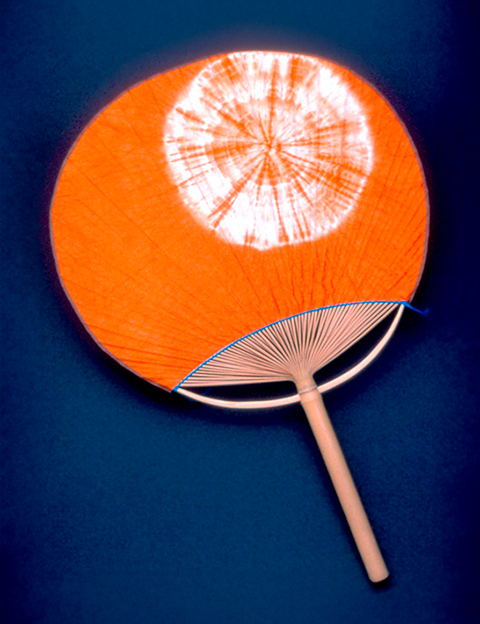
BOSHU Uchiwa (fans)

Chiba Prefecture

The production of paper fans in the Kanto region began during the Edo period. At that time, Boshu was a production area for bamboo, which is used to make paper fans. Paper fan production in Boshu is said to have started around 1877 (Meiji 10), and by 1884 (Meiji 17), it was being produced as a major product of Awa County.
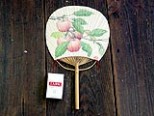
Along with KYO Uchiwa (Fans) and MARUGAME Uchiwa (Fans), it is one of Japan's three major types of fans, and has been passed down through generations in Minami-Boso.

  • Technology/techniques/raw materials

    Technology/techniques

    1. The bone and handle portion are cylindrical and made of the same connected bamboo, forming a round handle.


    2. After selecting the bamboo, peeling it, and polishing it, the following techniques or methods shall be used for bone preparation.
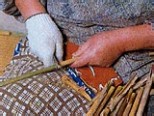
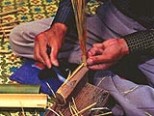
    (1) "Split bamboo" is the process of soaking bamboo in water to make it easier to split, and then finely splitting it using a Japanese razor.
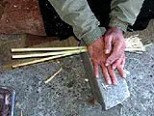
    (2) The process of removing sharp edges and splinters from bones by rolling the finely shredded bones on a stone.
    (3) To make a horizontal hole through which the "bow" that supports the ribs of the fan will pass.
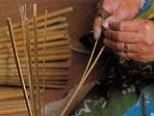
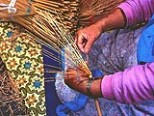
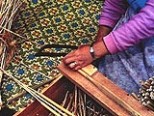
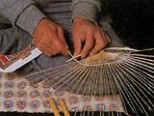
    (4) "Woven bamboo" refers to inserting a knitting needle and wrapping thread around the frame as if weaving.
    (5) "Handle filling" is the act of stuffing willow branches into the holes in the handle to fill them.
    (6) "Yuge" refers to the process of shaving bamboo with a machete or knife and inserting it into a horizontal hole.
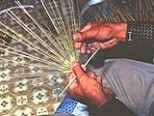
    (7) "Lower window" means stretching threads at equal intervals.
    (8) "Window making" involves bending the bow and tying a thread to make it the same shape.
    (9) "Picking up the bones" involves flattening the opposing bones and shaping them.
    (10) Use a cutting tool to "trimming" off excess bones.
    (11) Correcting the bone's texture by "roasting" it using a stove.


    3. The application shall be carried out using the following techniques or methods:
    (1) Use a brush or spatula for application.
    (2) A cutting machine or a cutting press shall be used for cutting.
    (3) To attach the edges, use a brush and a small knife to apply the edge paper.


    4. To finish the handle, apply a base coat and a top coat to the end of the handle.


    5. For the finishing touch, use a crimping tool to make the bones stand out.
     

    raw materials

    1. For the frame, the bamboo used shall be Medake from Boshu, and for the bow, it shall be Madake from Boshu or a material of equivalent quality.

    2. The yarn used for knitting should be cotton or silk.

    3. The base paper shall be Japanese paper (washi), and the fabric shall be silk or cotton.

    4. Decorated paper and fabric shall be made of pigments, dyes, or materials having equivalent properties.

    5. A willow branch shall be used to fill the hole at the end of the handle, white pigment and animal glue shall be used for the undercoat, and lacquer, pigment, or a material of equivalent quality shall be used for the topcoat.

  • Work scene

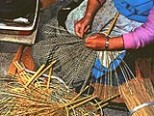
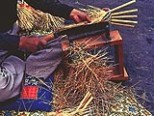
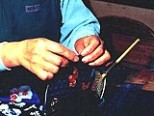
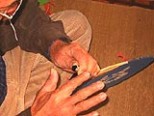
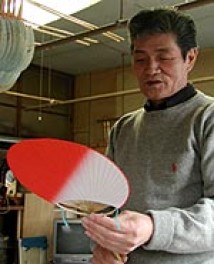
    BOSHU Uchiwa (fans) are made by splitting a single bamboo stalk to create the handle and frame. The manufacturing process involves 21 steps and is carried out by a division of labor. Some of these steps require particular skill, and these tasks are performed by specialized craftsmen with many years of experience.
    Overall production management and some tasks are handled by wholesalers known as "uchiwa-ya" (fan makers). <Process Flow>

    Step 1: Cutting the bamboo (at the fan shop)

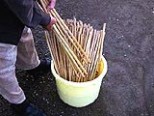
    The female bamboo used for the frame of the fan is cut from local bamboo groves.
    Onnatake is a slender bamboo that grows naturally on the Boso Peninsula, and pieces about the thickness of a finger are used for making fans.
    The bamboo is harvested between October and January, when the flesh is firm and less susceptible to insects.
    Cut the bamboo you've cut into appropriate lengths.
    Because fans require bamboo of a uniform thickness, only enough material for two or three fans can be obtained from a single long piece of bamboo.

    Step 2: Peeling (Uchiwa maker)

    Carefully peel off the outer layer of the bamboo stalks and remove any debris around the nodes.
    If there are buds at the nodes, remove the buds as well.

    Step 3: Polishing (by the fan maker)

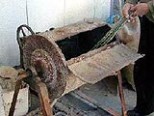
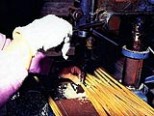
    The peeled bamboo is put through a polishing machine to remove dirt and debris from the surface and then polished.

    Step 4: Soaking in water (by the splitter)

    Soak the bamboo in water overnight to make it easier to split.

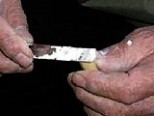
    Step 5: Splitting bamboo (by a bamboo splitter)

    Tightly wrap a thread around the bamboo slightly above the joint to secure it and serve as a guide to stop the split. Insert the blade up to the thread and split the bamboo evenly. Once it is split into about eight sections, thin the inner flesh by shaving it off, and then divide it into even smaller sections.
    The number of divisions will vary depending on the shape and size of the fan.

    Step 6: Flossing (for the fan maker)

    The split end is rolled and rubbed against a hard stone to remove splinters and round off the edges of the cut surface, making it smooth. This process is called "momi."

    Step 7: Hole punching (fan maker)

    A hole is made below the joint for the "bow" that will support the fan.

    Step 8: Weaving the bamboo (weaving shop)

    Place the thread about 10 cm above the split in the bamboo, and weave the split bamboo so that it is aligned in a straight line.

    Step 9: Pattern filling (fan maker)

    Cut the handle to the desired length and fill the hollow of the bamboo with willow branches.

    Step 10: Yuge (Yugeya)

    Thick strips for bows are made by shaving down bamboo, and these are threaded through holes drilled in the nodes. The finished products are then passed on to the window makers via the fan makers.

    Process 11: Lower window (lower window)

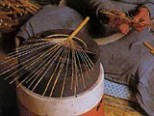
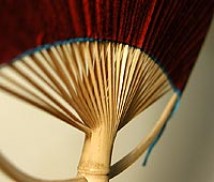
    The woven bamboo strips are arranged so that they are evenly spaced, spread out in a fan shape, and the stiffness of the bamboo is bent to create the shape. The ends of the woven bamboo threads are temporarily tied to the bamboo strips that are threaded through the holes.

    Step 12: Window making (lower window maker)

    Bend the bamboo strips that are threaded through the holes into an arc shape, pull the thread to remove any slack, and tie them securely. After securing the thread, readjust the spacing of the woven bamboo strips.

    Step 13: Picking up threads (fan maker)

    Thread a thin bamboo stick through the string slightly above it.

    Step 14: Harvesting the rice grains (for the fan maker)

    We use a push cutter to trim away the excess bone.

    Step 15: Baking (Uchiwa maker)

    The frame is placed on a heated metal base and heated. Heating stabilizes the shape of the frame. Once the frame is stable, the bamboo strips are removed.

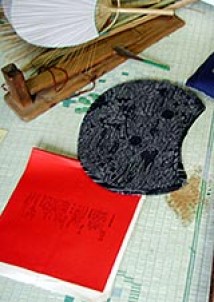
    Step 16: Pasting (Painter)

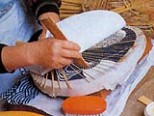
    Place the pre-cut fan-shaped paper face down, then place the glued frame on top, and finally attach the backing paper on top of that.

    Step 17: Cutting (Uchiwa maker)

    Use a push cutter to trim the edges and shape the fan.

    Step 18: Edge finishing (edge construction)

    Attach a thin strip of paper to the edge of the fan to cover the cut edge.

    Step 19: Undercoat (Uchiwa-ya)

    The gaps in the willow branches packed into the handle are filled with a mixture of white pigment and animal glue dissolved in water, and the end of the handle is made flat.

    Step 20: Top coat (Uchiwa maker)

    Once the undercoat is dry, apply the pigment on top to finish the patterned areas.

    Step 21: Finishing (Fan maker)

    Roll over the paper-covered area to make the bones stand out, and you're done.

    工程22: 完成


  • Close-up

    The craftsmanship that creates a pleasant breeze BOSHU Uchiwa (fans)

    The Boso Peninsula enjoys a mild climate. A type of bamboo known as "BOSHU Uchiwa (fans)" (female bamboo) has grown naturally in this region since ancient times. Onna-dake is about the thickness of a human finger. This slender and flexible bamboo is used to create "Boshu Uchiwa" (Boso fans).
    "BOSHU Uchiwa (fans)" fans are lightweight, durable, and easy to use because the handle tip is split to create the frame. Once a kitchen essential, they are now a beloved symbol of summer. We visited the workshop of Tadahiro Maruyama, the second-generation owner of Maruyama Ichiro Shoten, the manufacturer that has produced countless fans.


    The town of fans

    In Tateyama and Tomiura, at the southern tip of the Boso Peninsula, fans have been made using locally sourced bamboo since the Meiji era.
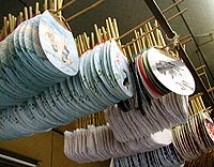
    Initially, they utilized the abundant resources to make the frames of fans out of bamboo and shipped them to Tokyo. When Tokyo-based fan wholesalers entered the market, the focus shifted from frame making to fan making. In particular, after the Great Kanto Earthquake, many fan craftsmen moved to the area, and fan manufacturing flourished.
    The manufacturers of the fans, who oversee the fan makers, are called "uchiwa-ya" (fan makers). At its peak, there were more than 20 "uchiwa-ya" in this small town, and fan making was a thriving industry representative of the region. The "uchiwa-ya" decide on the design of the fans, but the actual work is carried out by various specialized craftsmen.
    "When you went down the alley, you'd see that almost every house was splitting bamboo and drying it outside, so there were a lot of houses making fans. My family business is a fan maker, so when I was a child, I often went around picking up the finished products," Maruyama says.

    Gathering the skills of craftsmen

    "BOSHU Uchiwa (fans)" (a type of fan made in Boshu) are produced through a division of labor. It takes 21 steps to complete a single "BOSHU Uchiwa (fans)." The "Uchiwa-ya" (fan maker) manages the production process by moving between the specialized craftsmen responsible for each stage. While some of the steps are performed within the "Uchiwa-ya," many require the skills of highly experienced, specialized craftsmen.
    Among the various trades, the "splitter" is particularly skilled. The splitter is responsible for splitting the ends of the handles into small pieces to create the frame. First, the bamboo is split into even widths, and the inner flesh is trimmed to adjust the thickness. Then, it is split into the appropriate number of pieces for the size of the fan. For a bamboo with a diameter of 1 centimeter, the number of pieces can reach 40 or more. If the splitting is done roughly, the fan will be rough, and if the frame is too thin or too narrow, the fan will lack resilience and be difficult to use. It is said that the quality of the fan depends on the work of the splitter.
    Besides the "paper splitter," there are other trades that require skill. These include the "paper paster," who attaches the paper to the fan, and the "edge maker," who attaches paper to the edge of the fan. In addition to these, there are "weavers," "bow shavers," and "lower window makers," and fan making is supported by the skilled techniques of various craftsmen. "BOSHU Uchiwa (fans)" take shape only after passing through the hands of many craftsmen, so "it's all about how to employ good craftsmen and get them to do good work," says Maruyama.

    To create a fan that people will choose

    "BOSHU Uchiwa (fans)" (Boshu fans) were once primarily used for practical purposes, such as starting fires in kitchens and bathrooms, due to their durability and ease of use. In recent years, however, with the decline in such demand, many people purchase them as a symbol of summer, seeking decoration and a sense of coolness. As customers now carefully examine and select each fan, the makers have become even more dedicated to their craft.
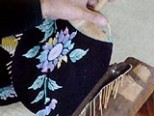
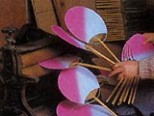
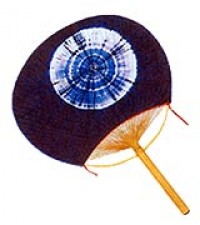
    The key factor when choosing a product is undoubtedly the design. While "BOSHU Uchiwa (fans)" fans sometimes feature designs painted on white fans, the basic principle is to use fabric with a pre-printed design.
    "The patterns vary. I find them myself, from fabrics like ro silk and indigo dyed paper to chiyogami paper."
    From selecting the designs to cutting the fabric for each individual fan, Mr. Maruyama personally envisions the finished product. This is because the placement of the design can make or break the fan. As this is a crucial moment for showcasing the individuality of the "uchiwa maker," his attention to detail is exceptional.

    A different kind of wind: "BOSHU Uchiwa (fans)"

    A "BOSHU Uchiwa (fans)" fan creates a gentle breeze with just a light flick of your hand. Supported by flexible bamboo ribs, the fan surface captures and gently releases air with minimal effort. The pleasantness of the breeze is similar to a natural breeze.
    "People who use them say, 'The breeze is different,'" says Maruyama. The gentle breeze created by the "BOSHU Uchiwa (fans)" evokes the cool, refreshing breezes that blow through the bamboo groves of the Boso Peninsula.

    Craftsman Profile

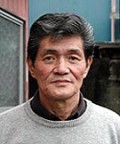
    Tadahiro Maruyama

    Born in 1939 (Showa 14). After gaining experience working for a company, he became the second-generation owner of "Maruyama Ichiro Shoten." He has been involved in the manufacture of paper fans for over 45 years since then.
    Chairman of BOSHU Uchiwa (fans) Promotion Council

    Anecdotes

    Female bamboo (Medake) and male bamboo (Otokodake)

    The bamboo used in BOSHU Uchiwa (fans), also known as Onnadake, is a type of bamboo that grows in clusters along riverbanks and coastal hills. Due to its long internodes and flexibility, it is also used for musical instruments such as the quena and fishing rods.
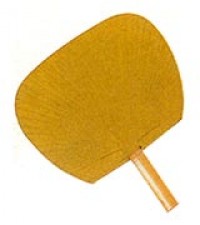
    The bamboo that most people picture when they hear the word "bamboo" is actually called "male bamboo." This male bamboo is used in flat-handled fans, such as those made by MARUGAME Uchiwa (Fans).
    Even though they are both fans, a fan made from female bamboo and a fan made from male bamboo give very different impressions.
    BOSHU Uchiwa (fans) Marugame Flat-handled Uchiwa


overview

Craft item name BOSHU Uchiwa (fans)
Reading Water-resistant fan
Classification of crafts Other crafts
Main Products fan
Main manufacturing area Tateyama City, Minamiboso City
Designated date March 17, 2003

contact address

■ Production area association

BOSHU Uchiwa (fans) Promotion Council
294-0036
1564-1 Tateyama, Tateyama City, Chiba Prefecture
Tateyama City Economic and Tourism Department, Employment and Commerce Division, Commerce Section
TEL: 0470-22-3362
FAX: 0470-24-2404

https://www.bosyu-uchiwa.com/

Features

This fan uses high-quality female bamboo for the frame and true bamboo for the bow. Unlike KYO Uchiwa (Fans) with their splayed handles and MARUGAME Uchiwa (Fans) with their flat handles, this fan has a round handle, is durable, and features a beautiful semi-circular lattice pattern.

How to make it

The frame of the fan is made by splitting a single round bamboo stalk into small pieces to create a joined structure. Next, washi paper, silk fabric, or cotton fabric is carefully pasted onto the frame, the edges are attached, and the end of the handle is painted to finish it off.

Please see here for information on traditional craftspeople.

Japanese traditional craftsman
top